Buying vs Leasing a Car With No US Credit: What International Workers Actually Get Approved For
No US credit history does not mean no car — here is exactly which lenders and lease programs approve international workers in 2026.
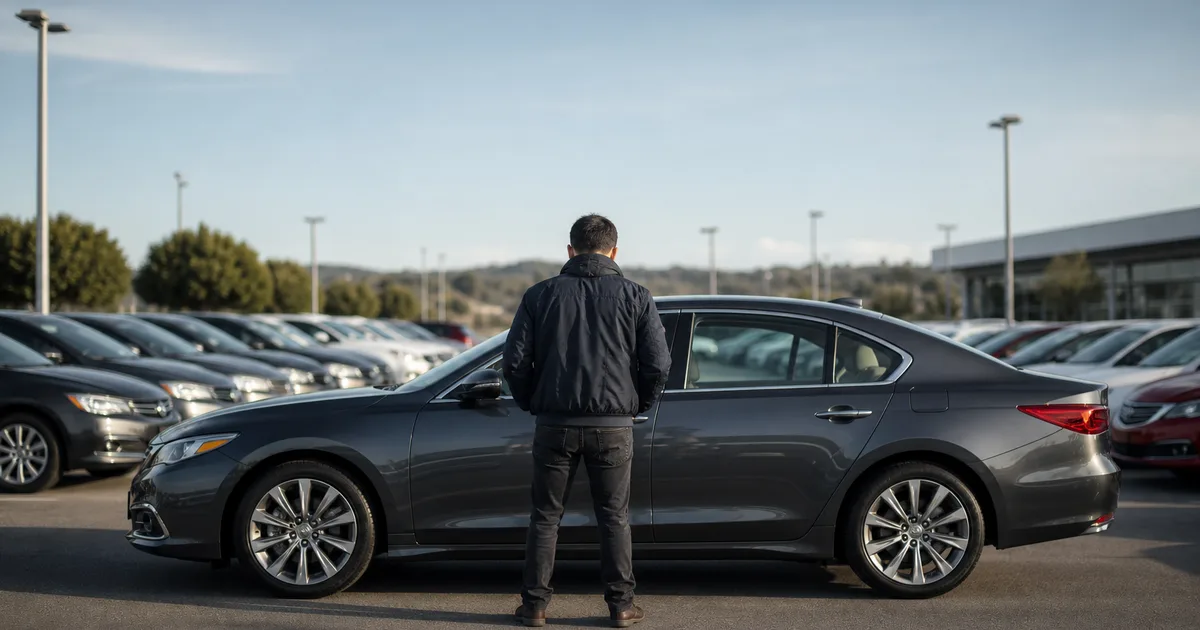
You landed the job. You have an offer letter, a start date, and a lease on an apartment. Then you look at a map and realize the commute is not walkable, the bus runs twice an hour, and your coworkers are casually asking which highway you take to the office. You need a car — and you have zero US credit history.
This is the exact situation thousands of F-1, OPT, STEM OPT, and H-1B workers face every year. The gap between "I need a car" and "I can actually get financing approved" can feel enormous when you have never held a US credit card, never paid a US bill, and have nothing in the Equifax or TransUnion system except a few months of apartment rent. The good news: the gap is bridgeable. The bad news: the path is narrower than it is for US-born applicants, and the wrong moves waste weeks of your time.
This guide tells you exactly which route — buying or leasing — is actually available to you given your visa situation, how to approach lenders, what documentation you need, and how to avoid the common traps that send international workers in circles.
Why Your Credit Situation Is Different
Most US adults have been building a FICO score since their first credit card in college. When you arrive from abroad, you bring none of that history with you — even if you had an excellent credit score in your home country. The US credit bureaus (Experian, Equifax, TransUnion) have no foreign data-sharing agreements that would carry over your existing score. You start from a blank file, which FICO treats almost the same as a bad score for auto lending purposes.
There are two structural challenges layered on top:
Visa uncertainty risk. A lender writing a 60-month auto loan wants confidence you will still be in the US to make payments through month 60. If you are on a 12-month OPT window with no STEM extension in sight, or your H-1B petition has not been filed yet, the lender's underwriting model treats that as elevated early-payoff risk at best and flight risk at worst.
Thin file vs. bad file. If you have lived in the US for 6+ months and opened a secured credit card — even one — you have the beginning of a real credit history. A thin file is easier to work around than no file at all. If you have not started building credit, do that immediately even if you are not buying a car yet. The guide on building US credit history as an international covers exactly which cards are accessible on F-1 and H-1B with no prior history.
Buying vs. Leasing — The Real Approval Landscape
The intuitive assumption is that leasing is "easier" because monthly payments are lower and the commitment feels shorter. In practice, for thin-credit international applicants, the opposite is often true.
| Factor | Buying (Auto Loan) | Leasing |
|---|---|---|
| Credit history requirement | Flexible — credit unions often do manual underwriting | Strict — most captive arms require a FICO score on file |
| SSN requirement | Required by most lenders; ITIN accepted at some credit unions | Almost always requires SSN |
| Visa length sensitivity | Moderate — loan term vs. visa length reviewed | High — residual value risk makes lenders more conservative |
| Down payment | 20-30% down on thin credit opens most doors | Often 0-1 month's drive-off required but harder to get approved at all |
| Newcomer programs | Available at several manufacturer brands | Available at Toyota, Hyundai, Honda — restricted models |
| Mileage restrictions | None | 10,000-15,000 miles/year typical; overages cost you |
| End-of-term flexibility | Own the car; sell or keep | Return, buy-out, or re-lease — all require you to still be in the US |
When Buying Makes More Sense
Buying is the stronger path if you are on STEM OPT, H-1B, or any status with multi-year authorized stay. A used car purchased outright with savings avoids the financing question entirely if you have enough saved. If you need a loan, a credit union auto loan with a 20-25% down payment is the most reliably accessible option for a thin-credit international worker.
Ownership also removes the end-of-lease calculation problem. If your H-1B extension is delayed by an RFE, if you are mid-PERM, or if any immigration timeline gets compressed, you are not stuck negotiating an early lease termination. You own the asset — you can sell it, lend it, or leave it with a friend if you need to travel for visa stamping.
When Leasing Can Work
Leasing makes sense if you have strong employment documentation from a large, established employer and you are targeting a manufacturer that runs a formal newcomer or recent-graduate program. These programs exist specifically because manufacturers know that new-to-credit customers are often newly employed people with strong income — not defaulters.
The catch is that these programs apply to specific new vehicles, specific trim levels, and usually require you to visit a dealer enrolled in the program. They also tend to have short approval windows (you must take delivery within 30-60 days of program approval). Still, if you are on H-1B with a 3-year validity and you want a new Camry or Civic, these programs are worth exploring.
The Lender Landscape — Who Will Actually Say Yes
Credit Unions (Best Option for Most Thin-Credit Applicants)
Credit unions are the most consistently accessible financing source for international workers with thin or no credit history. Unlike banks, credit unions are member-owned institutions that can exercise discretion in underwriting — they can say "this applicant has no FICO score but they have a $90,000 salary, a valid H-1B, and $15,000 in a checking account" and approve the loan manually.
Universities with large international student populations often have affiliated credit unions with explicit newcomer programs. Digital Credit Union (DCU), State Employees' Credit Union (SECU), and Pentagon Federal Credit Union (PenFed) have all approved thin-credit auto loans in the past, though terms and eligibility change — call the loan officer directly and ask about their new-to-credit program before applying, so your credit is not pulled unnecessarily.
Joining a credit union typically requires membership eligibility — often tied to employer, geography, or affiliation with an organization. Check if your university's alumni credit union accepts graduates; many do.
Manufacturer Newcomer and Recent-Graduate Programs
Several OEM captive finance arms run programs designed for recent immigrants or graduates:
- Toyota Financial Services (TFS) Newcomer Program — accepts applicants with limited or no US credit history, requires an employment offer letter or pay stubs, usually limited to new Toyota vehicles
- Hyundai Motor Finance (HMF) New-to-Credit Program — similar documentation requirements, new Hyundai/Genesis vehicles
- Honda Financial Services (HFS) — has run a recent-graduate program that sometimes overlaps with thin-credit applicants; verify current availability with your Honda dealer
These are not guaranteed approvals. They are programs that bypass the standard FICO floor, but the lender still evaluates your employment authorization, income, and visa duration. Bring every document listed in the preparation section below.
Traditional Banks
Chase, Bank of America, Wells Fargo, and similar large banks generally require an established credit score. If you have been in the US long enough to build even a 680+ FICO — which takes roughly 6 months of on-time secured card payments and a few months of reported history — large banks become accessible. If you are pre-FICO, your bank may still be worth a conversation if you have been a customer for 6+ months and maintain significant deposits; relationship banking sometimes unlocks manual review.
Dealership Financing (Use With Caution)
Many dealerships have relationships with subprime lenders who specialize in no-credit applicants. These lenders will approve you, but at interest rates that can reach 18-29% APR. For a $25,000 vehicle on a 60-month term, that interest cost can equal another $10,000-$15,000 over the life of the loan. Unless you have no other option, get pre-approved at a credit union or manufacturer program before walking into a dealer, so you have a benchmark rate to compare.
What Documentation You Need to Bring
International workers routinely get declined not because of credit — but because they showed up at a dealership without the right paperwork and the dealer's finance manager did not know how to process their application. Bring everything in one organized folder:
- Passport (valid, with US entry stamps)
- Visa document — F-1 I-20, OPT EAD card, H-1B approval notice (I-797), or equivalent
- I-94 arrival/departure record (download the current one from the CBP website — do not rely on a paper copy from years ago)
- Social Security card or proof of SSN — if you do not yet have one, bring your receipt of SSN application and ask whether the lender can process with ITIN
- Employment offer letter or most recent 2-3 pay stubs
- US bank account statements (3 months minimum, showing consistent balance)
- Proof of residence — utility bill or lease agreement with your US address
- International driving license and your home-country record if available (not required but sometimes helps)
For OPT and STEM OPT holders specifically, bring your DSO's letter confirming your STEM extension authorization or your current OPT approval — and be prepared to explain the 90-day unemployment rule and your current employment dates to a loan officer who may not be familiar with OPT timelines. The guide on SSN and driver's license setup for international students is worth reading before you do this.
Step-by-Step Approval Process
Follow this sequence to maximize your approval odds and avoid wasted credit pulls:
- Build any credit you can first. Even 60 days of a secured credit card on your file is better than zero. See the credit building guide referenced above.
- Determine your price range. A $15,000-$22,000 used car is the practical sweet spot for a first car purchase — affordable enough that a 20-25% down payment is manageable, depreciation is already absorbed by the first owner, and the loan-to-value math works in your favor.
- Get pre-qualified (soft pull) at your target credit union. Pre-qualification is not a hard inquiry; it gives you a rate estimate. Tell the loan officer you are on an H-1B (or OPT), have been in the US for X months, and have no existing US credit history. Ask specifically about their process for thin-file or newcomer applicants.
- Apply for formal pre-approval once you have identified the right lender. This is a hard inquiry. Time multiple applications within a 14-day window — FICO counts all auto loan inquiries within 14-45 days as a single inquiry.
- Bring the pre-approval letter to the dealer. This removes the dealer's leverage on financing. Your rate is locked; the dealer sells you a car.
- At the dealer, provide your full documentation packet. Expect the finance manager to call the lender to confirm employment authorization. Have your HR department or immigration attorney's phone number available if needed.
- Review the contract carefully. Confirm the APR, loan term, monthly payment, and prepayment penalty terms before signing. Auto loans in the US typically have no prepayment penalty, but confirm.
Insurance Before Keys
You cannot drive off the lot without insurance. Getting auto insurance as a new US driver with a foreign license history and no US insurance history can itself be challenging — and expensive. Some insurers will factor in your years of clean driving abroad if you bring documentation from your home insurer. Progressive, State Farm, and GEICO have historically been workable for new-to-US drivers. Ask your car insurer whether your years of foreign driving experience count.
If you are relocating for a job, your employer may have negotiated group rates or partnerships with insurers — ask HR before you call around. Relocation packages sometimes include moving and transportation assistance that can offset first-year auto costs; negotiating that before you start is worth the ask, as covered in the relocation negotiation guide for F-1 students.
Leasing End-of-Term Risks for Visa Holders
If you do go the lease route, run the math on what happens at lease end under a few visa scenarios.
A standard car lease runs 36-39 months. If you sign a lease in month 1 of your STEM OPT and your STEM OPT ends in month 24 without an H-1B approval (say, the H-1B lottery did not select you), you face lease payments for 12-15 more months on a car you may not be able to drive in the US. Early lease termination typically costs the remaining monthly payments plus a termination fee — potentially $8,000-$15,000 depending on the vehicle and how many payments remain.
This is not a reason to never lease. It is a reason to align the lease term with your most conservative visa timeline, not your optimistic one. If you are entering a 36-month lease and your visa has 28 months of authorized stay remaining with a plausible extension path, that is a known risk to model explicitly, not to ignore.
Common Mistakes
- Applying at the dealer without pre-approval. The dealer's finance department will route your application to whatever lender accepts it at whatever rate — often not the best option available to you. Pre-approve first.
- Applying at multiple lenders over several months. Multiple hard inquiries spread out over time hurt your score. Cluster all auto loan applications within a 14-day window so FICO treats them as rate-shopping, not multiple new debts.
- Using an expired or soon-to-expire I-94. Your I-94 is what proves authorized stay to the lender. If it shows an expiration in the past (which happens when people extend their status and the I-94 is not updated), the lender will decline even if you are fully authorized. Always download your current I-94 from the CBP website immediately before applying.
- Choosing a 72-month loan to lower the monthly payment. Long loan terms leave you upside-down on the car (owing more than the car is worth) for 3+ years. If you need to sell the car quickly for visa or relocation reasons, you may be stuck covering the difference out of pocket.
- Signing a lease without reading the mileage cap. Standard lease mileage caps are 10,000-12,000 miles per year. If your commute is 25 miles each way, you will almost certainly exceed the cap and pay $0.15-$0.30 per excess mile at return.
- Not shopping insurance before the loan closes. In most states, you must show proof of insurance before you can take delivery. If you are unaware of the process and arrive at delivery day without insurance, the deal stalls.
Frequently Asked Questions
Can I get a car loan in the US with no credit history if I am on F-1 or OPT?
Yes. Several credit unions and manufacturer-captive lenders approve thin-credit or no-credit applicants when you show proof of employment authorization, a valid visa, a US bank account with adequate savings, and pay stubs or an offer letter. A larger down payment (20-30%) meaningfully improves approval odds and terms. Building a thin credit file first — even one secured card and 3-6 months of on-time payments — further increases your options.
Is leasing or buying better for an H-1B or OPT holder with no credit history?
Leasing is often harder to get approved for on thin credit because captive finance arms run strict FICO minimums and typically require a Social Security Number on file. Buying through a credit union or a manufacturer newcomer program tends to be more accessible. That said, if your H-1B is approved and your employer is established, some manufacturer programs — Toyota Financial, Hyundai Motor Finance, Honda Financial — will lease to newcomers if you meet their specific documentation requirements.
Do I need a Social Security Number to finance a car in the US?
Most major lenders require an SSN for a credit check. If you do not yet have one, an ITIN can sometimes substitute, though far fewer lenders accept it. Your strongest path before you have an SSN is a credit union that has a newcomer or international student program — some run manual underwriting based on income and residency documents rather than a FICO score.
How does visa length affect car loan approval for international workers?
Lenders care about whether your authorized stay in the US extends beyond the loan repayment period — or at least long enough that repayment risk is manageable. A 3-year auto loan on a visa with 2 years remaining is a yellow flag. Showing an H-1B approval with a 3-year validity, combined with a letter of employment, helps. STEM OPT holders who can demonstrate a 24-month extension authorization are in a better position than someone on a 12-month standard OPT window.
What down payment should I expect to need as an international worker buying a car?
Plan for 20-30% down if you have no US credit history. This reduces lender risk and often unlocks approval at lenders who would otherwise decline. On a $28,000 car, that means $5,600-$8,400 upfront. Some newcomer programs from manufacturers require as little as 10% down if you have strong employment documentation, but those programs are selective about which vehicles and trim levels qualify.
Getting your first US car as an international worker is not as smooth as it is for someone with five years of US credit history — but it is absolutely doable if you approach it methodically. Pre-qualify at a credit union, bring complete documentation, align the loan term with your realistic visa timeline, and resist the temptation to lease without understanding end-of-term risk.
The financial foundations all connect: your car loan, your apartment, your first US credit card, your tax filing status — each one builds on the others. If you are still figuring out the order of operations for setting up your US financial life, F1Jobs works with international workers at every visa stage and can point you toward the next step.
Frequently asked questions
Can I get a car loan in the US with no credit history if I am on F-1 or OPT?
Yes. Several credit unions and manufacturer-captive lenders approve thin-credit or no-credit applicants when you show proof of employment authorization, a valid visa, a US bank account with adequate savings, and pay stubs or an offer letter. A larger down payment (20-30%) meaningfully improves approval odds and terms. Building a thin credit file first — even one secured card and 3-6 months of on-time payments — further increases your options.
Is leasing or buying better for an H-1B or OPT holder with no credit history?
Leasing is often harder to get approved for on thin credit because captive finance arms run strict FICO minimums and typically require a Social Security Number on file. Buying through a credit union or a manufacturer newcomer program tends to be more accessible. That said, if your H-1B is approved and your employer is established, some manufacturer programs (Toyota Financial, Hyundai Motor Finance, Honda Financial) will lease to newcomers if you meet their specific documentation requirements.
Do I need a Social Security Number to finance a car in the US?
Most major lenders require an SSN for a credit check. If you do not yet have one, an ITIN can sometimes substitute, though far fewer lenders accept it. Your strongest path before you have an SSN is a credit union that has a newcomer or international student program — some run manual underwriting based on income and residency documents rather than a FICO score.
How does visa length affect car loan approval for international workers?
Lenders care about whether your authorized stay in the US extends beyond the loan repayment period — or at least long enough that repayment risk is manageable. A 3-year auto loan on a visa with 2 years remaining is a yellow flag. Showing an H-1B approval with a 3-year validity, combined with a letter of employment, helps. STEM OPT holders who can demonstrate a 24-month extension authorization are in a better position than someone on a 12-month standard OPT window.
What down payment should I expect to need as an international worker buying a car?
Plan for 20-30% down if you have no US credit history. This reduces lender risk and often unlocks approval at lenders who would otherwise decline. On a $28,000 car that means $5,600-$8,400 upfront. Some newcomer programs from manufacturers require as little as 10% down if you have strong employment documentation, but those programs are selective about which vehicles and trim levels qualify.