Fashion Design Visa Sponsorship: O-1, H-1B, and the Creative Path 2026
Fashion design can be a legitimate path to US work authorization — if you know whether O-1 or H-1B is the right visa and how to position your portfolio.
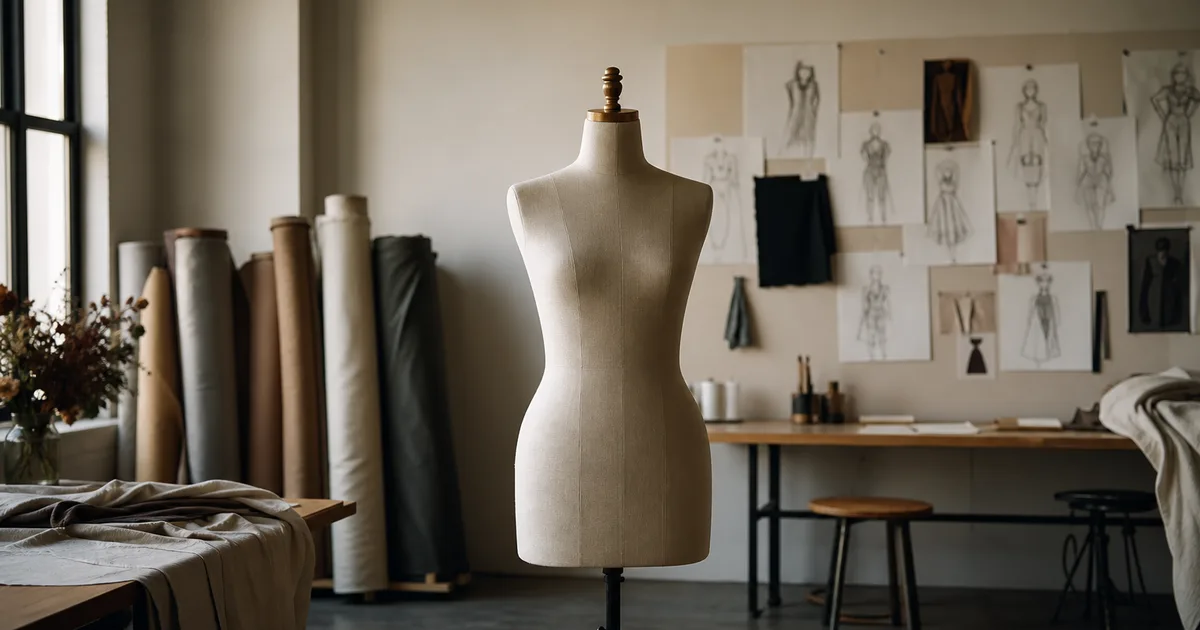
You spent years building your portfolio, your aesthetic, and your technical skills. Now you're in the US — on a student visa or OPT — and you're wondering whether American fashion companies will actually sponsor you to stay and work. The short answer is yes, some will. But the path is narrower than in software engineering, and the right strategy depends entirely on which visa category fits your situation.
Fashion design sits at an interesting intersection in US immigration law. It's unambiguously a creative profession, which makes the O-1 "extraordinary ability" visa a natural fit for accomplished designers. But it's also increasingly a technical discipline — product development, technical design, textile engineering — which can satisfy the H-1B specialty occupation requirement at the right companies. Understanding which lane you're in, and how to position yourself for it, is the whole game.
How fashion design fits into US visa categories
Before diving into tactics, it helps to understand exactly where fashion design lands under the major work visa categories.
| Visa | Who it's for | Key requirement | Cap | Typical timeline |
|---|---|---|---|---|
| H-1B | Specialty occupation employees | Bachelor's degree in a specific field required for the role | 85,000/year (lottery) | 3-6 months after lottery selection |
| O-1B | Individuals with extraordinary achievement in arts | Documented national or international recognition | No cap | 3-6 months |
| O-1A | Individuals with extraordinary ability in sciences, education, business, or athletics | Documented extraordinary ability | No cap | 3-6 months |
| TN (Canada/Mexico) | NAFTA/USMCA professionals | Listed occupations — fashion designer is not on the list | No cap | Same-day at port of entry |
| L-1 | Intracompany transferees | Must work for a multinational employer overseas first | No cap | 3-5 months |
| EB-1A | Extraordinary ability (green card) | Sustained national or international acclaim | Priority category | Varies by country of birth |
| EB-2 NIW | National Interest Waiver (green card) | Advanced degree + national interest argument | Priority category | Varies by country of birth |
For most fashion designers on F-1/OPT, the realistic choices come down to H-1B (if the role qualifies as specialty occupation) or O-1B (if you have documented achievement). The TN visa does not include fashion designer as a covered profession. The L-1 path requires working for a foreign affiliate of a US company first, which is possible at global fashion houses but requires planning years in advance.
H-1B for fashion designers: the specialty occupation problem
The H-1B visa requires that the role be a "specialty occupation" — one that normally requires at least a bachelor's degree in a specific field. This is where fashion design runs into friction.
USCIS has historically scrutinized H-1B petitions for fashion-related roles because the agency has questioned whether a specific degree (as opposed to general creativity or experience) is truly required to do the job. This doesn't mean H-1B is unavailable — it means the petition framing matters enormously.
Roles that tend to qualify
- Technical designer — pattern grading, fit specifications, factory communication; clearly requires specialized technical training
- Product development manager — technical specs, BOM (bill of materials) management, vendor negotiation; ties to manufacturing science
- Textile/materials scientist — fiber technology, performance fabrics, sustainability certifications; often degree-gated by nature
- CAD/technical fashion designer — software-driven pattern creation (CLO 3D, Lectra, Gerber); technical skill set maps cleanly to degree requirements
- Apparel engineer — structural design, wearable technology integration; engineering framing helps
Roles that face more pushback
- Creative designer / designer with broad, undefined scope
- Stylist (editorial or personal styling rarely qualifies)
- Fashion consultant (ambiguous scope)
- Art director without technical design components in a fashion context
The safest H-1B petition for a fashion role documents that (a) the company's job postings consistently require a degree in Fashion Design, Apparel Design, Textile Science, or a closely related field, (b) similarly situated employees all hold such degrees, and (c) the actual duties are too specialized to be performed without that educational foundation. If your target employer's job posting says "degree or equivalent experience preferred," the petition is on weaker ground.
The H-1B lottery reality
Even if your role qualifies, H-1B is subject to an annual lottery capped at 85,000 visas (20,000 of which are reserved for US master's degree holders). With demand historically exceeding cap, selection is not guaranteed in any given year. This makes planning around H-1B alone risky for fashion designers, because if you don't get selected, you need a backup plan — more on that below.
For a broader picture of how the lottery works and strategies around it, the H-1B backup plans guide covers the main alternatives.
O-1B: the pathway built for creative professionals
The O-1B visa is specifically designed for people who have "extraordinary achievement in the arts." USCIS defines "arts" broadly — it includes fashion design. This is the visa category that supports editorial photographers, stylists, illustrators, animators, and designers of all kinds when they have documented professional recognition.
The O-1 does not have an annual cap and is not subject to a lottery. You can file any time of year, and approval is possible within 15 business days with premium processing. The standard period is three years with one-year extensions available indefinitely.
For a thorough breakdown of the O-1 for creatives, the O-1 visa guide for artists and creatives covers the evidentiary framework in detail.
What qualifies as extraordinary ability in fashion
USCIS requires you to meet at least three of the following criteria (the full list is in 8 CFR § 214.2(o)):
- Receipt of prizes or awards — CFDA Awards, LVMH Prize, Hyères Festival recognition, NYFW emerging designer awards, FIT Critic's Choice, regional fashion competition wins
- Published material about you — features, profiles, or reviews of your work in WWD, Vogue, Harper's Bazaar, Business of Fashion, Dazed, i-D, or comparable trade/consumer fashion press (not just mentions in roundups)
- Judging the work of others — jury member for design competitions, mentor at fashion incubators, faculty critic roles at PARSONS, FIT, or equivalent programs
- Original contributions of major significance — a signature technique, a widely imitated construction method, a significant sustainability innovation, a viral capsule collection documented in press
- Critical or essential role at a distinguished organization — head designer at a label with documented prestige, lead designer credit on a runway collection at a recognized fashion week
- High salary compared to peers — documented compensation significantly above the median for fashion designers at your career stage (BLS wage data is the reference)
You don't need all six. Three is the threshold. Many fashion designers who have had even modest editorial careers have enough for three criteria without realizing it.
The petition agent requirement for O-1
O-1 requires either a US employer/petitioner or an agent. Unlike H-1B, you can work as a freelancer or run your own work through an O-1 agent petitioner. This makes O-1 especially useful for designers who work across multiple clients — a fashion agent who represents creative talent can sponsor the visa and you can work with multiple fashion houses and brands under that umbrella.
Building your OPT runway strategically
If you're currently on F-1, you likely have OPT available as your first foothold. Use that time strategically.
OPT basics for fashion designers
- 12 months of post-completion OPT after graduating from an accredited US program
- 24-month STEM OPT extension if your degree program is on the STEM Designated Degree Program List — Fashion Merchandising is generally not listed, but programs in Textile Science, Materials Engineering, or Product Development Engineering often are; check your institution's listed CIP code
- 90-day unemployment limit across post-completion OPT — you have a maximum of 90 cumulative days of unemployment, so gaps between jobs need to be managed carefully
- Your OPT employer must be E-Verified for STEM OPT
Using OPT time to build O-1 evidence
If you graduate knowing H-1B is uncertain and O-1 is your likely path, use your OPT period to deliberately accumulate O-1 evidence:
- Prioritize roles at companies or studios with recognized names — a title at a CFDA member brand carries more evidentiary weight than the same title at an unknown startup
- Document every press mention of your work — save links, PDFs, screenshots with publication metadata
- Volunteer to judge student competitions, industry awards, or portfolio reviews — create a paper trail of invitations and participation
- Submit work to recognized competitions even if you don't win; finalist status in a notable competition is usable evidence
- Track your salary carefully — if you're being paid above the BLS median for fashion designers (which in major metros is quite achievable), that supports the high-compensation criterion
For more on how to leverage OPT effectively, see the OPT vs STEM OPT vs CPT overview.
Which companies actually sponsor fashion designers
Large corporations with structured HR and immigration programs are the most reliable sponsors. The following types of employers have consistent H-1B filing histories in apparel and fashion:
- Major sportswear and athletic brands with large in-house design teams
- Multi-brand apparel holding companies with US headquarters
- Department store chains with private-label design departments
- Mass market retailers with vertically integrated design functions
- Luxury fashion groups with US-based subsidiary operations
Smaller independent labels, boutique design studios, and most startups in the fashion tech space rarely sponsor because the legal fees and administrative burden are prohibitive for companies without dedicated HR infrastructure.
To verify whether a specific company has sponsored H-1B petitions, search the Department of Labor's Foreign Labor Certification Data Center. It shows LCA filings by employer, job title, and wage level. An employer with zero LCA filings in the past three years is unlikely to sponsor your petition.
The how to check if a company sponsors H-1B guide walks through this database lookup step by step.
The green card path for fashion designers
If you land an H-1B or O-1, the longer-term question is how to get a green card. For most fashion professionals, the options are:
EB-1A (Extraordinary Ability): The same evidence framework as O-1A, but for a permanent residence petition you self-file. If your O-1B is strong, you may be able to self-petition for EB-1A after a few more years of accumulated achievement. EB-1A has no requirement for a job offer or PERM labor certification.
EB-2 NIW (National Interest Waiver): You can self-petition if you can argue that your work is in the national interest of the United States. For fashion, this is harder to argue than for scientists or engineers — but designers working in sustainable fashion, inclusive sizing technology, or US domestic manufacturing revival have made credible NIW arguments.
EB-3 via PERM: The traditional employer-sponsored path. Your employer files a PERM labor certification with the Department of Labor, recruits to show no qualified US workers are available, then files an I-140. This is the most common path for H-1B holders but requires the employer to commit to sponsoring permanently and takes years in the current priority date backlog, especially for applicants from India or China. For context, the EB-1A vs EB-2 NIW comparison covers the self-petition green card strategies in detail.
The graphic design and interior design comparison
Fashion designers sometimes compare notes with colleagues in adjacent creative fields. The graphic designer visa sponsorship guide and interior design visa sponsorship guide explore how those fields face similar specialty-occupation challenges and similarly benefit from the O-1 pathway.
The common thread across creative professions: technical roles within each discipline (graphic production designer vs. brand strategist, technical interior design vs. decorating) tend to do better on H-1B, while accomplished creatives with documented recognition do better on O-1.
Step-by-step action plan
Here is a practical sequence for a fashion designer on OPT aiming for long-term US work authorization:
-
Identify your degree's STEM eligibility. Check whether your CIP code appears on the STEM Designated Degree Program List. If yes, file STEM OPT extension before your standard OPT expires — this gives you up to three years of runway.
-
Audit your O-1 evidence now. List every press mention, award, jury role, and notable employer credit you have. Send the list to an immigration attorney for a preliminary O-1 assessment — many offer a free or low-cost initial consult.
-
Target employers with H-1B track records. Use the DOL database to verify filings. Prioritize roles at companies where the job title and duties are clearly degree-gated.
-
If pursuing H-1B, enter the lottery in March. The lottery opens in early March and closes within days. Your employer must be ready to file in the cap window. Premium processing is available after selection and is worth the cost.
-
If you don't get selected in the H-1B lottery, pivot to O-1B. File as soon as you have three provable criteria. You can file at any time — O-1 has no lottery, no annual deadline.
-
Build toward green card from day one. If your employer sponsors via PERM, confirm the timeline with your immigration attorney early. If you're self-petitioning EB-1A or EB-2 NIW, document every achievement methodically from the start of your US career.
Common mistakes
Assuming fashion roles can't qualify for H-1B. They can — but the petition framing has to be specific. Vague "designer" titles with no documented degree requirement will face RFEs or denials. Technical design and product development titles with documented degree requirements are stronger.
Applying to companies that have never sponsored. Checking LCA history takes 15 minutes and can save you months of misaligned conversations. A company that has never filed an LCA is almost certainly not going to start for you.
Waiting too long to assess O-1 eligibility. Many designers with genuine recognition assume O-1 is for "celebrities." The evidentiary standard is lower than most people think. A preliminary attorney assessment early in your OPT year — not in month 11 — gives you time to file and secure status before OPT expires.
Not documenting press and recognition in real time. Press articles get taken down, websites change, publications fold. Save PDFs with metadata at the time of publication. Build a running evidence log from your first day working in the US.
Misunderstanding the 90-day unemployment rule. Some designers assume they have 90 days per gap. The rule is 90 cumulative days across the entire post-completion OPT period. Two 45-day gaps is the maximum; three 30-day gaps is already over the limit.
Confusing O-1B with O-1A. Fashion design falls under O-1B (arts). The evidentiary criteria are similar in structure but there are differences in how "distinguished" and "critical role" are defined. Your attorney should be using the O-1B regulatory framework, not O-1A, in the petition.
Picking a small company because the role sounds good. A dream title at a boutique label that has never sponsored is effectively unavailable to you unless that label is willing to build an immigration program. A solid technical design role at a large corporation that sponsors regularly is a better visa bet.
If you want help identifying fashion companies that sponsor, assessing whether your portfolio supports an O-1 petition, or thinking through OPT timing, F1Jobs works with creative professionals navigating exactly this path.
Frequently asked questions
Can a fashion designer get an H-1B visa?
Yes, but it requires careful positioning. USCIS evaluates whether the role meets the "specialty occupation" standard — meaning it typically requires at least a bachelor's degree in a specific field. Fashion design roles at larger companies are increasingly approved when the employer can document that the position requires a fashion design or related degree rather than generic creative skills. Roles closer to technical design, product development, or textile engineering tend to fare better than ambiguous creative director titles.
Is the O-1 visa better for fashion designers than H-1B?
For many fashion designers, yes. The O-1A or O-1B visa rewards documented extraordinary ability rather than requiring the employer to win a lottery. If you have verifiable achievements — major label credits, published editorial work, awards, jury roles, or a significant social following connected to your professional work — the O-1 can be faster and more reliable than waiting on the H-1B lottery. Unlike H-1B, O-1 has no annual cap.
What counts as evidence of extraordinary ability for a fashion designer's O-1 application?
USCIS looks for at least three of the statutory criteria. For fashion, the most commonly used are receipt of prizes or awards, published material about you in major trade publications such as WWD or Vogue, judging the work of others (jury roles, contest judging, mentoring panels), critical role at a distinguished organization (a well-known label or fashion house), high salary relative to peers, and original contributions of major significance. A strong portfolio alone is not sufficient — you need documented external recognition.
How do the OPT and STEM OPT periods work for fashion designers, and what is the 90-day rule?
After graduating from an accredited US program, F-1 students get 12 months of Optional Practical Training during which you can work for a sponsoring employer. If your degree is in a STEM-designated field — some product development and textile science programs qualify — you may be eligible for a 24-month STEM OPT extension, giving you up to three years total. During all OPT periods, USCIS allows a maximum of 90 days of unemployment across the entire post-completion OPT, so staying continuously employed or moving quickly between roles matters.
Which types of fashion companies actually sponsor H-1B visas?
Large publicly traded apparel and retail corporations — including major sportswear brands, department store chains with in-house design teams, and multi-brand conglomerates — file H-1B petitions regularly. Luxury houses with US subsidiaries also sponsor. Small independent studios and most startup labels rarely have the infrastructure or legal budget to sponsor. Checking USCIS public H-1B disclosure data through the Department of Labor's Foreign Labor Certification Data Center is the most reliable way to confirm a specific company's sponsorship history.
Frequently asked questions
Can a fashion designer get an H-1B visa?
Yes, but it requires careful positioning. USCIS evaluates whether the role meets the "specialty occupation" standard — meaning it typically requires at least a bachelor's degree in a specific field. Fashion design roles at larger companies are increasingly approved when the employer can document that the position requires a fashion design or related degree rather than generic creative skills. Roles closer to technical design, product development, or textile engineering tend to fare better than ambiguous creative director titles.
Is the O-1 visa better for fashion designers than H-1B?
For many fashion designers, yes. The O-1A or O-1B visa rewards documented extraordinary ability rather than requiring the employer to win a lottery. If you have verifiable achievements — major label credits, published editorial work, awards, jury roles, or a significant social following connected to your professional work — the O-1 can be faster and more reliable than waiting on the H-1B lottery. Unlike H-1B, O-1 has no annual cap.
What counts as evidence of extraordinary ability for a fashion designer's O-1 application?
USCIS looks for at least three of the statutory criteria. For fashion, the most commonly used are receipt of prizes or awards, published material about you in major trade publications such as WWD or Vogue, judging the work of others (jury roles, contest judging, mentoring panels), critical role at a distinguished organization (a well-known label or fashion house), high salary relative to peers, and original contributions of major significance. A strong portfolio alone is not sufficient — you need documented external recognition.
How do the OPT and STEM OPT periods work for fashion designers, and what is the 90-day rule?
After graduating from an accredited US program, F-1 students get 12 months of Optional Practical Training during which you can work for a sponsoring employer. If your degree is in a STEM-designated field — some product development and textile science programs qualify — you may be eligible for a 24-month STEM OPT extension, giving you up to three years total. During all OPT periods, USCIS allows a maximum of 90 days of unemployment across the entire post-completion OPT, so staying continuously employed or moving quickly between roles matters.
Which types of fashion companies actually sponsor H-1B visas?
Large publicly traded apparel and retail corporations — including major sportswear brands, department store chains with in-house design teams, and multi-brand conglomerates — file H-1B petitions regularly. Luxury houses with US subsidiaries also sponsor. Small independent studios and most startup labels rarely have the infrastructure or legal budget to sponsor. Checking USCIS public H-1B disclosure data through the Department of Labor's Foreign Labor Certification Data Center is the most reliable way to confirm a specific company's sponsorship history.