H-1B Stamping at Ciudad Juárez and Matamoros: Third-Country Mexico Consulate Strategy for 2026
Mexico's US consulates in Ciudad Juárez and Matamoros offer H-1B stamping appointments far faster than India or China — here's the complete 2026 playbook.
Part of our guide to H-1B visa stamping.
Updated for 2026 — check this before you book anything. The State Department now directs nonimmigrant visa applicants to apply in their country of nationality or legal residence, so third-country stamping is no longer generally available as a way around a backlog. H-1B applicants are also reported to no longer qualify for the dropbox interview waiver, meaning an in-person interview is required including for renewals. Appointment availability has tightened sharply in several countries. Parts of this article were written before those changes. Confirm the current rules on the official booking portal and with an immigration attorney before making travel plans — see why third-country H-1B stamping is no longer an option.
Your H-1B is approved, the I-797 is in hand, and you need a visa stamp to re-enter the US — or you're outside the US and need to stamp before starting your job. The problem is that appointment wait times at US consulates in India, China, or Nigeria stretch to many months. Meanwhile, Mexico's US consulates in Ciudad Juárez and Matamoros are sitting at a fraction of that wait. If you have the flexibility to make a quick international trip, the Mexico third-country stamping strategy could save you weeks or even months.
This is not a loophole. Attending a consular interview at a third-country post is explicitly permitted — you do not need to stamp in your home country. The legal framework under the Immigration and Nationality Act (INA) allows any US visa applicant to choose their consular post, and the State Department's scheduling system reflects that. What varies is appointment availability, the consulate's familiarity with your case type, and the downstream risk of 221(g) administrative processing if the officer flags your case for additional review.
Why Mexico for H-1B stamping
The US operates multiple consular posts in Mexico, but Ciudad Juárez and Matamoros are the two that attract the most third-country H-1B applicants. Each has different characteristics worth understanding before you book.
US Consulate General — Ciudad Juárez
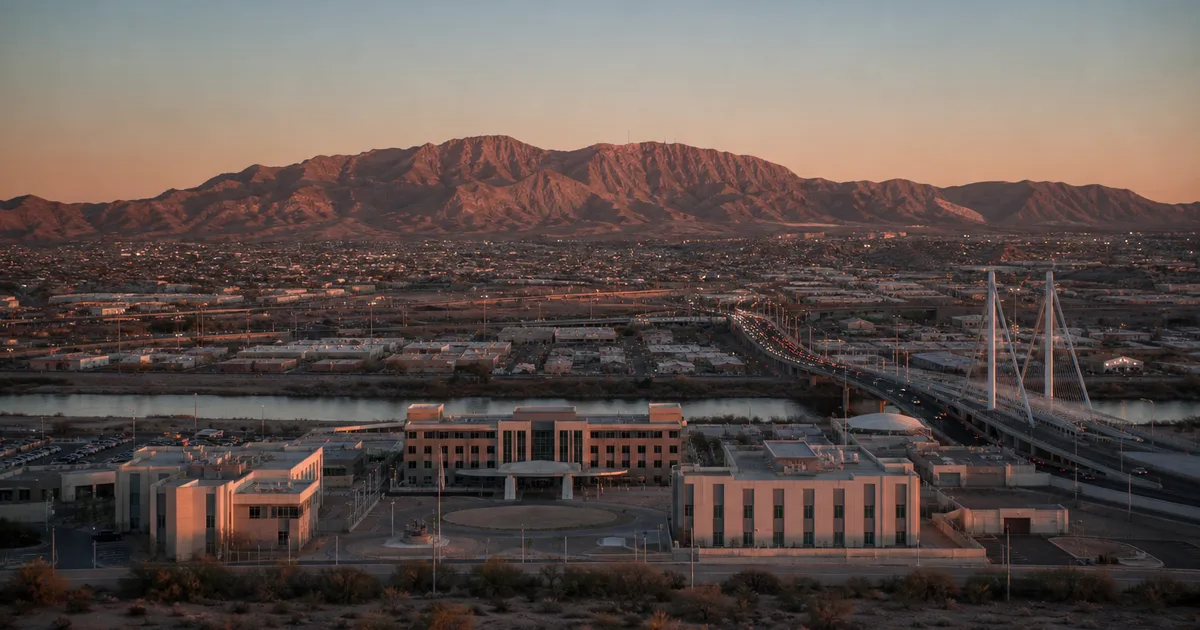
Ciudad Juárez (Chihuahua state, across the Rio Grande from El Paso, Texas) is the largest US consulate in Mexico by visa volume. It processes a large share of immigrant visas as well as nonimmigrant visas. The consulate has dedicated IV (immigrant visa) and NIV (nonimmigrant visa) windows and is experienced with complex employment-based cases.
For H-1B stamping purposes, Ciudad Juárez tends to have more appointment slots than smaller posts. The consulate is within walking or short taxi distance from multiple El Paso, Texas hotels, which makes logistics comparatively easy: fly into El Paso International Airport (ELP), stay on the US side, cross the border on the morning of your appointment, interview, and return the same day.
US Consulate — Matamoros
Matamoros (Tamaulipas state, across from Brownsville, Texas) is a much smaller post. It processes fewer visas than Ciudad Juárez and historically has had shorter appointment backlogs for H-1B applicants because its volume is low. The trade-off is limited slots — if the post fills its weekly NIV quota, you could see waits extend without warning. The closest US airport is Brownsville South Padre Island International Airport (BRO), or alternatively Harlingen Valley International Airport (HRL), about 30 minutes north.
Other Mexico posts
Mexico City, Guadalajara, Hermosillo, Monterrey, Merida, and Nogales all operate US consular sections that accept NIV (nonimmigrant visa) applications. For third-country H-1B stamping, Ciudad Juárez and Matamoros draw the most traffic specifically because of their border-town geography — you can be in and out of Mexico within a single day, minimizing hotel stays and travel risk.
H-1B stamping Mexico vs Canada: how they compare
Both Mexico and Canada serve as popular third-country stamping destinations, and the H-1B stamping Canada guide covering Calgary, Toronto, and Vancouver is worth reading alongside this one. Here is a direct comparison:
| Factor | Mexico (Juárez / Matamoros) | Canada (Calgary / Toronto / Vancouver) |
|---|---|---|
| Appointment availability (2026) | Generally better at Matamoros; Juárez moderate | Variable; Toronto and Vancouver often backlogged |
| Visa needed to enter the country | Required for Indian, some Asian nationals | Not required for most nationalities (eTA only) |
| Proximity to US airport hub | El Paso (Juárez) / Brownsville (Matamoros) | Major international airports |
| Day-trip feasibility | Yes, especially Juárez-El Paso corridor | Possible but longer travel day from US |
| Cost of trip | Lower overall if flying into El Paso | Higher for most US-based travelers |
| 221(g) risk | Similar to other posts for your nationality | Similar to other posts for your nationality |
| Language of consulate staff | English-primary for NIV applicants | English-primary |
| Consulate size / experience with H-1B | Juárez: high volume; Matamoros: lower volume | Calgary: medium; Toronto/Vancouver: high |
The Mexico strategy makes the most sense if you need an appointment soon and can obtain a Mexican visa without significant delay. For Indian nationals, obtaining a Mexican tourist visa adds roughly one to two weeks of processing time and a consulate fee, so factor that into your planning.
Who can use Mexico third-country stamping
There is no restriction on who can attend a US consulate in Mexico for H-1B stamping. You do not need to be a Mexican citizen or have Mexican residency. What you do need:
- A valid, approved H-1B petition (I-797 approval notice, unexpired)
- A completed DS-160 nonimmigrant visa application form, locked and submitted
- An appointment at the specific consulate you choose
- A valid passport (with at least six months of validity beyond the intended period of admission)
- A valid entry document for Mexico — either a Mexican visa (where required) or the FMT/FMM tourist permit for nationals who enter visa-free
- Supporting employment documentation (see document checklist below)
If you currently have an F-1 OPT or STEM OPT visa stamp that has expired, or if you are in your cap-gap period and need to depart the US, stamping in Mexico before re-entering as H-1B is a viable path. Review the H-1B cap-gap travel risks 2026 guide before departing the US on a cap-gap EAD — travel can be risky in that window.
Step-by-step process for Mexico H-1B stamping
Follow these steps in order. Do not book travel before completing steps 1 through 3.
-
Confirm your H-1B I-797 is valid and the petition is not being amended. If your employer is filing an H-1B amendment (new worksite or significant job change), wait until the amendment is approved before stamping. Traveling during a pending amendment is risky.
-
Check whether your nationality requires a Mexican visa. Indian nationals: yes, Mexican tourist visa required. Chinese nationals: check current Mexico RREE (Secretaría de Relaciones Exteriores) policy — requirements have changed in recent years. Many Latin American, European, and Southeast Asian nationals enter Mexico visa-free. Confirm at the official Mexican consulate site for your home country before proceeding.
-
Obtain a Mexican visa if required. Apply at the Mexican consulate nearest your current location. Processing times vary by location but can range from a few days to a couple of weeks. You will need proof of the US consulate appointment when applying, so you may need to book your US appointment first.
-
Complete and lock your DS-160. Go to ceac.state.gov. Select the consulate (Ciudad Juárez: "Mexico, Ciudad Juárez"; Matamoros: "Mexico, Matamoros"). Complete all fields accurately. The DS-160 barcode confirmation page is required at your interview.
-
Pay the MRV (Machine Readable Visa) fee. Currently $205 for H-1B (nonimmigrant worker) as of 2026. This is paid via the US Travel Docs (ustraveldocs.com) Mexico portal. Keep the receipt.
-
Schedule your appointment. Log into the US Travel Docs Mexico scheduling portal. Select the consulate. Pick a date and time. For Mexico, you will typically need to schedule both a biometrics (Offsite Facilitation Center, OFC) appointment and a visa interview appointment. In many Mexico locations, both happen on the same day or on consecutive days at the consulate itself.
-
Prepare your document package (see below).
-
Travel to Mexico. Cross the border or fly in. If using the Juárez-El Paso corridor, most applicants stay in El Paso and cross via the Paso del Norte or Ysleta international bridges. US Customs pre-clearance does not exist on the Mexico side; you will re-enter through US CBP when returning.
-
Attend the interview. Arrive 15-30 minutes early. Dress professionally. Be prepared to explain your role, employer, and wages clearly and concisely.
-
Passport collection. If approved, passports are typically returned via courier to an address you specify at booking — either at a pickup location in Mexico or mailed to the US. If you need the passport quickly, choose a pickup location and clarify timing at the interview.
Document checklist for the consulate interview
Bring originals plus one copy of each:
| Document | Notes |
|---|---|
| Valid passport | 6+ months validity beyond intended entry |
| Prior US visas (all available) | Show all prior H-1B, F-1 stamps |
| I-797 H-1B approval notice | All prior I-797s helpful; current one essential |
| I-797 for all prior H-1B petitions | Shows continuous status history |
| DS-160 confirmation barcode page | Printed, not just on phone |
| MRV fee receipt | From US Travel Docs portal |
| Appointment confirmation letter | Printed |
| Employment verification letter | On employer letterhead, signed, stating title, start date, salary, and H-1B validity |
| Labor Condition Application (LCA) | Public access file excerpt showing prevailing wage compliance |
| Paystubs (last 3 months) | If currently employed |
| Original offer letter | If new H-1B not yet started |
| Educational credentials | Degree certificates, transcripts |
| Resume | Current version |
| Social Security card | If obtained |
| I-94 departure record | Print from i94.cbp.dhs.gov if currently in the US |
For roles requiring licensure — such as engineering (PE license), medicine (USMLE steps), pharmacy (NAPLEX), or law (state bar) — bring your license certificate or exam score documentation. The officer may ask about specialty-occupation qualifications, especially under the H-1B Modernization Rule's revised specialty-occupation standards.
What to expect at the interview
H-1B stamping interviews at Ciudad Juárez and Matamoros are nonimmigrant visa interviews. The officer is verifying that your petition is legitimate, your employer is real, and the position genuinely qualifies as a specialty occupation.
Typical questions:
- What does your company do?
- What is your specific role and day-to-day job duties?
- What is your annual salary?
- Do you have a written offer or employment contract?
- What is your highest level of education?
- Have you worked in the US before?
Keep answers brief and accurate. Do not volunteer information beyond what is asked. If you have an H-1B RFE that was resolved before approval, you do not need to mention it unless asked.
Understanding 221(g) administrative processing
If the officer cannot approve your visa on the spot, they will issue a 221(g) notice. This means your case requires additional review — it is not a denial, but it is not an approval either. The consular 221(g) administrative processing guide covers this in detail, but the key points for Mexico stamping are:
- 221(g) can happen at any consulate, including Mexico. It is not a sign that something went wrong.
- Technology roles — software engineering, data science, machine learning — can trigger Technology Alert List (TAL) checks or Visas Mantis security advisory opinions. These are nationality-dependent but not exclusively so.
- If you receive a 221(g) in Mexico, you have to decide whether to wait in Mexico (logistically challenging), return home to your passport country while waiting, or return to the US if your status still permits it (usually not possible without a valid visa stamp).
- Most 221(g) holds are resolved within weeks. A small share extend to months.
For applicants from India, a useful companion read is the H-1B stamping India 2026 guide, which describes the administrative processing risk profile in more detail from a home-country perspective — the same profile applies to Indian nationals stamping anywhere, including Mexico.
Common mistakes
Traveling without confirming your Mexican visa requirement. Indian nationals who arrive at the Mexican border without a visa will be turned back. Verify requirements before booking anything.
Booking appointments before the DS-160 is locked. Your DS-160 barcode must match the consulate you booked. If you change your mind about the post after locking the DS-160, you need to fill out a new DS-160.
Departing the US during a pending H-1B amendment. If your employer filed an amendment (new worksite, significant job title change), and you depart before approval, you may be stuck abroad until the amendment is approved and you can stamp. Confirm with your employer's immigration attorney before leaving.
Assuming same-day passport return. Mexico consulates generally do not return passports at the interview. Passport courier processing takes days. Plan your trip accordingly — do not book a return flight the evening of your interview assuming you'll have your passport back.
Not accounting for cap-gap travel risk. If you are in a cap-gap period — holding OPT EAD while your H-1B petition is pending for October 1 — traveling outside the US is extremely risky. Cap-gap status does not serve as a re-entry document. Review the cap-gap travel rules carefully before any international trip.
Using an outdated DS-160 barcode. DS-160 sessions expire if inactive. Always confirm that your submission is locked and that the barcode confirmation is the current one. Officers will not process interviews with stale or mismatched DS-160 data.
Choosing Matamoros without checking availability. Matamoros has limited appointment inventory. If you book and then find the post is suddenly unavailable for weeks, you may be stuck with a non-refundable hotel and no interview date. Watch the scheduling portal closely and have a backup post in mind.
Visa validity and the difference between status and stamp
One thing that confuses many applicants: the H-1B visa stamp you receive does not determine your period of authorized stay in the US. Your I-94 (issued by CBP when you enter) controls your authorized stay. The visa stamp is just an entry document — a travel document that allows you to board a plane and present yourself at the port of entry.
Most H-1B visa stamps are issued for a period tied to the petition validity (up to three years) and may be multiple-entry. The stamp validity and the I-94 validity are separate. You can remain in the US on an expired stamp as long as your I-94 is valid and your petition is still in effect. You only need a valid stamp to re-enter after international travel.
This matters for the Mexico strategy: if your current H-1B stamp expired but your status is valid, you can legally remain in the US until you travel. Once you exit, you need a new stamp to return.
Frequently asked questions
Can Indian or Chinese nationals get their H-1B stamped in Mexico?
Yes. Third-country nationals — including Indian and Chinese citizens — can apply for H-1B visa stamping at any US consulate worldwide, including Ciudad Juárez and Matamoros in Mexico. You do not need Mexican citizenship or residency. The consulate accepts third-country applicants, though appointment availability and 221(g) administrative processing rates can vary.
How long do H-1B appointments take to get at Ciudad Juárez vs Matamoros?
Appointment wait times fluctuate and you should verify on the US State Department's appointment system when you plan to book. Historically, both posts have offered shorter waits than US consulates in India or China, with some applicants booking within a few weeks. Matamoros is a very small post and has limited appointment slots, so availability can be unpredictable compared to Ciudad Juárez.
What is the risk of 221(g) administrative processing when stamping in Mexico?
221(g) administrative processing can be issued at any US consulate, including those in Mexico, and is not unique to India or China stamping. However, if a 221(g) hold is issued in Mexico, you may be stuck waiting there or need to return home — which is logistically more complex than a hold issued in your home country. Technology-heavy roles and certain nationalities carry a higher probability of administrative processing regardless of where you stamp.
Do I need a Mexican tourist visa to attend my H-1B interview in Ciudad Juárez or Matamoros?
Most nationalities that require a visa to enter Mexico will need to obtain a Mexican tourist visa before traveling to the consulate appointment. Indian nationals, for example, generally require a Mexican visa. This adds planning time and cost to the Mexico stamping strategy. US citizens, Canadians, and many others can enter Mexico visa-free. Always confirm Mexico's current visa requirements for your citizenship before booking.
Is stamping in Mexico better or worse than stamping in Canada?
Both Mexico and Canada are popular third-country stamping destinations. Canada (Calgary, Toronto, Vancouver) tends to draw more applicants, which can make appointments harder to find at peak times. Mexico's consulates — especially Matamoros — sometimes have more availability. The trade-off is that some nationalities need a Mexican visa, and 221(g) rates at smaller posts can be unpredictable. For a detailed Canada comparison, the H-1B stamping Canada guide covers Calgary, Toronto, and Vancouver in full.
Navigating H-1B stamping logistics while managing a job search is genuinely complicated. If you want a second set of eyes on your timeline or need help thinking through the Mexico vs Canada decision for your specific situation, reach out to F1Jobs — we've helped hundreds of candidates plan consular appointments without derailing their start dates.
Frequently asked questions
Can Indian or Chinese nationals get their H-1B stamped in Mexico?
Yes. Third-country nationals — including Indian and Chinese citizens — can apply for H-1B visa stamping at any US consulate worldwide, including Ciudad Juárez and Matamoros in Mexico. You do not need Mexican citizenship or residency. The consulate accepts third-country applicants, though appointment availability and 221(g) administrative processing rates can vary.
How long do H-1B appointments take to get at Ciudad Juárez vs Matamoros?
Appointment wait times fluctuate and you should verify on the US State Department's appointment system when you plan to book. Historically, both posts have offered shorter waits than US consulates in India or China, with some applicants booking within a few weeks. Matamoros is a very small post and has limited appointment slots, so availability can be unpredictable compared to Ciudad Juárez.
What is the risk of 221(g) administrative processing when stamping in Mexico?
221(g) administrative processing can be issued at any US consulate, including those in Mexico, and is not unique to India or China stamping. However, if a 221(g) hold is issued in Mexico, you may be stuck waiting there or need to return home — which is logistically more complex than a hold issued in your home country. Technology-heavy roles and certain nationalities carry a higher probability of administrative processing regardless of where you stamp.
Do I need a Mexican tourist visa to attend my H-1B interview in Ciudad Juárez or Matamoros?
Most nationalities that require a visa to enter Mexico will need to obtain a Mexican tourist visa (FMM/Mexico visa) before traveling to the consulate appointment. Indian nationals, for example, generally require a Mexican visa. This adds planning time and cost to the Mexico stamping strategy. US citizens, Canadians, and many others can enter Mexico visa-free. Always confirm Mexico's current visa requirements for your citizenship before booking.
Is stamping in Mexico better or worse than stamping in Canada?
Both Mexico and Canada are popular third-country stamping destinations. Canada (Calgary, Toronto, Vancouver) tends to draw more applicants, which can make appointments harder to find at peak times. Mexico's consulates — especially Matamoros — sometimes have more availability. The trade-off is that some nationalities need a Mexican visa, and 221(g) rates at smaller posts can be unpredictable. For a detailed Canada comparison, the guide on H-1B stamping Canada covers Calgary, Toronto, and Vancouver in full.