Why International Dental Graduates Need a Second US Degree Before Any Visa Plan Works
A foreign DDS or BDS rarely licenses you to practice in the US, so most visa plans stall before the job search even starts
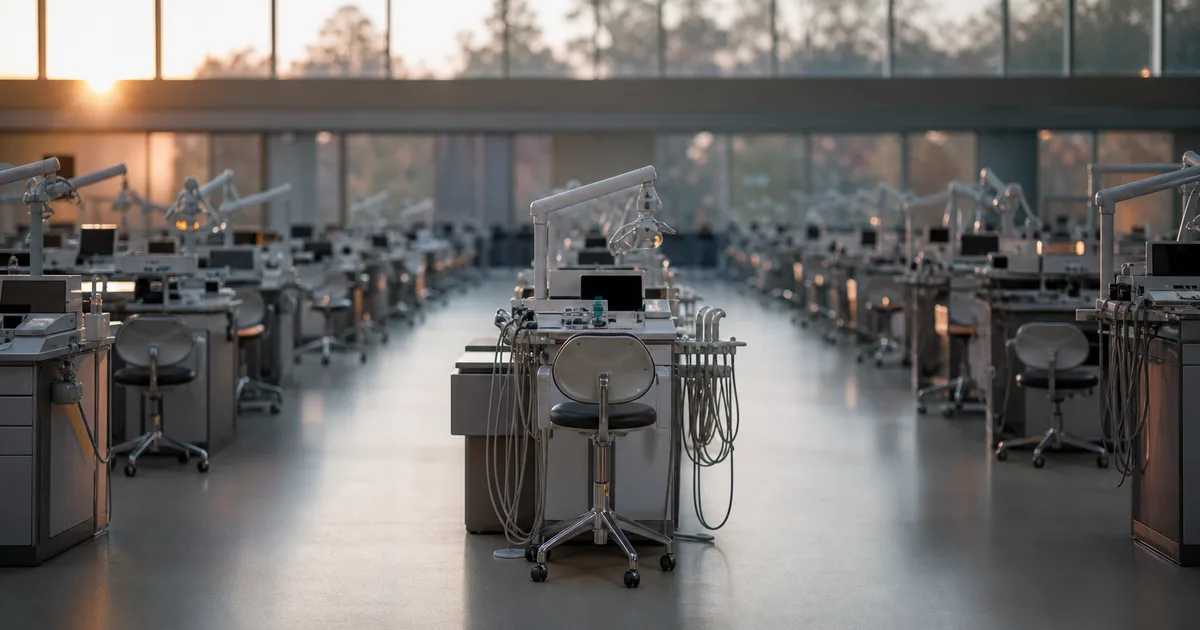
You have a DDS or BDS from a dental school outside the United States, a few years of clinical practice behind you, and a plan to build a career here. Then you start researching visas — H-1B, TN, O-1 — and run into the same wall over and over: none of it works until you are licensed to practice dentistry in a US state, and no US state board will license you on a foreign dental degree alone.
That is not a paperwork technicality you can route around. It is the entire problem. F1Jobs is a job-search service — we help clients on F-1, OPT, and H-1B market themselves to employers who sponsor, and we have a commercial interest in you believing your search is winnable. Read what follows with that in mind. For international dental graduates specifically, the honest answer is that the job search is the second problem. The first is getting licensed at all, and in almost every case that requires a second US dental degree before a visa plan can even start.
Why a foreign dental degree doesn't transfer
Every US state licenses dentists through its own dental board, but all fifty boards share one prerequisite: a degree from a program accredited by the Commission on Dental Accreditation (CODA), the body that accredits dental schools in the United States and Canada. A BDS from India, a DDS from the Philippines, an odontology degree from Brazil, or a dental degree from Nigeria, however rigorous the training, is not CODA-accredited. That single fact is why a foreign dental degree does not, by itself, qualify you to sit for a US licensure exam in any state.
Contrast this with physicians. An international medical graduate can earn an ECFMG certificate and enter a US residency directly on a foreign medical degree, without repeating medical school. Our guide on J-1 waivers and the Conrad 30 program for international physicians covers that route in detail. Dentistry has no equivalent bridge. There is no US dental residency you can enter straight off a foreign DDS the way an IMG enters an ACGME residency. The only door into US licensure runs through a CODA-accredited dental program, and that means going back to school.
The path that actually exists: a second US degree
Most internationally trained dentists who want to practice in the United States apply through ADEA CAAPID, the Centralized Application for Advanced Placement for International Dentists. CAAPID is the shared application system that a limited number of CODA-accredited dental schools use to admit foreign-trained dentists into advanced-standing programs, sometimes called International Dentist Programs (IDPs). These are not full four-year DDS programs. Because you already have a dental education, an accepted school gives you credit for prior coursework and compresses the curriculum, typically to two or three years, while still requiring you to complete the same US clinical requirements as any other DDS or DMD candidate.
Admission is competitive. Each program enrolls a small cohort a year, and requirements commonly include the Dental Admission Test (DAT), English proficiency scores (TOEFL or IELTS), transcripts evaluated for US equivalency, letters of recommendation, and in some programs a hands-on manual dexterity or technical skills assessment. A few schools also expect candidates to have started or completed the Integrated National Board Dental Examination (INBDE) before enrolling. Application cycles run on annual timelines set by each dental school, not on a rolling basis, so a missed deadline can cost you a full year.
You attend this program on an F-1 student visa, the same status as any other international student. Because F-1 admission end dates now work differently than the old "duration of status" model, a multi-year professional program deserves its own timeline check. If you are weighing a DDS-completion track against the newer fixed-admission rules, our explainer on how F-1 rules apply to professional degree programs like MD and PharmD walks through the mechanics, and much of it applies directly to a DDS completion program too.
The timeline once you're admitted
Getting through the program is only step one. Here is the sequence most international dental graduates actually work through, start to finish:
- Apply through ADEA CAAPID to CODA-accredited advanced-standing programs, factoring in DAT scores, English test scores, and each school's own deadline.
- Enroll as an F-1 student in the 2-3 year advanced-standing DDS or DMD program.
- Sit for the INBDE, the national written exam every state now requires for licensure, either during the program or shortly after graduating.
- Graduate and apply for OPT. This is the detail that trips up the most people: dentistry's CIP codes are classified under health professions, not the STEM Designated Degree Program list, so you get the standard 12-month OPT period, not the 24-month STEM extension.
- Inside that 12-month window, complete your target state's remaining licensure steps — usually a regional clinical exam through a testing agency such as CDCA, WREB, or CITA, plus a state jurisprudence exam and background check.
- Obtain your state dental license.
- Find an employer willing to file an H-1B petition, pursue TN status if you are Canadian or Mexican, or apply to a specialty residency if you want to sub-specialize before entering practice.
- If you're going the cap-subject H-1B route, register for the lottery the following March and file if selected.
The crunch is steps four through seven happening inside one 12-month OPT clock. Licensure exams alone can take months to schedule, sit, and get results back. If licensure and a sponsor are not both lined up before OPT runs out, you have no institutional runway left, and re-entering F-1 status for another program is a much bigger decision than most people realize going in.
Comparing the pathways
The table below lines up the routes international dental graduates actually consider, since "dental" covers several different licenses with very different visa realities.
| Track | Typical length | Credential earned | Visa status while training | STEM OPT eligible | Scope of practice |
|---|---|---|---|---|---|
| Foreign DDS/BDS alone | N/A | Foreign dental degree | N/A | N/A | Not licensable to practice in the US |
| US advanced-standing program via ADEA CAAPID | 2-3 years | DDS or DMD (US, CODA-accredited) | F-1 | Generally no | Full dentist scope of practice after state licensure |
| Dental hygiene program | About 2 years (associate) or 4 (bachelor's) | RDH license | F-1 | Depends on the program's CIP code | Preventive and hygiene care under a dentist's supervision |
| US dental specialty residency | 2-6 years, after DDS/DMD | Specialty certificate | F-1 (OPT) or H-1B, program-dependent | N/A | Specialist scope (oral surgery, orthodontics, periodontics, etc.) |
The dental hygiene row matters more than it looks. It's a genuinely shorter, F-1-eligible path into a US-licensed dental career, and for some readers it's the right call. But it's a different license with a narrower scope than a dentist, not a stepping stone toward practicing as a dentist later. Our comparison of dental hygienist visa sponsorship breaks down how the hygienist route actually works if you're weighing it against the DDS-completion track.
Who actually sponsors dentists
Once you're licensed, the visa question becomes an employer question, and dentistry has a targeting problem that's easy to underestimate. Across all US employers, immigration-policy research group NFAP reported that only 28,277 US employers were approved to hire even one new H-1B worker in fiscal year 2025 — roughly half of one percent of the roughly 6 million employer firms in the country — and that 61% of those employers sponsored exactly one person. Most industries face that math. Dentistry compounds it, because the majority of US dental offices are one- or two-dentist private practices with no HR department and no history of filing a Labor Condition Application, let alone an H-1B petition.
The employers more likely to have that infrastructure fall into a few categories:
- Multi-location dental groups large enough to run their own credentialing and HR functions, where sponsoring a handful of foreign-trained dentists a year is a routine, budgeted process rather than a one-off favor.
- University-affiliated dental school faculty practices, which are typically cap-exempt H-1B employers because they're part of a nonprofit institution of higher education — the same category that makes cap-exempt university and research hospital H-1B roles attractive in other fields.
- Federally qualified health centers and public health systems in underserved areas, which sometimes have more established sponsorship processes because they already recruit internationally for other clinical roles.
Rather than paying a consultancy for a list of "sponsor-friendly" dental employers, build your own using verified petition data. F1Jobs' employer directory shows which companies have actually filed H-1B petitions and how much of that activity went to new hires versus renewals, which tells you far more than a marketing claim ever will.
The TN option for Canadian and Mexican dentists
If you hold Canadian or Mexican citizenship, TN status is worth evaluating alongside H-1B. Dentist is one of the professions listed under the USMCA professional categories, and TN eligibility for it runs on your DDS or DMD plus your state license — the same credential requirements as H-1B, but without the annual lottery or cap. TN status has historically been issued in multi-year increments and can be renewed indefinitely as long as the underlying job and qualifications hold up. For a licensed Canadian or Mexican dentist with a US job offer, TN is often a faster, less uncertain route into practice than waiting on an H-1B cap-subject registration.
Our comparable veterinarian visa sponsorship guide walks through a licensed profession with a very similar credentialing-then-sponsorship structure, useful if you're weighing dentistry against other clinical fields with foreign-degree gaps.
Common mistakes
- Assuming a "certificate" or "equivalency" review will get you licensed. No pathway substitutes for completing a CODA-accredited advanced-standing program; state boards check for the accredited degree itself, not a credential evaluation of your foreign one.
- Budgeting the OPT clock as if it were 36 months. Most DDS and DMD CIP codes are not on the STEM list, so you have 12 months of OPT to clear licensure exams and find an employer, not the 24-month STEM extension some other majors get.
- Applying to CAAPID programs without checking each school's DAT score cutoffs and annual deadline. These programs admit once a year in most cases; missing a deadline is a lost year, not a delay.
- Treating any dental practice as a plausible H-1B sponsor. A solo or two-dentist office with no history of filing an LCA is a long shot compared to a multi-location group or a university-affiliated clinic.
- Paying for a "guaranteed placement" before you're even licensed. No legitimate service can promise an employment or sponsorship outcome, and a dental credential without a state license isn't yet a hireable one. If a consultancy is promising placement ahead of licensure, that promise is getting ahead of what any employer can actually offer.
- Treating dental hygiene as a shortcut into dentistry. It's a genuinely different, narrower license. Choosing it purely because the program is shorter can mean starting the DDS-completion process over later if practicing as a dentist was the actual goal.
Frequently asked questions
Can a foreign-trained dentist get H-1B sponsorship in the US?
Only after becoming licensed in a US state, which almost always requires completing a CODA-accredited advanced-standing DDS or DMD program first. Once licensed, sponsorship is possible through H-1B, but it typically comes from larger, multi-location dental groups or university-affiliated clinics rather than small private practices, since most solo offices have never filed a Labor Condition Application. Canadian and Mexican dentists also have a cap-free option through TN status.
Do I need to redo dental school if I already have a DDS or BDS from another country?
In nearly every US state, yes. State dental boards require a degree from a CODA-accredited dental school before you can sit for licensure exams, and no US state currently licenses dentists on a foreign dental degree alone. Most foreign-trained dentists complete a 2 to 3 year advanced-standing program through ADEA CAAPID rather than a full 4-year DDS.
Is STEM OPT available for a US dental degree?
Generally no. Most DDS and DMD CIP codes fall under health professions rather than the STEM Designated Degree Program list, so international dental graduates typically get the standard 12-month OPT period rather than a 24-month STEM extension. Plan your licensure and job search around 12 months, not 36.
What is ADEA CAAPID?
ADEA CAAPID, the Centralized Application for Advanced Placement for International Dentists, is the centralized application service internationally trained dentists use to apply to advanced-standing programs at CODA-accredited US dental schools. It's the standard entry point into the second degree most foreign-trained dentists need before they can pursue licensure and eventually a visa sponsor.
Can a dental hygienist license substitute for a dentist visa pathway?
No. Dental hygiene is a separate license with its own accredited program, usually shorter than a dentist-completion track, and it authorizes a narrower scope of preventive care performed under a dentist's supervision. Choosing that route because it looks faster on a visa timeline can mean starting over later if practicing as a dentist was always the goal.
If you're working through a licensure and visa timeline like this one, F1Jobs can help you think through the employer-targeting side once you're ready for it.
Frequently asked questions
Can a foreign-trained dentist get H-1B sponsorship in the US
Only after becoming licensed in a US state, which almost always requires completing a CODA-accredited advanced-standing DDS or DMD program first. Once licensed, sponsorship is possible through H-1B, but it typically comes from larger, multi-location dental groups or university-affiliated clinics rather than small private practices, since most solo offices have never filed a Labor Condition Application. Canadian and Mexican dentists also have a cap-free option through TN status.
Do I need to redo dental school if I already have a DDS or BDS from another country
In nearly every US state, yes. State dental boards require a degree from a CODA-accredited dental school before you can sit for licensure exams, and no US state currently licenses dentists on a foreign dental degree alone. Most foreign-trained dentists complete a 2 to 3 year advanced-standing program through ADEA CAAPID rather than a full 4-year DDS.
Is STEM OPT available for a US dental degree
Generally no. Most DDS and DMD CIP codes fall under health professions rather than the STEM Designated Degree Program list, so international dental graduates typically get the standard 12-month OPT period rather than a 24-month STEM extension. Plan your licensure and job search around 12 months, not 36.
What is ADEA CAAPID
ADEA CAAPID, the Centralized Application for Advanced Placement for International Dentists, is the centralized application service internationally trained dentists use to apply to advanced-standing programs at CODA-accredited US dental schools. It is the standard entry point into the second degree most foreign-trained dentists need before they can pursue licensure and eventually a visa sponsor.
Can a dental hygienist license substitute for a dentist visa pathway
No. Dental hygiene is a separate license with its own accredited program, usually shorter than a dentist-completion track, and it authorizes a narrower scope of preventive care performed under a dentist's supervision. Choosing that route because it looks faster on a visa timeline can mean starting over later if practicing as a dentist was always the goal.