IoT & Connected Devices Companies That Sponsor H-1B Visas in 2026
IoT and connected device roles are among the most visa-friendly engineering niches in 2026 — here is how to find and land one.
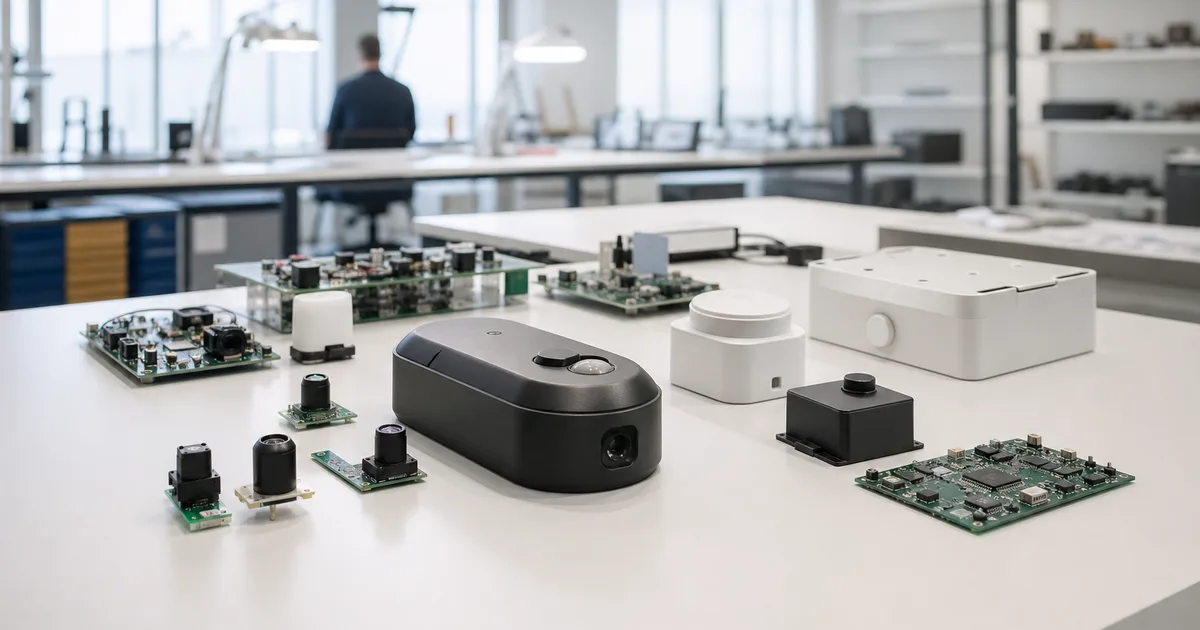
Part of our guide to companies that sponsor H-1B visas.
You have the skills. You have the degree. You might even have a few IoT projects on GitHub with real hardware in the photos. But when you start applying to embedded firmware or connected-device engineering roles in the US, a familiar obstacle appears on every job description: "must be authorized to work in the United States without sponsorship." You close the tab and move on — but you are likely ruling out many more companies than you need to.
The IoT and connected-devices space is genuinely visa-friendly compared with, say, pure software web-dev roles competing for the same H-1B cap slots. Embedded firmware, RF engineering, hardware/software co-design, and IoT platform development all require specialized education that maps cleanly to USCIS's specialty-occupation standard. And the talent gap in these disciplines is real: hardware-capable engineers who also understand cloud connectivity, edge computing, and security are in short supply. That combination gives you real leverage in the H-1B conversation. This guide tells you where that leverage is strongest in 2026 and how to use it.
Why IoT roles clear the specialty-occupation bar
The H-1B requires that the role be a "specialty occupation" — one that requires the theoretical and practical application of highly specialized knowledge and, at minimum, a bachelor's degree in a directly related field. USCIS has challenged roles it considers too general, but embedded systems and IoT engineering consistently fare well because the degree requirement is industry-standard.
Roles that map cleanly include:
- Embedded firmware engineer (C/C++, RTOS, bare-metal)
- RF and wireless systems engineer (Bluetooth LE, Zigbee, Thread, LTE-M, NB-IoT)
- IoT platform software engineer (edge compute, device shadow, MQTT/AMQP protocols)
- Hardware engineer and PCB designer (mixed-signal, power management)
- Systems integration and test engineer (hardware-in-the-loop, HIL testing)
- Computer vision engineer on embedded targets (TinyML, Edge TPU, NVIDIA Jetson)
If your role title includes any of these descriptors and your employer's petition explains why the position requires a relevant degree, denial rates are relatively low compared with business-analyst-type roles that USCIS has historically scrutinized. For a deeper look at the specialty-occupation argument strategy, see our guide on embedded systems engineers and H-1B sponsorship.
Major IoT employer categories and their sponsorship patterns
Consumer IoT and smart home
Smart home is one of the most active hiring sectors for H-1B engineers in connected devices. The companies below are large enough to have dedicated immigration teams and established LCA filing patterns.
| Company | IoT Product Lines | Typical Sponsored Roles |
|---|---|---|
| Amazon | Ring, Echo, Alexa, Fire TV, AWS IoT | Firmware, cloud IoT platform, SDE |
| Nest, Google Home, Pixel | Embedded SW, TPU/Edge ML, HW Eng | |
| Apple | HomeKit, AirTag, HomePod | Firmware (SW/HW co-design), RF |
| Samsung | SmartThings, Galaxy Wearables | Platform SW, SmartThings SDK |
| Sonos | Whole-home audio | Embedded audio DSP, firmware |
| Lutron | Smart lighting control | Embedded controls, RF firmware |
| Ecobee | Smart thermostats | Embedded Linux, cloud connectivity |
Amazon and Google file among the highest volumes of H-1B petitions in the country. Their IoT divisions — Ring in Santa Monica, Nest in Palo Alto and San Jose — are active H-1B employers. Apple is more selective overall but routinely sponsors firmware engineers where the specialized skill set is narrow.
For smart home tech H-1B sponsorship, the most reliable path is applying to product-line teams within these large platforms rather than to standalone startups in the same space, particularly if you are early in your career and need the petition to be airtight.
Industrial IoT and automation
Industrial IoT is frequently overlooked by candidates who focus on consumer devices. It is a mistake. Honeywell, Rockwell Automation, Emerson Electric, Siemens (US operations), ABB, and Schneider Electric all have long H-1B filing histories and strong needs for engineers who can bridge OT (operational technology) and IT.
Industrial IoT roles often involve:
- PLCs and SCADA integration with cloud platforms
- IEC 62443 industrial cybersecurity
- Time-sensitive networking (TSN) and industrial Ethernet
- Asset tracking and predictive maintenance firmware
- Protocol translation (Modbus, PROFINET, OPC-UA to MQTT/REST)
These companies tend to file at Wage Level II–III for engineers with 3–8 years of experience, which means the LCA prevailing-wage burden is real but manageable in mid-cost cities like Raleigh-Durham, Indianapolis, or Pittsburgh.
Semiconductors and chipmakers powering IoT
The chip layer is where some of the most consistent H-1B IoT sponsorship happens. Qualcomm's IoT division (QCS/QCX chipsets), Texas Instruments (MSP430, SimpleLink), Nordic Semiconductor (US engineering offices), Silicon Labs, and NXP Semiconductors all actively sponsor for roles that require deep hardware-software integration knowledge.
Semiconductor companies mapping to IoT are also partly sheltered by CHIPS Act investment, which has increased domestic chip-design headcount and created sustained demand for specialized engineers. Our detailed guide on semiconductor companies and H-1B sponsorship covers the CHIPS Act angle in depth.
Wearables and digital health IoT
Wearables sit at the intersection of consumer IoT and medical-device regulatory requirements, making them one of the more technically demanding niches. Fitbit (Google), Garmin, Withings, Oura Ring, and companies in the continuous glucose monitoring space (Abbott FreeStyle, Dexcom) all hire embedded firmware engineers who sponsor H-1B.
Medical-device IoT adds the FDA software-as-a-medical-device (SaMD) and IEC 62304 layers. If you have that background from a prior employer, it is a genuine differentiator. See our guide on embedded engineers in medical devices and H-1B sponsorship for a full treatment of that niche.
Cloud IoT platform teams at hyperscalers
Beyond the hardware product lines, the cloud teams that build IoT management infrastructure are steady H-1B employers. AWS IoT Core, Google Cloud IoT (now folded into broader Edge and AI services), Azure IoT Hub, and Salesforce IoT are all platform-level products with dedicated engineering orgs.
These roles often look like standard cloud software engineering from the outside — Java, Python, distributed systems — but with domain-specific knowledge of device provisioning, certificate management, MQTT broker architecture, and OTA (over-the-air) update pipelines. If you have that context from prior work with embedded devices, you can compete effectively against software-only candidates for roles that get fewer applications and historically strong H-1B approval rates. The broader cloud engineering landscape for sponsorship is covered in our cloud and DevOps H-1B sponsorship guide.
How to verify sponsorship before you apply
Do not rely on the job description. Many companies that sponsor H-1B omit sponsorship language entirely, and many that say "no sponsorship" mean they are open to it for the right candidate. Instead, verify through primary sources.
- DOL LCA disclosure data. The Department of Labor publishes quarterly LCA disclosure data listing every Labor Condition Application filed, the wage offered, the worksite city, and the employer name. Search for the company and the role title. If you see recent filings for roles similar to yours, the employer has the infrastructure and track record to sponsor.
- USCIS H-1B employer data hub. USCIS publishes H-1B approval and denial statistics by employer. Low denial rates at a large employer are a positive signal; high denial rates warrant a careful look at whether the company uses a reputable immigration attorney.
- Ask in the recruiter screen. "My understanding is the company has sponsored H-1B in the past — is that still the case for this role?" is a reasonable question in the first conversation. The recruiter's answer tells you quickly whether to invest in the process.
Timing your H-1B relative to OPT and STEM OPT
If you are currently on F-1 OPT or STEM OPT, the cap-subject H-1B lottery timeline is the primary constraint in your planning. USCIS typically opens H-1B registration in early March for a fiscal year starting October 1. A registered petition, if selected, must be filed by June 30 of that year with an October 1 start date.
The 24-month STEM OPT extension gives you additional runway if your first-attempt lottery registration is not selected, but STEM OPT authorization requires that your employer file an I-983 training plan and that your degree is in a qualifying STEM field. Make sure you verify your degree's CIP code against the current STEM OPT designated degree list before assuming you qualify.
The cap-gap rule protects your work authorization between the expiry of your OPT EAD and the H-1B start date of October 1, but only if your employer filed the H-1B petition during the cap-gap period and your OPT was valid when they filed. Gaps in employment can count against you under STEM OPT's unemployment limit rules, so coordinating offer timing carefully matters. A step-by-step sequence is covered in OPT to STEM OPT to H-1B sequencing with the 4-year rule.
Practical job search tactics for IoT roles
Go deep on LinkedIn company pages, not just job boards
Searching "embedded firmware" or "IoT platform engineer" on LinkedIn Jobs and Indeed will surface many relevant postings. More useful: look at the LinkedIn company pages for the employers listed above, filter employees by "firmware" or "embedded" in their titles, and note which people list "H-1B visa holder" or similar in their profiles. That is direct evidence that the company sponsors in practice — not just in policy.
Target teams doing hardware-software co-design
Pure software IoT roles (mobile apps, backend dashboards) face more competition from candidates who do not need sponsorship. The closer your role is to the hardware — interrupt-driven firmware, RF stack integration, board bring-up, power optimization — the more you are competing in a pool where specialized international candidates are common and employers are used to sponsoring.
Use the OPT alumni network
Find classmates or alumni from your program who have moved into IoT roles at specific companies. An internal referral dramatically improves your chances and often surfaces roles before they are posted publicly. A strong referral also gives the hiring manager context about your work quality that a cold application cannot provide.
Common mistakes
Filtering out companies that say "no sponsorship" without investigating further. Many large IoT employers outsource their job posting to ATS systems that auto-populate "authorization required" language from a boilerplate. A direct inquiry to the hiring manager or recruiter overrides that default far more often than candidates expect.
Applying to seed-stage startups before checking financial viability. USCIS requires an employer-employee relationship and evidence that the employer can pay the offered wage. A startup with under $2M raised and two employees may want to sponsor you sincerely but will have difficulty satisfying USCIS's financial documentation requirements. Use our guide on whether a startup can sponsor H-1B before committing time to a process that may fail at petition stage.
Underestimating the prevailing wage requirement. The DOL wage level matters. If a company wants to pay you at a Level I wage for an embedded firmware role that USCIS and DOL classify under SOC 17-2061 in San Jose, the LCA may be flagged or denied, and your petition follows. Know the prevailing wage for your title and metro before negotiating salary — you need the offer to comfortably clear that floor.
Ignoring cap-exempt options. University research labs (think MIT Media Lab, CMU Robotics Institute, Stanford AI Lab) and federally funded research centers regularly hire firmware and IoT platform engineers. These roles are H-1B cap-exempt, meaning no lottery, no April registration window, and no October 1 start-date constraint. The pay may be lower, but the sponsorship certainty and path to eventual cap-subject H-1B through a bridge strategy can be worth it.
Leaving the specialty-occupation argument to the employer alone. You can meaningfully help your petition by documenting the technical complexity of your role — IEEE papers you have worked on, industry certifications (CET, CEBCP, or ARM Accredited Engineer credentials), open-source contributions to RTOS or protocol stack projects, and evidence that peers in your role hold relevant degrees. This documentation does not substitute for a competent immigration attorney, but it makes the attorney's job considerably easier and the resulting petition more defensible.
Frequently asked questions
Which IoT companies are most likely to sponsor H-1B visas in 2026?
Large platform players — Amazon (Ring, Alexa, AWS IoT), Google (Nest, Home), Apple (HomeKit), Samsung (SmartThings), and Qualcomm — have strong H-1B track records in IoT roles. Industrial IoT leaders like Cisco, Honeywell, Rockwell Automation, and Siemens also file regularly. Mid-market smart home and wearables firms can be strong sponsors too, particularly if they need specialized firmware or RF engineering talent that is hard to source domestically.
What job titles qualify as specialty occupations for H-1B in IoT?
USCIS requires a theoretical and practical application of highly specialized knowledge. Embedded firmware engineer, RF systems engineer, IoT platform software engineer, hardware engineer, RTOS developer, and systems integration engineer have each been approved as specialty occupations. The key is that the role requires at minimum a bachelor's degree in a directly related field — electrical engineering, computer engineering, computer science, or a related discipline. A general "IoT technician" title with no degree requirement would struggle, but an engineering role with standard academic prerequisites is well-established.
Can I find IoT H-1B sponsorship at a startup rather than a large company?
Yes, but due diligence matters more at startups. A startup with Series B or later funding, a payroll that comfortably covers your prevailing wage, and prior H-1B filings on record (check the DOL LCA disclosure data) is a reasonable bet. Pre-seed or seed-stage companies may genuinely want to sponsor but lack the financial documentation USCIS needs to approve the employer-employee relationship. The checklist in our guide on whether a startup can sponsor H-1B is worth running before you accept.
What prevailing wage level should I expect for an embedded IoT firmware engineer?
Prevailing wages are set by the DOL based on the Standard Occupational Classification code and the Metropolitan Statistical Area of employment. Embedded firmware engineers typically map to SOC 17-2061 (Computer Hardware Engineers) or 15-1252 (Software Developers). In high-cost metros like San Jose, Seattle, or Austin, a Level II wage for these codes can be above $120,000 annually as of 2026 data. Level I wages in mid-cost metros may be considerably lower. Your employer must certify the LCA at or above the applicable prevailing wage before USCIS will approve the petition.
Does the 100K H-1B fee affect IoT engineers applying from outside the US?
Yes — the White House proclamation that took effect September 21 2025 imposes a $100,000 fee on new H-1B cap-subject petitions for workers being brought from abroad. If you are already in the US on OPT or STEM OPT and your employer files a cap-subject H-1B for you, the fee applies to that petition. Cap-exempt petitions (universities, nonprofit research) are not covered by the proclamation. Extensions and transfers for workers already holding H-1B status inside the US are also not subject to the fee.
IoT and connected-device engineering is one of the more rewarding niches to navigate as an international candidate — the specialized skills gap is real, the employer pool is broad, and the specialty-occupation case is well-established in USCIS precedent. The work is in identifying the right employers, verifying their sponsorship track record before investing heavily, and building a petition that makes the specialty-occupation argument clearly and defensibly.
If you want help thinking through your specific situation — which IoT companies to target, how to sequence your OPT and H-1B timeline, or how to evaluate an offer — F1Jobs works with embedded and IoT engineers every month and can walk you through it.
Frequently asked questions
Which IoT companies are most likely to sponsor H-1B visas in 2026?
Large platform players — Amazon (Ring, Alexa, AWS IoT), Google (Nest, Home), Apple (HomeKit), Samsung (SmartThings), and Qualcomm — have strong H-1B track records in IoT roles. Industrial IoT leaders like Cisco, Honeywell, Rockwell Automation, and Siemens also file regularly. Mid-market smart home and wearables firms can be strong sponsors too, particularly if they need specialized firmware or RF engineering talent that is hard to source domestically.
What job titles qualify as specialty occupations for H-1B in IoT?
USCIS requires a theoretical and practical application of highly specialized knowledge. Embedded firmware engineer, RF systems engineer, IoT platform software engineer, hardware engineer, RTOS developer, and systems integration engineer have each been approved as specialty occupations. The key is that the role requires at minimum a bachelor's degree in a directly related field — electrical engineering, computer engineering, computer science, or a related discipline. A general "IoT technician" title with no degree requirement would struggle, but an engineering role with standard academic prerequisites is well-established.
Can I find IoT H-1B sponsorship at a startup rather than a large company?
Yes, but due diligence matters more at startups. A startup with Series B or later funding, a payroll that comfortably covers your prevailing wage, and prior H-1B filings on record (check the DOL LCA disclosure data) is a reasonable bet. Pre-seed or seed-stage companies may genuinely want to sponsor but lack the financial documentation USCIS needs to approve the employer-employee relationship. The checklist in our guide on whether a startup can sponsor H-1B is worth running before you accept.
What prevailing wage level should I expect for an embedded IoT firmware engineer?
Prevailing wages are set by the DOL based on the Standard Occupational Classification code and the Metropolitan Statistical Area of employment. Embedded firmware engineers typically map to SOC 17-2061 (Computer Hardware Engineers) or 15-1252 (Software Developers). In high-cost metros like San Jose, Seattle, or Austin, a Level II wage for these codes can be above $120,000 annually as of 2026 data. Level I wages in mid-cost metros may be considerably lower. Your employer must certify the LCA at or above the applicable prevailing wage before USCIS will approve the petition.
Does the 100K H-1B fee affect IoT engineers applying from outside the US?
Yes — the White House proclamation that took effect September 21 2025 imposes a $100,000 fee on new H-1B cap-subject petitions for workers being brought from abroad. If you are already in the US on OPT or STEM OPT and your employer files a cap-subject H-1B for you, the fee applies to that petition. Cap-exempt petitions (universities, nonprofit research) are not covered by the proclamation. Extensions and transfers for workers already holding H-1B status inside the US are also not subject to the fee.