Miami H-1B Jobs 2026: Fintech, Latin America Hubs & Sponsorship Reality
Miami's fintech and Latin America hub is quietly becoming one of the most accessible H-1B markets for international professionals in 2026.
You graduated with a degree in finance, computer science, or international business. You have a strong background in cross-border transactions, LatAm markets, or fintech. And you have been told, repeatedly, that you need to be in New York or San Francisco to make it in the US job market. That advice is increasingly outdated.
Miami has spent the last several years building out a genuine tech and financial services hub — not just as a real estate play or a pandemic relocation story, but as an ecosystem with actual employer density in fintech, payments, international banking, and Latin America-facing business services. For international professionals on F-1 OPT, STEM OPT, or targeting H-1B sponsorship, this matters because it creates a different kind of opportunity: roles that specifically value your international background, in a market that is less crowded than the coasts, with the added financial benefit of no state income tax.
This guide breaks down who is actually hiring in Miami, what the sponsorship landscape looks like in 2026, how the FY2027 lottery math affects your planning, and the specific mistakes that cost candidates good opportunities in this market.
Why Miami Is Different for International Professionals
Most H-1B discussions focus on the same tier-one markets: Bay Area, Seattle, New York, Boston. Miami sits in a different category — it is a market where your international background is often the reason you get the interview, not a liability you have to explain away.
The city's economic identity is built around Latin America business flows. The regional headquarters of multinational banks, payment networks, and international trade finance companies cluster in Brickell and Downtown Miami because that is where the client relationships are. For a software engineer who speaks Spanish and Portuguese and understands LatAm regulatory environments, or a data analyst who has worked with cross-border payment systems, Miami employers see a direct fit that a candidate with purely domestic experience cannot replicate.
This does not mean sponsorship is easy or guaranteed. But it does mean that the pitch to an employer — "I need visa sponsorship, and here is the unique value I bring" — lands differently in Miami than in markets where international hiring is purely a talent pipeline exercise.
The Miami Tech and Fintech Ecosystem in 2026
Brickell and the Financial District
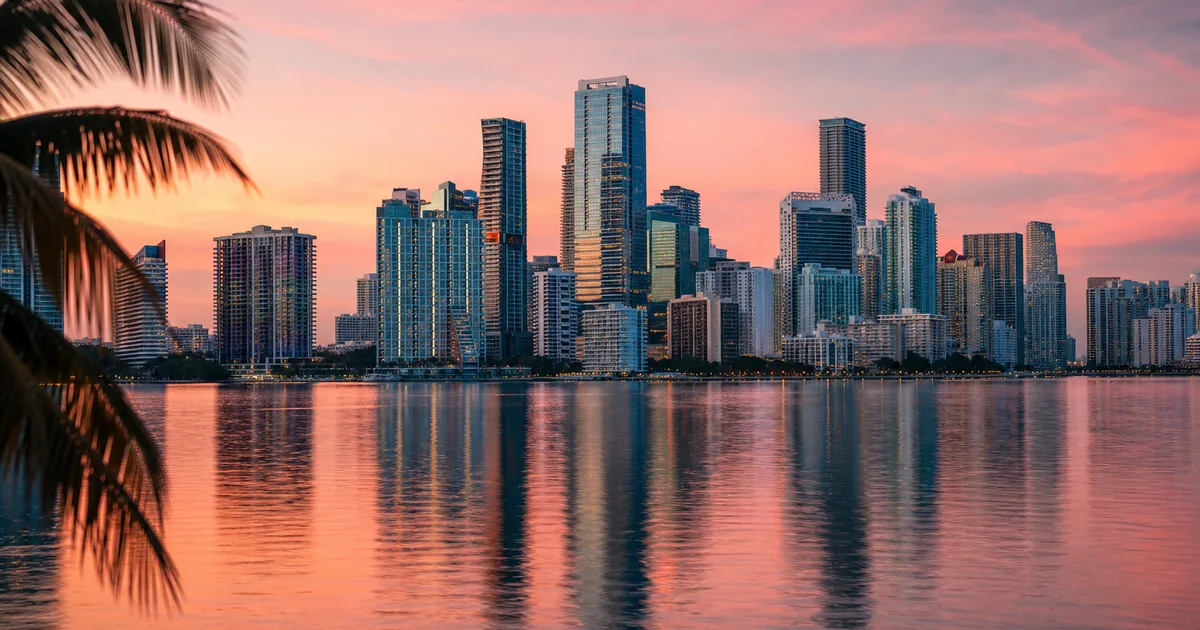
Brickell is Miami's answer to Midtown Manhattan for financial services. Regional offices of international banks, asset managers, insurance companies, and payment processors concentrate here. For H-1B purposes, these are generally more reliable sponsors than early-stage startups — larger organizations have established immigration workflows, approved vendor relationships with law firms, and management teams experienced with international hiring.
Key sectors represented in Brickell for tech and fintech roles:
- Cross-border payments and remittances — a sector where Miami's proximity to Latin America creates genuine operational advantages
- Trade finance and structured products — particularly for LatAm markets
- Compliance and RegTech — as Latin America-facing financial services firms navigate increasingly complex regulatory environments on both ends
- Wealth management technology — serving high-net-worth clients with complex international profiles
Wynwood and the Tech Startup Scene
Wynwood and the Design District have absorbed a wave of tech startups, particularly those building consumer and SMB fintech products. Sponsorship here is less predictable — startup size, funding stage, and the specific team's experience with immigration all factor in. A Series B fintech with institutional backing is a much more reliable sponsor than a seed-stage company where the founders have never navigated USCIS. Use the DOL's LCA database to check whether a company has filed Labor Condition Applications before — if they have not, the hiring manager may be unaware of the cost and timeline involved.
The Latin America Hub Advantage
A handful of Fortune 500 and Global 2000 companies have established Miami as their Latin America regional headquarters. This creates a specific type of opportunity for international professionals: roles that sit at the intersection of technology, operations, and regional market expertise. These are often harder roles to fill with purely domestic candidates, which is why employers in this category tend to be more willing to navigate the H-1B process.
If your background includes any of the following, you are well-positioned for this segment:
- Bilingual fluency in Spanish or Portuguese
- Prior work experience in Latin America or with LatAm clients
- Understanding of local payment infrastructure (PIX in Brazil, SPEI in Mexico, PSE in Colombia)
- Regulatory familiarity with local financial authorities
H-1B Sponsorship Reality in Miami 2026
What Employers Will and Will Not Do
The honest version of H-1B sponsorship in Miami looks like this: major financial institutions with established HR infrastructure will sponsor, mid-size technology companies will sometimes sponsor depending on role level and budget, and early-stage startups are unpredictable. The key differentiator is whether the company has done it before and has a process.
Before you spend weeks in a hiring process, verify:
- Does the company appear in the DOL LCA disclosure database for prior years?
- Does the company have a stated immigration benefit in its HR materials?
- Is the recruiter able to name the immigration law firm the company uses?
A company that cannot answer question three probably does not have a consistent sponsorship program, even if they say they are willing to sponsor.
The DOL Prevailing Wage Issue
In March 2026, DOL proposed revisions that would raise H-1B prevailing wage floors — the minimum salary an employer must pay to maintain a valid Labor Condition Application. The proposal is not final as of this writing; confirm current status with your DSO or an immigration attorney before relying on specific wage numbers.
What this means for Miami specifically: the city is an emerging tech hub, and emerging hubs often have wage surveys that reflect a mixed labor market — some roles are priced at national tech-hub levels, others at local market rates. If DOL's proposed increases take effect, Miami employers offering Level II or Level III salaries for roles that USCIS classifies as requiring specialized expertise may face additional scrutiny in the LCA certification process. This is not a reason to avoid Miami roles, but it is a reason to understand the wage level your offer is pegged at before filing.
The FY2027 Lottery and Wage-Level Math
For FY2027, both the 65,000 regular cap and the 20,000 master's cap were exhausted, per DHS. If you are planning for FY2028 (registration typically in March 2027), understanding the wage-weighted selection model is essential.
DHS modeling for FY2027 projected the following selection rates:
- Level I (entry level): approximately 15.3%
- Level IV (experienced/senior): approximately 61.2%
This is not a quirk — it is the intended design of the wage-weighted lottery. USCIS weights lottery selection toward higher wage levels to favor petitions where the employer is offering above-market compensation. For your purposes, this means:
- If your Miami employer can justify a Level III or Level IV wage tier for your role based on your actual responsibilities and qualifications, your odds improve substantially
- If you are being hired at an entry-level wage tier, your lottery odds are materially lower
- The argument for positioning your role at a higher wage tier is not just about pay — it directly affects your probability of getting a visa
For a deeper look at how to think about wage levels and lottery strategy, see our guide on H-1B wage levels and lottery planning.
The No-State-Income-Tax Advantage
Florida has no state income tax. On a $120,000 salary, this is roughly $8,000–$12,000 per year in after-tax income that you would not have in California or New York, depending on your filing status and deductions. This matters for two reasons:
First, your actual compensation in Miami is meaningfully higher than the gross salary suggests relative to high-tax states. Second, when an employer is setting your salary and trying to hit a DOL prevailing wage floor, the total compensation math in Florida works in your favor — you need less gross salary to reach the same take-home target. See our broader analysis of no-tax state relocation strategy for H-1B holders for how this plays out across the major metro markets.
Miami vs. Other H-1B Markets
| City | Primary Industries | Sponsorship Maturity | State Income Tax | Lottery Competition Level |
|---|---|---|---|---|
| Miami | Fintech, LatAm Biz, Finance | Moderate | None | Lower than tier-1 |
| New York | Finance, Tech, Consulting | Very High | 8.8%–10.9% | Very High |
| San Francisco | Tech, AI, Biotech | Very High | 9.3%–13.3% | Very High |
| San Diego | Biotech, Defense, Tech | High | 9.3%–13.3% | High |
| Tampa | Fintech, Cybersecurity | Growing | None | Moderate |
The table captures a structural advantage: Miami combines a growing employer base with lower competition relative to the coastal tech hubs and zero state income tax. The tradeoff is that sponsorship infrastructure is less mature — you will need to do more due diligence on individual employers. Compare Miami's neighboring Florida market in our Tampa fintech and cybersecurity guide and our San Diego biotech and defense guide for context on regional differences.
Roles Most Likely to Get Sponsored in Miami
Not every role category has equal H-1B sponsorship density. Based on LCA filing patterns and employer profiles in South Florida, the following categories have the strongest sponsorship track record:
High Sponsorship Likelihood
- Software Engineers and Backend Engineers — financial services firms and fintech companies both have ongoing demand; see our guide to fintech H-1B sponsorship for employer-specific patterns
- Data Engineers and Data Scientists — cross-border payment analytics and fraud detection are active hiring areas
- Compliance and RegTech roles — particularly those requiring bilingual Spanish/Portuguese and familiarity with LatAm regulatory frameworks
- DevOps and Cloud Engineers — financial services firms migrating legacy systems to cloud have ongoing infrastructure needs
Moderate Sponsorship Likelihood
- Product Managers — depends heavily on company size; mid-market and enterprise fintech companies are more likely to sponsor than early-stage startups
- Cybersecurity Analysts — financial services sponsorship is stronger than most other verticals in this category
- Business Analysts — large institutions sponsor, but project-based roles through staffing agencies are typically not sponsorship-eligible
Lower Sponsorship Likelihood
- Marketing and Digital Marketing roles — DOL specialty-occupation challenges are more common for these positions; confirm with an attorney before investing in a process
- Sales roles — similar specialty-occupation risk as marketing; sponsorship exists but is inconsistent
Your OPT and STEM OPT Timeline in Miami
If you are currently on F-1 OPT or STEM OPT, the Miami market has specific timing implications.
F-1 OPT gives you 12 months of authorized work. You have a 90-day cumulative unemployment limit — days without a job offer count against this limit. You can extend to STEM OPT for 24 additional months if your degree is in a qualifying STEM field and your employer is enrolled in E-Verify. During STEM OPT, your employer must file a Form I-983 training plan.
The typical H-1B path from Miami looks like this:
- Start OPT after graduation (submit Form I-765 at least 90 days before your program end date)
- Secure a sponsoring employer in Miami — target companies with LCA history
- Employer files H-1B petition during the March registration window for the following October start
- If selected in lottery: cap-gap protection extends your OPT authorization through September 30 of the relevant fiscal year while USCIS adjudicates
- If not selected: pursue STEM OPT extension if eligible, which buys two additional years and two additional lottery cycles
Two lottery attempts during STEM OPT is the standard path for many OPT graduates. The wage-weighted lottery means your outcome depends substantially on how your employer prices your role — a conversation worth having before registration.
Step-by-Step: Finding and Securing Miami H-1B Sponsorship
- Build your target employer list. Use the DOL LCA database (available at dol.gov) to identify companies in Miami-Dade and Broward counties that have filed LCAs in your field in the last two years. This is your verified sponsor universe.
- Prioritize by role fit and sponsorship history. Filter for companies with multiple annual filings — these indicate a consistent program, not one-off hiring.
- Network into the target companies. LinkedIn, local fintech meetups (Miami Tech, eMerge Americas), and university alumni networks are the primary channels. Cold outreach works better in Miami than in saturated markets because the international professional network is smaller and more connected.
- Verify sponsorship intent early. In your first recruiter screen, it is appropriate to confirm the company sponsors H-1B and to ask whether they use premium processing. Do not wait until the offer stage.
- Understand your wage level before signing. Request that your offer letter state the wage level (Level I–IV) associated with the role. If the company cannot answer this, ask their immigration attorney to clarify before you accept.
- Use premium processing if available. The $2,965 premium processing fee (effective March 2026) buys 15-business-day adjudication. For a tight OPT timeline, this is frequently worth the cost — confirm whether your employer covers it.
- Have a backup plan. Lottery outcomes are uncertain. Before registration, understand whether you qualify for STEM OPT extension, whether your employer has an L-1 pathway, or whether cap-exempt employment at a Miami-area university or hospital might be viable.
Cap-Exempt Options in Miami
If you do not win the H-1B lottery, Miami offers several cap-exempt employer options:
- University of Miami — private research university; cap-exempt and regularly employs international professionals in research, IT, and administrative roles
- Florida International University (FIU) — public research university; cap-exempt
- Miami Children's Health System / Nicklaus Children's Hospital — nonprofit hospital system; cap-exempt for qualifying roles
- Jackson Health System — Miami's public hospital system; cap-exempt
Cap-exempt employment lets you start or continue work while remaining on H-1B status without going through the lottery. It is a legitimate strategy, particularly if you are in a field where academic or hospital research work overlaps with your career goals. See our cap-exempt employer strategy guide for a full breakdown of how this works.
Common Mistakes
Assuming Miami startups will sponsor because they say they want to. A founder who says "we are happy to sponsor" and a company with an established immigration program are not the same thing. Verify LCA history before committing time to a process.
Ignoring the wage level on your offer. The difference between a Level I and Level III offer at the same company can mean a 40-point swing in your lottery selection probability based on FY2027 DHS modeling. This is worth understanding and, where possible, negotiating.
Skipping due diligence because the role sounds perfect. Specialty occupation challenges are real — DOL and USCIS scrutinize roles in financial services and business operations more carefully than pure software engineering roles. If your job title sounds generic (business analyst, financial analyst), verify that prior petitions at this employer in this role category have been approved.
Treating OPT unemployment limits as a soft suggestion. The 90-day cumulative unemployment clock on F-1 OPT is tracked and real. Miami's job market is good but not instant — start your job search at least 90 days before your program end date, and activate OPT as early as possible. Read our detailed breakdown of OPT 60-day unemployment tracking to understand how gaps compound.
Not exploring EB-2 NIW early. If you are a researcher, engineer, or professional with demonstrable national interest contributions, the EB-2 National Interest Waiver allows self-petition for a green card without employer PERM sponsorship. For international professionals in Miami with LatAm market expertise and documented impact, NIW petitions are increasingly viable. Start the conversation with an immigration attorney while still on OPT — the I-140 prioritization date starts from when you file, and earlier is better given India and China backlogs.
Frequently Asked Questions
Which Miami employers sponsor H-1B visas most reliably in the fintech and tech sectors?
Larger financial institutions with Miami operations — regional banks, global payment processors, and established Latin America-focused financial services firms — tend to have dedicated immigration programs and sponsor H-1B routinely. Mid-size fintech startups in Brickell and Wynwood sponsor less consistently; always verify a company's H-1B history through the DOL LCA database before accepting an offer contingent on sponsorship.
Does Florida having no state income tax actually improve my H-1B compensation situation?
Yes, in a meaningful way. Florida has no state income tax, so your take-home pay on any given salary is higher than in states like California or New York that impose significant state income tax. For an H-1B worker needing to meet DOL prevailing wage floors, this means your net compensation advantage relative to comparable roles in high-tax states can be substantial — even if the gross salary is nominally lower.
How does the FY2027 H-1B lottery affect my chances if I am applying from a Miami employer?
The lottery outcome does not depend on where in the US your sponsoring employer is located — Miami versus New York versus anywhere else. What matters is your wage level. For FY2027, DHS modeling projects that wage-weighted lottery selections favor Level IV petitions at roughly 61.2% versus Level I at roughly 15.3%. If your Miami employer can position your role at a higher wage level, your odds improve meaningfully.
Is Miami a viable alternative to New York or San Francisco for international professionals in fintech?
For roles in Latin America-facing financial services, payment processing, cross-border transactions, and related compliance work, Miami is genuinely competitive. The talent pool is less saturated than the Bay Area and the employer pool actively seeks bilingual professionals with international business backgrounds. The H-1B sponsorship infrastructure is less mature than in major tech hubs, so due diligence on specific employers matters more.
What visa options exist if I do not win the H-1B lottery while working in Miami?
Several paths are worth exploring. If your employer has overseas operations, an L-1 intracompany transfer may be available. O-1A extraordinary ability visas are an option if you have a strong professional record. TN status is available for Canadian and Mexican nationals in qualifying roles. Cap-exempt employment at universities, nonprofit research organizations, or government research entities is another route — Miami has several institutions that qualify. Discuss all options with a qualified immigration attorney before your OPT or STEM OPT deadline approaches.
Miami is not the easiest H-1B market, but it is one of the most overlooked for the right candidate profile. If your background combines technical skills with international business fluency — and especially if you have Latin America market knowledge — you are in a segment where Miami employers are genuinely competing for people like you.
If you are navigating the Miami H-1B market and want help identifying the right employers, positioning your visa status in interviews, and planning your filing timeline, F1Jobs works with international professionals on exactly this kind of strategy.
Frequently asked questions
Which Miami employers sponsor H-1B visas most reliably in the fintech and tech sectors?
Larger financial institutions with Miami operations — regional banks, global payment processors, and established Latin America-focused financial services firms — tend to have dedicated immigration programs and sponsor H-1B routinely. Mid-size fintech startups in Brickell and Wynwood sponsor less consistently; always verify a company's H-1B history through the DOL LCA database before accepting an offer contingent on sponsorship.
Does Florida having no state income tax actually improve my H-1B compensation situation?
Yes, in a meaningful way. Florida has no state income tax, so your take-home pay on any given salary is higher than in states like California or New York that impose 9–13% state income tax. For an H-1B worker needing to meet DOL prevailing wage floors, this means your net compensation advantage relative to comparable roles in high-tax states can be substantial — even if the gross salary is nominally lower.
How does the FY2027 H-1B lottery affect my chances if I am applying from a Miami employer?
The lottery outcome does not depend on where in the US your sponsoring employer is located — Miami versus New York versus anywhere else. What matters is your wage level. For FY2027, DHS modeling projects that wage-weighted lottery selections favor Level IV petitions at roughly 61.2% versus Level I at roughly 15.3%. If your Miami employer can position your role at a higher wage level, your odds improve meaningfully.
Is Miami a viable alternative to New York or San Francisco for international professionals in fintech?
For roles in Latin America-facing financial services, payment processing, cross-border transactions, and related compliance work, Miami is genuinely competitive. The talent pool is less saturated than the Bay Area and the employer pool actively seeks bilingual professionals with international business backgrounds. The H-1B sponsorship infrastructure is less mature than in major tech hubs, so due diligence on specific employers matters more.
What visa options exist if I do not win the H-1B lottery while working in Miami?
Several paths are worth exploring. If your employer has overseas operations, an L-1 intracompany transfer may be available. O-1A extraordinary ability visas are an option if you have a strong professional record. TN status is available for Canadian and Mexican nationals in qualifying roles. Cap-exempt employment at universities, nonprofit research organizations, or government research entities is another route — Miami has several institutions that qualify. Discuss all options with a qualified immigration attorney before your OPT or STEM OPT deadline approaches.