Mining and Metallurgical Engineering Visa Sponsorship 2026
Mining and metallurgical engineers are genuinely short-staffed in the US — here is how to turn that scarcity into a sponsored offer in 2026.
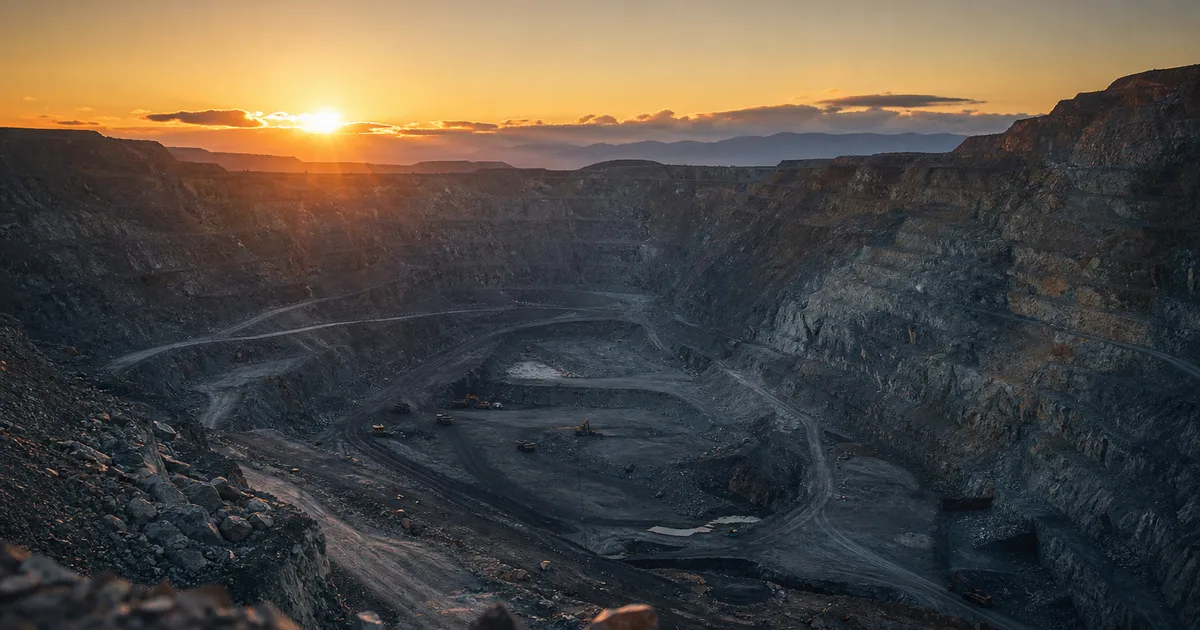
You studied mining or metallurgical engineering because the work is tangible — you wanted to pull critical minerals out of the ground, refine them into usable metals, and help build the supply chains that modern technology depends on. Now you're in the US on F-1 or OPT, and you're trying to figure out whether the extractive industry will actually sponsor your visa. The honest answer: yes, more often than you'd expect, and for reasons that are specific to this field.
Mining and metallurgical engineering have a real and documented labor shortage in the United States. University enrollment in mining engineering programs has been thin for decades, the existing workforce skews older, and the energy transition has pushed demand for battery-critical minerals — lithium, cobalt, nickel, copper — to levels that require engineers who don't exist in sufficient numbers domestically. That supply-demand imbalance puts international candidates in a stronger negotiating position than you'd have in an oversubscribed field. This guide walks you through how to convert that advantage into an actual sponsored offer and a sustainable long-term path.
The visa landscape for mining and metallurgical engineers
Your visa options depend on where you are in your career. Here is the full picture.
OPT and STEM OPT
If you just graduated or are about to, you start with 12 months of Optional Practical Training (OPT). Because mining engineering, metallurgical engineering, geological engineering, and related materials fields appear on the DHS STEM Designated Degree Program list, you qualify for the 24-month STEM OPT extension — giving you up to 36 months total of work authorization.
Key constraints during OPT and STEM OPT:
- The 90-day unemployment limit applies across the entire OPT period. If you're between jobs or your authorization start date is delayed, those days count. Start your job search early.
- For STEM OPT, your employer must be enrolled in E-Verify and must sign Form I-983 (Training Plan for STEM OPT Students). Most established mining companies and consultancies have done this before or will cooperate without friction.
- STEM OPT extensions must be filed before your current OPT EAD expires. Don't let the deadline slip.
For more on the mechanics of managing the 90-day clock, see our guide on beating the OPT 90-day unemployment clock.
H-1B
H-1B is the workhorse long-term work visa for engineering roles. Mining engineering, metallurgical engineering, and geological engineering qualify as specialty occupations because they require a theoretical and practical application of highly specialized knowledge and at minimum a bachelor's degree in the specific field (or closely related field). USCIS SOC codes 17-2151 (mining and geological engineers) and 17-2131 (materials engineers, which covers metallurgy) both support this argument consistently.
The H-1B cap lottery runs once per fiscal year, with registration typically opening in March for the October 1 start date. You are subject to the lottery unless your employer is cap-exempt. If you lose the lottery, your STEM OPT (if still valid) keeps you authorized until the next cycle.
For a full breakdown of what happens if the lottery doesn't go your way, see H-1B backup plans after lottery.
Cap-exempt employers
This is one of the most underused pathways in the extractive industry. Universities with mining, geological, or metallurgical engineering programs — Colorado School of Mines, University of Arizona, Montana Tech, Michigan Technological University, South Dakota School of Mines, and many others — are cap-exempt H-1B employers. So are government research labs like the National Energy Technology Laboratory (NETL), the Critical Materials Institute managed under Ames National Laboratory, and similar federally funded programs. Nonprofit research organizations working on mineral processing or materials science can also qualify.
A postdoctoral or research staff position at a cap-exempt institution is not a consolation prize. It keeps you fully authorized, builds publications, and positions you for EB-1 or EB-2 NIW later. See the cap-exempt H-1B employers guide for how to identify these organizations systematically.
O-1A
If you have a strong research record — significant publications, patents, awards, invited conference presentations, or a history of reviewing work for recognized journals — O-1A (extraordinary ability) is worth exploring. It is harder to win than H-1B but sidesteps the lottery entirely, has no annual cap, and can be renewed indefinitely. For mining researchers working on critical minerals, battery technology, or environmental remediation, the record requirement is achievable.
Who actually sponsors in mining and metallurgy
Not every company in the industry has the infrastructure to petition for an H-1B. Here is a realistic breakdown:
| Employer type | Sponsorship likelihood | Notes |
|---|---|---|
| Major diversified miners (US operations) | High | Established immigration programs, file regularly |
| Mid-size base metals producers | Moderate to high | Depends on HR sophistication and immigration counsel on retainer |
| Engineering and consulting firms | Moderate to high | AMEC, Wood, Stantec, SRK, WSP Global, Hatch — most file regularly |
| Royalty and streaming companies | Moderate | Corporate roles, smaller headcount |
| Government and national labs | High (cap-exempt) | No lottery, but competitive hiring |
| Universities with mining programs | High (cap-exempt) | Research and faculty roles |
| Junior exploration companies | Low | Usually lack the HR infrastructure and financial history USCIS requires |
| Smelting and refining operations | Moderate | Depends on size; major refiners sponsor; small operations rarely do |
Before applying, verify any company's H-1B filing history through the DOL OFLC disclosure data or myvisajobs.com. A company that filed zero LCAs in the past three years will struggle to move quickly when you have an offer in hand. For a step-by-step approach to this verification, see how to check if a company sponsors H-1B.
Related reading for adjacent fields: geoscience and petroleum visa sponsorship and materials science engineer H-1B sponsorship cover overlapping employer pools and similar qualification arguments.
Where the jobs actually are
US mining and metallurgical engineering employment concentrates in specific geographies tied to active operations and corporate offices:
- Nevada — gold mining, lithium extraction (the Thacker Pass and Clayton Valley areas), major corporate offices in Elko and Reno
- Arizona — copper production (the Morenci, Ray, and Sierrita mines), corporate offices in Phoenix and Tucson
- Montana, Idaho, Wyoming — silver, gold, phosphate, and coal operations
- Minnesota — iron ore (taconite operations on the Iron Range), copper-nickel emerging development
- Utah — copper (Bingham Canyon remains one of the largest operating open-pit mines in the world)
- Colorado and New Mexico — molybdenum, gold, and uranium; also a strong base of mining engineering firms and consultancies in Denver
Beyond direct mine-site roles, consider the broader extractive ecosystem: engineering and environmental consulting firms, metallurgical testing laboratories, equipment manufacturers (Caterpillar, Komatsu, Epiroc all have US engineering divisions that sponsor), and government agencies including the Mine Safety and Health Administration (MSHA) and the US Geological Survey (USGS). The USGS is a federal employer — US citizenship is required for many USGS positions, but not all; check each posting carefully.
The green card path for mining and metallurgical engineers
EB-2 with PERM labor certification
For most engineers working at established companies, the sequence is H-1B → employer-sponsored PERM → I-140 (EB-2 or EB-3) → adjustment of status or consular processing. PERM requires the employer to conduct a supervised labor market test and certify to the Department of Labor that no minimally qualified US worker was available for the role. Mining and metallurgical engineers have a genuine advantage here: the domestic labor pool is thin, and employers can document that truthfully rather than pro forma.
Priority dates for EB-2 for most countries of birth (outside India and China) are current or close to current as of early 2026, meaning the wait after I-140 approval can be relatively short. For EB-2 India, retrogression is a serious issue — see EB-2 India retrogression for current priority date analysis.
EB-2 NIW (National Interest Waiver)
If your work touches critical minerals supply chains, battery materials for EVs, clean energy transition metals, or national security supply chains, an EB-2 NIW self-petition is worth a serious look. The NIW standard requires that your work has both substantial merit and national importance, that you are well-positioned to advance it, and that waiving the PERM requirement serves the national interest. The US government has formally identified critical minerals as a national priority. A well-documented NIW petition from a metallurgical engineer working on lithium recovery, rare earth processing, or copper recycling is significantly more defensible than it was five years ago. See EB-2 NIW self-petition guide for how to build the record.
EB-1A
For researchers with a strong publication record, EB-1A (extraordinary ability) is a lottery-free, employer-free path. The standard is high — you need evidence of sustained national or international acclaim — but for a mining or materials science researcher with significant citations, patents, and professional recognition, it is achievable. Compare EB-1A and EB-2 NIW in depth at EB-1A vs EB-2 NIW for engineers.
Step-by-step job search timeline for mining OPT
Here is a realistic search timeline if you are graduating in May 2026 and starting OPT authorization in June:
- January–February: Build your target employer list. Use the DOL LCA data to confirm each company's H-1B filing history. Prioritize companies that filed in multiple recent years, not just one.
- February–March: Attend SME (Society for Mining, Metallurgy & Exploration) conferences and regional career fairs. The Colorado School of Mines career fair draws recruiters from across the industry. If you can attend in person, do so.
- March–April: Apply directly through company career portals and through your university's career services. Engineering consulting firms (SRK, Hatch, Wood, Stantec) hire on rolling cycles; don't wait for specific posting windows.
- April–May: Interview and negotiate. When the visa question arises in an interview, answer clearly — how to handle visa expiry questions in interviews covers this.
- May–June: Accept offer, confirm I-983 training plan logistics with HR, coordinate OPT start date with your DSO.
- October (Year 1 or Year 2 of STEM OPT): H-1B registration opens in March. Your employer registers you. Lottery runs in March–April. If selected, H-1B starts October 1 under cap-gap protection.
- If not selected: Maintain STEM OPT authorization, reregister next March. Use the interval to continue contributing and to document your work for a possible NIW.
Salary and wage level considerations
H-1B petitions require a certified LCA that specifies a wage level (I through IV on DOL's Occupational Employment and Wage Statistics scale). Mining engineers and metallurgical engineers working at Wage Level I or II are sometimes the target of USCIS requests for evidence (RFEs) arguing that Level I is inconsistent with specialty-occupation complexity. Work with an experienced immigration attorney to ensure the wage level in your LCA matches the actual complexity of your duties. Being underpaid on paper creates unnecessary petition risk.
For more on navigating compensation as an international hire, see tech comp breakdown for new grads — the wage-level analysis applies to engineering roles broadly.
Common mistakes
Applying only to mining companies and ignoring the consulting ecosystem. Engineering and environmental consulting firms that serve the mining sector — SRK Consulting, Hatch, Stantec, WSP, Wood — hire metallurgical and mining engineers routinely, sponsor H-1B visas regularly, and offer geographic flexibility that mine-site roles do not. Many candidates overlook this segment entirely.
Targeting junior exploration companies for sponsorship. A company that has been exploring for three years and hasn't yet reached production likely lacks the financial history and HR infrastructure that USCIS expects from a petitioning employer. The employer ability-to-pay requirement can be a genuine obstacle for early-stage juniors. Verify before you invest effort.
Letting the STEM OPT employer verification slide. Form I-983 must be filed with your DSO, the employer must be on E-Verify, and you must receive evaluations every six months. If any of these lapse, your STEM OPT can be terminated. Don't assume HR will handle it automatically — confirm every step.
Framing your LCA wage level too low. Some candidates or their employers try to save money by classifying roles at Wage Level I. For a mining engineer with specialized duties (process design, blast design, geological resource estimation), that wage level is often inconsistent with the actual job. USCIS will notice, and the RFE will cost more to respond to than the wage savings justified.
Ignoring the cap-exempt universe. Many mining candidates assume they need to go straight to industry. But a two or three year stint at a national lab, a university, or a research consortium builds credentials, keeps you fully authorized without lottery exposure, and positions you far better for NIW or EB-1A later.
Not verifying whether a specific USGS or federal role requires citizenship. Some federal engineering positions require US citizenship. Applying to positions you're ineligible for wastes time and creates false confidence about your pipeline.
Frequently asked questions
Does mining engineering qualify as a specialty occupation for H-1B purposes?
Yes. Mining engineering, metallurgical engineering, and geological engineering consistently qualify as H-1B specialty occupations because a bachelor's degree or higher in the specific field is the normal minimum for entry into those roles. USCIS looks at the SOC code, the complexity of duties, and whether the degree requirement is standard practice in the industry. Mining and metallurgy have strong professional norms that support the specialty-occupation argument.
Which employers in the extractive industry sponsor H-1B visas most regularly?
Major diversified miners and metals companies with US operations are the most consistent H-1B sponsors in this field. Larger companies generally have dedicated immigration programs and file petitions routinely. Mid-size royalty companies, engineering and consulting firms that serve the mining sector, and university geology and mining departments are also reliable sponsors. Smaller junior exploration companies rarely have the infrastructure to sponsor and should be approached with caution.
Can I use STEM OPT while working for a mining company?
Yes, if your degree is in mining engineering, metallurgical engineering, geological engineering, materials science, or a closely related STEM field listed on the DHS STEM Designated Degree Program list. You get 12 months of standard OPT followed by a 24-month STEM OPT extension for a total of 36 months. The employer must sign Form I-983 (Training Plan) and be enrolled in E-Verify. Watch the 90-day unemployment limit that applies across the entire OPT period.
How competitive is the H-1B lottery for mining engineers compared to software engineers?
The lottery is the same universal random-draw system for all cap-subject petitions, so your chances are statistically identical to any other applicant in a given registration year. What differs is that mining-focused employers tend to file far fewer total petitions than large tech companies, which means less competition from within a single employer's pool. Cap-exempt employers — universities, national labs, and nonprofit research centers — sidestep the lottery entirely and are worth targeting early in your career.
What green card path makes the most sense for a metallurgical engineer with a US master's degree?
EB-2 is typically the most accessible route. If you have an advanced degree and your role requires it, your employer files PERM labor certification followed by an I-140 immigrant petition under EB-2. If your research or work qualifies as exceptionally beneficial to the national interest — think critical minerals, battery materials, or national security supply chains — an EB-2 NIW self-petition is worth exploring because it skips PERM entirely. EB-1A extraordinary ability is a higher bar but achievable for researchers with publication records and significant citations.
Mining and metallurgical engineering is genuinely one of the more favorable fields for international candidates pursuing US sponsorship in 2026. The labor shortage is real, the employers who need you know it, and the green card pathways are cleaner than in overcrowded fields. The work is there — the question is whether you approach it with a plan that accounts for your visa timeline.
F1Jobs works with engineering candidates across the extractive industry and can help you build that plan.
Frequently asked questions
Does mining engineering qualify as a specialty occupation for H-1B purposes?
Yes. Mining engineering, metallurgical engineering, and geological engineering consistently qualify as H-1B specialty occupations because a bachelor's degree or higher in the specific field is the normal minimum for entry into those roles. USCIS looks at the SOC code, the complexity of duties, and whether the degree requirement is standard practice in the industry. Mining and metallurgy have strong professional norms that support the specialty-occupation argument.
Which employers in the extractive industry sponsor H-1B visas most regularly?
Major diversified miners and metals companies with US operations are the most consistent H-1B sponsors in this field. Larger companies generally have dedicated immigration programs and file petitions routinely. Mid-size royalty companies, engineering and consulting firms that serve the mining sector, and university geology and mining departments are also reliable sponsors. Smaller junior exploration companies rarely have the infrastructure to sponsor and should be approached with caution.
Can I use STEM OPT while working for a mining company?
Yes, if your degree is in mining engineering, metallurgical engineering, geological engineering, materials science, or a closely related STEM field listed on the DHS STEM Designated Degree Program list. You get 12 months of standard OPT followed by a 24-month STEM OPT extension for a total of 36 months. The employer must sign Form I-983 (Training Plan) and be enrolled in E-Verify. Watch the 90-day unemployment limit that applies across the entire OPT period.
How competitive is the H-1B lottery for mining engineers compared to software engineers?
The lottery is the same universal random-draw system for all cap-subject petitions, so your chances are statistically identical to any other applicant in a given registration year. What differs is that mining-focused employers tend to file far fewer total petitions than large tech companies, which means less competition from within a single employer's pool. Cap-exempt employers — universities, national labs, and nonprofit research centers — sidestep the lottery entirely and are worth targeting early in your career.
What green card path makes the most sense for a metallurgical engineer with a US master's degree?
EB-2 is typically the most accessible route. If you have an advanced degree and your role requires it, your employer files PERM labor certification followed by an I-140 immigrant petition under EB-2. If your research or work qualifies as exceptionally beneficial to the national interest — think critical minerals, battery materials, or national security supply chains — an EB-2 NIW self-petition is worth exploring because it skips PERM entirely. EB-1A extraordinary ability is a higher bar but achievable for researchers with publication records and significant citations.