ML Engineer at Autonomous Vehicle Companies: H-1B and STEM OPT Sponsorship in the AV Industry
AV companies are some of the most active H-1B sponsors in tech — here is how to position yourself, which roles qualify, and how to protect your visa status through the job change.
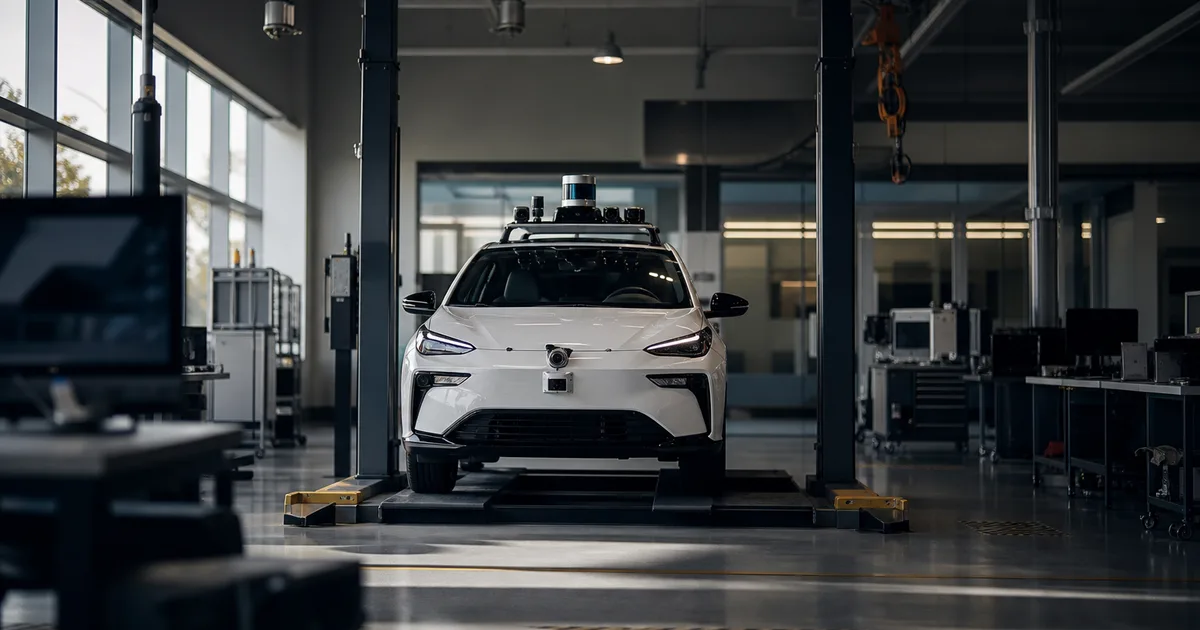
The autonomous vehicle space is one of the few corners of the tech industry where a newly graduated international student with a strong ML background can walk into a genuinely frontier role — not building one more recommendation feed, but working on perception systems that have to be right when it counts. If you are on F-1, OPT, STEM OPT, or H-1B and targeting AV companies, this industry hires heavily from international talent pools and has a real track record of sponsoring visas. The challenge is understanding which roles qualify, how to time your status transitions correctly, and what red flags to watch for in the hiring process.
This guide covers the types of ML roles AV companies hire internationally, how STEM OPT and H-1B interact with the AV hiring cycle, and the green card paths most relevant to engineers in this field.
What AV companies actually mean by "ML engineer"
Autonomous vehicle companies use "ML engineer" to describe a range of roles that differ significantly in their technical profile. Before you apply, understand what sub-discipline you are targeting — it affects both your application strategy and your visa petition.
| Role Title | Core Skill Set | Typical Degree Background |
|---|---|---|
| Perception Engineer | Computer vision, object detection, LIDAR/radar point cloud processing | CS, EE, Robotics |
| Prediction / Behavior Modeling Engineer | Probabilistic forecasting, trajectory prediction, Gaussian processes | CS, Statistics, Applied Math |
| Planning / Decision-Making Engineer | Reinforcement learning, search algorithms, motion planning | CS, EE, Robotics |
| Sensor Fusion Engineer | Kalman filters, multi-modal sensor integration (camera + LIDAR + radar) | EE, CS, Physics |
| ML Infrastructure Engineer | Training pipelines, distributed GPU compute, data labeling systems | CS, Software Engineering |
| Safety / Validation ML Engineer | Formal methods, adversarial testing, scenario generation | CS, EE, Systems |
For H-1B specialty-occupation purposes, all of these typically qualify — each maps clearly to a degree field. The weakest cases arise when an ML engineer is primarily doing generic software engineering with very little ML content in the actual day-to-day work. Your offer letter and the H-1B petition's description of duties should accurately and specifically describe the ML content of the role.
If you are interested in how computer vision roles more broadly qualify for sponsorship, see our post on computer vision engineer H-1B sponsorship.
The AV company landscape for international sponsorship
The AV industry spans large technology companies with dedicated AV divisions, standalone AV startups, and traditional automotive OEMs with software subsidiaries. Each segment has a different sponsorship profile.
Large tech platforms with AV divisions (Waymo, Amazon/Zoox, Apple's AV team) are strong H-1B sponsors with established immigration legal teams, predictable petition processes, and well-run PERM pipelines.
Standalone AV startups vary widely. A startup can file an H-1B — there is no company-size minimum — but verify they have immigration counsel, understand DOL prevailing wage, and have the financial stability to remain your employer through the process. Use our checklist for evaluating whether a startup can sponsor H-1B before signing anything.
Automotive OEM subsidiaries (Ford's Latitude AI, Stellantis autonomous programs, BMW's US software centers) move slower in hiring but are financially stable sponsors with solid H-1B track records.
Robotics and adjacent companies (Boston Dynamics, Nuro, Kodiak Robotics) also sponsor H-1B for ML talent. The dynamics resemble climate tech startups — mission-driven, strong technical bars, variable immigration infrastructure — as covered in our post on software engineers at climate tech startups.
To verify any company, search the public DOL LCA disclosure database and USCIS H-1B employer data for petition volumes and prevailing wage levels.
Navigating STEM OPT at an AV company
If you have recently graduated and are working on initial 12-month OPT or are applying for the 24-month STEM OPT extension, AV companies are generally well-suited employers for STEM OPT purposes. Here is what you need to do and when.
Step-by-step STEM OPT setup at an AV company
- Confirm your degree qualifies. CS, EE, mechanical engineering with a robotics focus, and applied math all appear on the DHS STEM Designated Degree Program list. Verify with your DSO before assuming.
- Verify the employer is E-Verify enrolled. This is a hard requirement — no workaround exists. Large AV companies nearly always are; for startups, confirm with HR before accepting the offer.
- Complete USCIS Form I-983. The Training Plan for STEM OPT Students must describe how your role provides practical training tied to your degree. For a perception or prediction ML engineer, this connection is clear.
- Apply for the STEM OPT EAD at least 90 days before your current EAD expires. Filing on time protects the 180-day automatic extension.
- Track the 90-day unemployment limit. Across your entire STEM OPT period, you cannot accumulate more than 90 cumulative days of unemployment. If you are laid off, start your search immediately — see our guide on beating the OPT 90-day unemployment clock.
- Report changes to your DSO within 10 days. Any change of employer, title, or worksite requires an updated I-983 and DSO notification.
Your STEM OPT window exists to let you land an H-1B filing before your authorization expires. The H-1B lottery registration opens in early March; selected petitions are filed from April 1; H-1B status starts October 1. The H-1B cap-gap provision extends your authorized work if your STEM OPT expires between April 1 and October 1 of the same year.
The H-1B lottery and AV hiring timelines
AV companies hire year-round, but H-1B follows a fixed annual cycle. If a company wants to hire you in September and your STEM OPT expires in February, they must file your H-1B the following April — meaning you need continued STEM OPT coverage through that window. Work through this timeline explicitly with immigration counsel before accepting any offer.
Key H-1B dates: registration opens early March, lottery results in late March, petition filing April 1 through June 30, H-1B start date October 1. Premium processing (~$2,965) guarantees adjudicative action within 15 business days and is worth the fee for the certainty it provides. Missing a lottery cycle means roughly a year wait — survivable on STEM OPT if time remains, but AV industry layoffs during that gap create real risk.
For a broader view of ML engineering roles and H-1B across tech sectors, see our post on machine learning engineer H-1B sponsorship.
DOL prevailing wage and AV salary alignment
AV companies pay competitively, which helps with H-1B compliance. USCIS requires H-1B workers to be paid the higher of the actual wage (what similarly situated employees earn at the same employer) or the prevailing wage (DOL's published rates for the role and location). DOL publishes prevailing wages in four levels (Level I through Level IV) via the Office of Foreign Labor Certification. Watch for three common problem patterns:
- Startups placing a graduate-level ML engineer at a Level I wage — a routine source of RFEs
- An LCA wage below what other engineers in equivalent roles at the company earn
- A worksite location change after LCA filing, requiring an amended LCA for the new Metropolitan Statistical Area
Unvested equity does not count toward prevailing wage compliance — only cash compensation and certain benefits count. Verify your cash salary meets prevailing wage before signing.
LIDAR perception roles and specialty-occupation precision
Roles involving LIDAR point cloud processing, radar signal processing, or multi-sensor fusion have especially clean specialty-occupation profiles for H-1B purposes — they map clearly to electrical engineering or computer science degree requirements that USCIS can readily verify. The key is precision in the petition: "development of perception algorithms for 3D LIDAR point cloud object detection using deep neural networks" is far stronger than "software development." If your role sits at the AV-robotics intersection, our post on robotics engineer H-1B sponsorship covers overlapping considerations.
Green card planning for AV engineers
The autonomous vehicle industry has a meaningful research component, which creates more green card pathway options than a typical software engineering role.
PERM / EB-2 and EB-3
The standard path is employer-sponsored PERM labor certification followed by I-140 — EB-2 for roles requiring an advanced degree, EB-3 for bachelor's-level roles. For engineers born outside India and China, EB-2 and EB-3 wait times are relatively short. For Indian nationals, EB-2 India and EB-3 India backlogs are severe — check the monthly Visa Bulletin for current priority dates. Start the PERM conversation as soon as you have one year of H-1B status; PERM recruitment alone takes six to nine months.
EB-2 NIW (National Interest Waiver)
If you have publications, conference papers (NeurIPS, CVPR, ICCV, ICRA, CoRL), patents, or other documented impact in autonomous vehicle ML, an EB-2 NIW self-petition is worth serious consideration. NIW eliminates the PERM requirement and lets you self-petition — you are not tied to your current employer. USCIS uses the Dhanasar three-prong test: substantial merit and national importance, being well-positioned to advance the endeavor, and benefit to waiving job offer and labor certification. AV safety — reducing traffic fatalities — has been recognized as an area of national importance. Engineers who can document specific contributions have a credible NIW basis. EB-1A (extraordinary ability) is the fastest path for engineers with major awards, sustained high-citation research, or top-tier field recognition, but it is genuinely selective.
Common mistakes
Accepting an offer without confirming the employer is E-Verify enrolled. For STEM OPT, this is disqualifying — you cannot work STEM OPT at a non-E-Verify employer. Ask HR before you sign.
Letting STEM OPT expire without a plan. STEM OPT ends 24 months after the extension approval date. Many engineers know roughly when it expires but do not count backward from lottery timelines to confirm they have coverage. Map this out in a spreadsheet, not a mental estimate.
Taking a LIDAR or perception role that is actually a data-labeling ops role. Some AV companies hire for "ML" roles that are largely data annotation review and tooling — these have a weaker specialty-occupation profile and may not support H-1B. Clarify actual duties in writing before accepting.
Assuming a startup can file H-1B without immigration counsel. Complex specialty-occupation questions in AV roles benefit from attorney packaging. Push for legal support as part of your offer negotiation.
Not negotiating green card sponsorship into the offer. The right time to discuss PERM timelines is during offer negotiation — not two years later. Our guide on negotiating green card sponsorship into an offer covers how to raise this without jeopardizing the offer.
Ignoring the I-983 annual review. Every 12 months you and your employer must update the I-983 training plan. Missing this is a compliance failure. Add it as a recurring calendar event.
Overlooking adjacent sectors. If top-tier AV companies have freezes, automotive EV programs, robotics companies, and ADAS suppliers also sponsor H-1B for ML talent. Our post on automotive and EV industry H-1B sponsorship covers that landscape.
Frequently asked questions
Do autonomous vehicle companies actually sponsor H-1B for ML engineers?
Yes — AV companies are among the more active H-1B sponsors in the broader tech sector. Companies focused on perception, prediction, and planning stacks hire large numbers of ML engineers and file H-1B petitions regularly for international candidates. Verify specific companies using the public DOL LCA disclosure database or USCIS H-1B employer data before accepting an offer.
Does an ML engineer role at an AV company qualify as a specialty occupation?
In most cases yes. USCIS defines specialty occupation as a position normally requiring at least a bachelor's degree in a specific field. ML engineering at AV companies routinely requires a degree in computer science, electrical engineering, or robotics, and roles focused on perception, sensor fusion, or prediction modeling have a strong specialty-occupation profile. Weak cases arise when actual duties do not clearly connect to those degree fields — be precise in your offer letter and petition.
Can I work at an AV company on STEM OPT before my H-1B is filed?
Yes. STEM OPT gives you up to 24 months of additional authorized work beyond your initial 12-month OPT. Degrees in CS, EE, and related engineering fields qualify. Your employer must be E-Verify enrolled and sign USCIS Form I-983. Use the STEM OPT window to get your H-1B petition filed before the authorization expires.
What happens to my visa status if the AV company does a layoff?
On H-1B, a layoff gives you a 60-day grace period to transfer to a new employer, change status, or prepare to depart. If your I-140 has been approved for more than 180 days, AC21 portability lets you port the petition and priority date to a new employer. On STEM OPT, layoff counts against the 90-day cumulative unemployment limit — start your job search immediately.
Which green card path is best for an ML engineer at an AV company?
Most AV companies sponsor EB-2 or EB-3 via PERM labor certification. Engineers with publications, patents, or conference papers may qualify for EB-2 NIW self-petition, bypassing PERM entirely. EB-1A is viable for engineers with major awards or sustained high-citation research. Start the green card conversation with your employer early — PERM timelines are long, and Indian nationals face significant EB-2/EB-3 backlogs.
The AV space is one of the most technically demanding sectors for ML engineers, and the visa sponsorship infrastructure here is real. The keys are timing your OPT and STEM OPT correctly, picking employers with demonstrated sponsorship track records, and starting your green card conversation earlier than feels comfortable.
If you want help mapping your specific timeline — whether you are months from STEM OPT expiration or evaluating an offer from an AV startup — F1Jobs works with international candidates in technical roles and can help you pressure-test the plan.
Frequently asked questions
Do autonomous vehicle companies actually sponsor H-1B for ML engineers?
Yes — AV companies are among the more active H-1B sponsors in the broader tech sector. Companies focused on perception, prediction, and planning stacks hire large numbers of ML engineers and regularly file H-1B petitions for international candidates. Check the DOL LCA disclosure database or USCIS H-1B employer data to confirm specific companies before accepting an offer.
Does an ML engineer role at an AV company qualify as a specialty occupation for H-1B purposes?
In most cases yes. USCIS defines specialty occupation as a position normally requiring at least a bachelor's degree (or equivalent) in a specific field. ML engineering roles at AV companies routinely require a bachelor's or master's degree in computer science, electrical engineering, robotics, or a closely related field. Roles focused on perception, sensor fusion, prediction modeling, or planning algorithm development have a strong specialty-occupation profile. Weak cases arise when the actual day-to-day duties do not clearly map to those degree requirements — so be precise in your offer letter and petition about what you will actually do.
Can I work at an AV company on STEM OPT before my H-1B is filed?
Yes. STEM OPT gives you up to 24 months of authorized work on top of your initial 12-month OPT, for a total of up to 36 months. Degrees in computer science, electrical engineering, mechanical engineering with a robotics specialization, and most engineering sub-fields qualify. Your employer must sign USCIS Form I-983 (Training Plan for STEM OPT Students) and meet E-Verify enrollment requirements. Use that window to get your H-1B petition filed through the employer before your STEM OPT expires.
What happens to my visa status if the AV company does a layoff?
If you are on H-1B and are laid off, you enter a 60-day grace period during which you can file an H-1B transfer to a new employer, change status, or prepare to leave the country. Under AC21 portability, if you have an approved I-140 from the laying-off company that is more than 180 days old, you can port that petition and its priority date to a new employer. On STEM OPT, layoff triggers the 90-day unemployment clock — you have 90 cumulative days of unemployment across your entire STEM OPT period before you fall out of status.
Which green card path is best for an ML engineer at an AV company?
Most AV companies sponsor EB-2 or EB-3 through the PERM labor certification process. If you have published research, patents, or media coverage tied to your AV work, an EB-2 NIW (National Interest Waiver) self-petition is worth exploring — autonomous vehicle safety is an area courts and USCIS have recognized as serving national interest. EB-1A (extraordinary ability) is viable for engineers who have made genuinely outsized contributions (major technical awards, conference keynotes at top venues, large citation counts). Regardless of path, start the conversation with your employer about green card sponsorship early — PERM timelines can be long, especially for Indian nationals given EB-2/EB-3 India backlogs.