Visa Options for International Musicians and Performing Artists (O-1, P, H-1B) 2026
From the O-1B to the P-1 and even H-1B, international musicians have more US visa paths than most realize — here is how each one works in 2026.
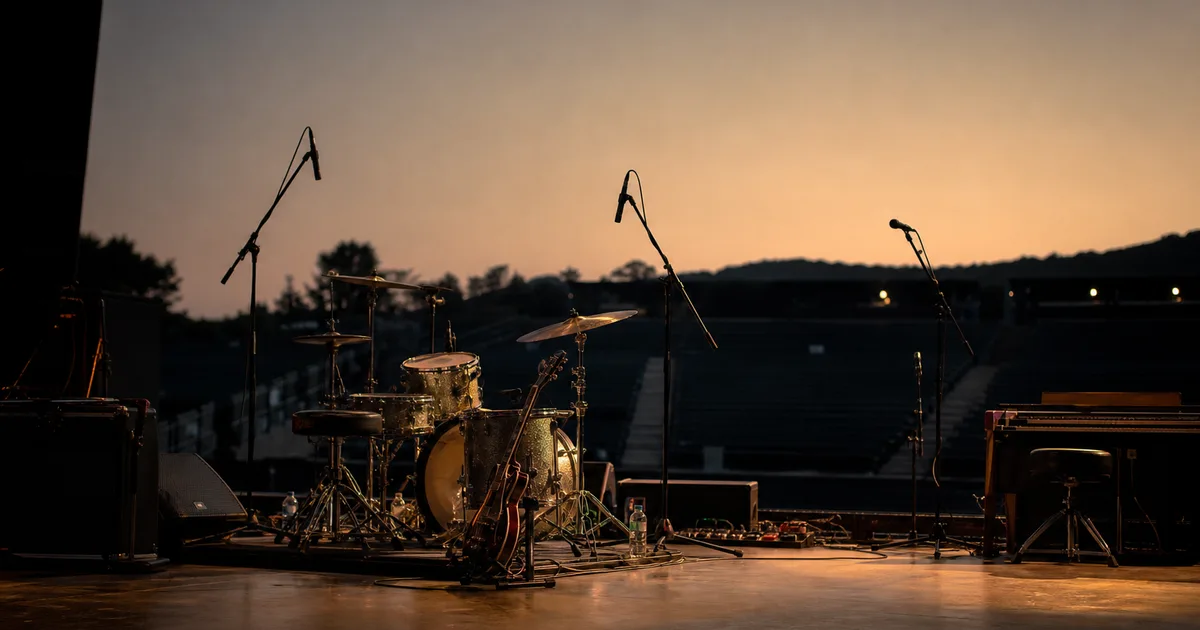
You spent years building your career — recording, touring, performing across continents — and now you want to work in the United States. Maybe you have a record deal with a US label, a season contract with an American orchestra, or a touring schedule that passes through US venues for months at a time. The work is real. The question is which visa unlocks it.
The US immigration system has several purpose-built pathways for performing artists, and they are more accessible than most musicians realize. The O-1B and the P visa category exist because Congress recognized that performing arts talent does not fit neatly into the standard employment model. This guide lays out each option plainly — how to qualify, who files, how long it takes, and how it connects to a green card if that is your goal.
The visa landscape for performing artists
Unlike software engineers who funnel toward H-1B, international musicians have multiple realistic paths depending on career stage, the nature of the US engagement, and whether the work is temporary or permanent.
| Visa | Best for | Duration | Cap? | Who petitions |
|---|---|---|---|---|
| O-1B | Established solo artists with international recognition | Up to 3 yrs, extendable | No | US employer, agent, or organization |
| P-1B | Internationally recognized performers, groups, touring acts | Up to 1 yr (extendable), up to 5 yrs for groups | No | US employer or sponsor |
| P-2 | Artists in reciprocal exchange programs (union-based) | Duration of the program | No | US organization or union |
| P-3 | Culturally unique performers (folk, traditional, ethnic arts) | Up to 1 yr, extendable | No | US employer or sponsor |
| H-1B | Music educators at universities, some specialized roles | 3 yrs, extendable to 6 | Yes (cap-exempt for universities) | US employer |
| J-1 | Short-term cultural exchange, visiting artists in residence | Varies by category | No | Designated sponsor organization |
For most professional musicians seeking to perform commercially in the US, the O-1B or P-1B will be the relevant starting point. J-1 is worth knowing for residency and educational programs but comes with a potential two-year home residency requirement that complicates longer-term plans.
O-1B: Extraordinary ability in the arts
The O-1B is the workhorse visa for established international artists. It covers aliens of extraordinary ability in the arts or extraordinary achievement in motion picture and television production.
What "extraordinary ability" means for musicians
USCIS defines extraordinary ability in the arts as "distinction" — a high level of achievement evidenced by a degree of skill and recognition substantially above what is ordinarily encountered. Unlike the O-1A for science and business, the O-1A standard requires being among the small percentage at the very top of the field. The O-1B arts standard is meaningfully lower: you need to show distinction, not uniqueness.
To demonstrate distinction, you must satisfy at least three regulatory criteria: leading or starring roles in productions or events with a distinguished reputation; critical role for a distinguished organization; high salary relative to peers; recognition from critics, government agencies, or labor unions; commercial success or critical acclaim evidenced by recordings or touring receipts; or a record of major commercial or critically acclaimed successes.
One Grammy nomination or win almost always satisfies multiple criteria simultaneously. A musician who has toured headline slots at major festivals, received coverage in major publications, and holds a recording contract can typically meet three or more criteria. Less obvious cases — a highly accomplished session musician, a principal player in a regional orchestra — require a more deliberate evidence package.
Who files the O-1B petition
A US employer, a US agent, or a US organization files Form I-129 on your behalf. In practice, most touring musicians use a US agent or entertainment attorney as the petitioner, which is explicitly permitted by regulation. The petitioner must provide a written consultation from a peer group, labor organization, or person with expertise in your field — typically the American Federation of Musicians (AFM) or the American Guild of Musical Artists (AGMA) for classical performers.
O-1B timeline and cost
Standard USCIS processing runs approximately 3-5 months for I-129 filings. Premium processing ($2,965 as of early 2026) provides adjudication within 15 business days — given touring schedules, most artists use it. Initial approval is for up to three years, with one-year extensions available with no statutory maximum, making the O-1B a practical long-term solution for artists with ongoing US engagements. For a full breakdown of the evidence standards, see our complete O-1 visa guide for artists and creatives.
P visas: Purpose-built for performers
The P visa category was created specifically for performing artists, athletes, and entertainers. It has three relevant subcategories.
P-1B: Internationally recognized performers
The P-1B is for individual performers or groups who have been internationally recognized as outstanding in their discipline for a sustained and substantial period of time. The standard is explicitly lower than the O-1B — you do not need to be "extraordinary," you need to be "internationally recognized."
Supporting evidence typically includes documentation of sustained international performance (tours, festival appearances, foreign venue contracts), reviews in nationally or internationally recognized publications, and proof of a critical role for distinguished organizations.
For entertainment groups, at least 75% of current members must have been performing together for at least one year — document the personnel history carefully if your lineup has changed. P-1B petitions require a written AFM consultation, which generally takes 1-2 weeks and must be obtained before the I-129 is filed. The P-1B is valid for the duration of the specific event or engagement, up to one year (groups up to five years), with one-year extensions available.
P-3: Culturally unique performers
If you are a folk musician, a traditional performer of your home country's cultural heritage, a classical artist in a non-Western tradition, or any artist performing in a style that is culturally unique, the P-3 is designed for you. The requirement is that you are coming to participate in a cultural event or program that furthers the understanding or development of your art form. Many world music artists, classical Indian musicians, West African drummers, and traditional dance companies enter on P-3.
The P-3 requires a written consultation from a labor organization or similar entity and must involve culturally unique performances, not commercially standard pop performances by foreign artists.
P-2: Reciprocal exchange
The P-2 is limited to exchange programs between US and foreign artists' organizations, typically facilitated by unions. It is less commonly used unless your situation fits a specific existing exchange arrangement between the AFM or AGMA and a foreign counterpart.
H-1B for musicians: A narrow but real path
The H-1B is not the natural visa for performing artists, but it is available in specific circumstances. The critical question is whether the role qualifies as a "specialty occupation" requiring at least a bachelor's degree in a specific field.
Where H-1B works for musicians
Music faculty positions at colleges and universities are the clearest fit. A position as Assistant Professor of Music, Instructor of Strings, or Director of Jazz Studies typically requires a music degree (often a master's or DMA), making it a qualifying specialty occupation. These institutions are also frequently cap-exempt, meaning they can file H-1B petitions year-round without entering the lottery.
See our cap-exempt H-1B employer guide for the full list of qualifying employer types — nonprofit arts organizations affiliated with universities and government arts programs can also qualify.
A principal or section player at a major symphony orchestra has also succeeded with H-1B in some cases, particularly when the orchestra has a policy of requiring advanced degrees for auditions. These cases require strong petition packaging and often an RFE response, but they are not theoretical — they have been approved.
Performing roles at commercial venues — a hotel band, a touring pop act, a Broadway production — generally do not meet the specialty-occupation standard. Those situations should default to the O-1B or P visa.
H-1B and OPT for music students
If you are on F-1 OPT at a US music school and have accepted a qualifying faculty position, plan your H-1B strategy early. The 90-day unemployment clock applies during OPT. STEM OPT extensions are available for STEM-designated programs — most music programs do not qualify — so standard OPT's 12-month window is the typical runway for music graduates. If you do not secure an H-1B-eligible employer before OPT expires, the O-1B or P visa is the path forward for continued work as a performer.
Path to a green card
Temporary status is a starting point. Most internationally successful musicians eventually want a permanent path.
EB-1A (self-petition). The most direct route for established artists. You file Form I-140 directly — no employer sponsor and no PERM labor certification required. You must show extraordinary ability through sustained national or international acclaim. The EB-1A evidentiary standard is higher than the O-1B distinction standard, but artists who have performed on O-1B for several years typically build the necessary record. Priority dates for EB-1A are current for most countries, making it faster than the EB-2 or EB-3 backlogs.
EB-2 NIW (National Interest Waiver). Bypasses the PERM requirement if you can show your work is in the national interest under the three-prong Dhanasar framework. Artists with a clear cultural or educational mission can construct this argument; purely commercial performers face a harder case.
Employer-sponsored EB-2/EB-3. An orchestra, arts organization, or university can sponsor you through standard PERM labor certification. This works on a reasonable timeline for musicians from most countries; nationals of India or China face significant retrogression in the EB-2 and EB-3 queues. See the O-1 visa complete guide for 2026 for how the O-1B-to-EB-1A transition typically unfolds.
Film, TV, and cross-industry work
Many musicians in the US compose for film and television, record soundtracks, or perform session work for productions. If your work involves a combination of recording, performing, and production for film or TV, the O-1B standard shifts to "extraordinary achievement in motion picture or television production," which carries a different — generally higher — evidentiary bar. Artists doing exclusively live performance stay under the performing arts O-1B standard. See our film and TV industry visa sponsorship guide for how those distinctions play out in practice.
Step-by-step timeline for a touring artist coming to the US
- Months 6-12 before first US date: Identify your US petitioner — a venue, promoter, booking agent, or US management company. Get a written engagement contract or series of contracts.
- Month 5: Hire a US immigration attorney experienced in entertainment visas. Gather your evidence package — reviews, press, contracts, awards, union memberships.
- Month 4: Obtain AFM or AGMA consultation. This typically takes 1-2 weeks but can run longer if the union has questions about your application.
- Month 3: Attorney drafts and files Form I-129 with premium processing. Provide all itinerary details, contracts, and biographical materials.
- Month 3, week 3: USCIS adjudicates within 15 business days under premium processing.
- Month 3, week 4 (if approved): Apply for the visa stamp at a US consulate abroad, or if already in the US in another valid status, file for change of status.
- Arrival: Present approved petition and visa stamp at the port of entry. Carry copies of all petition documents and approval notice at all times during your US stay.
- Ongoing: Track your authorized period of stay on your I-94. File for extension at least 45 days before your status expires — ideally 90 days in advance with premium processing.
Common mistakes
Filing too late. Even with premium processing, you need the AFM consultation, consular appointment, and logistics — plan for at least 90 days before your first US date, ideally six months.
Using an inexperienced petitioner. USCIS scrutinizes petitioners. A venue that has never filed an I-129 before raises more questions than an established management company or arts organization. Thin petitioner financials invite requests for evidence.
Treating the P visa as a permanent solution. P visas are event-specific and annual. If you want long-term US residency, start building your EB-1A or NIW record while on P or O status — not after a decade on temporary visas.
Rushing the evidence package. Reviews, remuneration contracts, expert letters, and international performance records take time to gather. Rushing produces thin petitions that invite RFEs and extend your timeline further.
Confusing O-1B status with the O-1B visa stamp. An approved I-129 lets you stay in status, but if you travel outside the US you need a new visa stamp from a consulate before re-entry. Your I-797 approval notice is not a travel document.
Ignoring the J-1 two-year bar. If you previously held a J-1 that carries a 212(e) home residency requirement, you cannot change to O-1B, P, or H-1B until you fulfill or waive it. Check your DS-2019 and J-1 visa before making plans.
Skipping the AFM consultation. The American Federation of Musicians will not issue a favorable consultation without documentation. It is a prerequisite for both O-1B and P petitions — start it early.
Frequently asked questions
What is the best visa for an international musician coming to perform in the US?
For a touring engagement, the P-1B is usually the fastest option — it is purpose-built for internationally recognized performers coming for a specific tour or event. If you have a sustained career with critical acclaim and want longer-term US access, the O-1B is more flexible, valid up to three years initially. The right choice depends on your recognition level, the nature of the engagement, and whether you have a US petitioner ready to file.
Can a musician get an H-1B visa?
Yes, but it is uncommon. Music faculty roles at colleges — assistant professor, lecturer, director of a program — typically qualify as specialty occupations and can be filed by cap-exempt universities year-round. Commercial performing roles at venues generally do not meet the specialty-occupation standard. Musicians in teaching or academic roles should explore this path; touring performers should default to O-1B or P.
How do I qualify for the O-1B musician visa?
You must demonstrate distinction in your field and satisfy at least three regulatory criteria: leading roles in distinguished productions, critical role for a distinguished organization, high salary relative to peers, commercial success, critical recognition in major publications, or recognition from industry experts. A Grammy nomination typically satisfies multiple criteria. A strong touring history with documented reviews and contracts can also build a qualifying evidentiary record.
What is the difference between a P-1B and a P-3 visa?
The P-1B is for internationally recognized individual artists or groups coming for a specific commercial performance. The P-3 is for artists coming to perform, teach, or coach in a culturally unique program — folk musicians, traditional performers, and culturally specific ensembles. Both require an AFM or AGMA consultation and a US petitioner, but the P-3 is specifically for artists whose work is rooted in a particular cultural heritage rather than the mainstream entertainment industry.
Is there a green card path for performing artists?
Yes. The EB-1A self-petition (no employer sponsor, no PERM required) is the most direct route for artists with an established record of extraordinary ability. The EB-2 NIW is available if you can frame your work as nationally important. Artists employed by orchestras, universities, or arts organizations can also be sponsored through standard PERM-based EB-2 or EB-3, though priority-date backlogs make that path slow for nationals of India and China.
Working through which visa path fits your performing career? F1Jobs works with international artists and musicians navigating US immigration — reach out and we will point you in the right direction.
Frequently asked questions
What is the best visa for an international musician coming to perform in the US?
For a touring or performing engagement, the P-1B (or P-1B group) is usually the fastest and most targeted option because it is purpose-built for internationally recognized artists coming for a specific performance or tour. If you have a sustained career with critical acclaim, the O-1B offers more flexibility and longer validity — up to three years initially. The right choice depends on your recognition level, the nature of the engagement, and whether you have a US petitioner ready to file.
Can a musician get an H-1B visa?
Yes, but it is uncommon and fact-specific. Music instruction at a college or university — think a faculty or lecturer role — can qualify as a specialty occupation. Performing roles at entertainment venues rarely meet the H-1B specialty-occupation standard on their own. Cap-exempt employers such as universities and nonprofit performing arts organizations can file H-1B petitions year-round without entering the lottery, which is a meaningful advantage for classical musicians and music educators.
How do I qualify for the O-1B musician visa?
USCIS evaluates O-1B applicants on extraordinary ability in the arts, defined as distinction — a high level of achievement evidenced by a degree of skill and recognition substantially above ordinary. You need to meet at least three of the regulatory criteria, which include leading or starring roles in distinguished productions, critical role for organizations with distinguished reputations, high salary relative to peers, commercial success, critical recognition in major publications, and recognition from experts in the field. One Grammy nomination is generally sufficient; so is a substantial touring history with major venues.
What is the difference between a P-1B and a P-2 or P-3 visa?
The P-1B is for internationally recognized individual artists or entertainment groups coming to the US for a specific performance. The P-2 is a reciprocal exchange program between US and foreign artists through labor unions or similar organizations. The P-3 is for artists or entertainers coming to perform, teach, or coach in a culturally unique program — folk musicians, traditional dance troupes, and similar culturally specific performers use P-3 most often. Each requires a US petitioner (typically a venue, promoter, or agent) to file the I-129.
Is there a green card path for performing artists?
Yes. The EB-1A (extraordinary ability) green card is the most direct route and requires no employer sponsor and no PERM labor certification — you self-petition with Form I-140. The EB-2 NIW (National Interest Waiver) is a second option if you can show your work benefits the US in a way that justifies waiving the PERM requirement. Both paths require substantial documentation of your career. Artists who have ongoing US employer sponsors can also pursue the standard PERM-based EB-2 or EB-3 route, though the timeline is significantly longer.