Optometrist Visa Sponsorship and Licensing for International Graduates (2026)
International OD graduates face a dual challenge — clearing NBEO boards and securing H-1B sponsorship. Here is a step-by-step path through both.
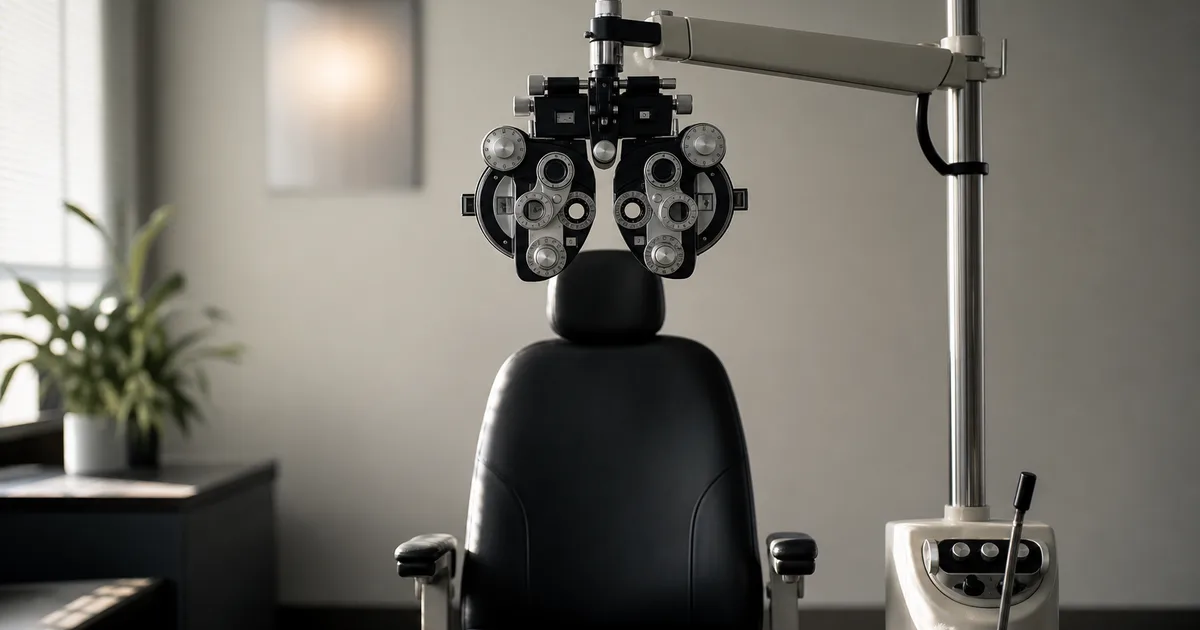
You spent four years earning your OD, passed your boards, and are ready to start practicing. The only thing standing between you and a full-time clinical role is your immigration status — and the clock on your OPT is already ticking. If you trained at a US optometry school, you likely have 12 months of post-completion work authorization. Unlike many STEM-heavy fields, optometry does not qualify for the 24-month STEM OPT extension, which compresses your window to find an employer who will sponsor your H-1B before your OPT expires.
The good news is that optometrists are in genuine demand across the US, and healthcare employers — particularly VA facilities, federally qualified health centers (FQHCs), and large vision care networks — have established immigration infrastructure that makes H-1B and green card sponsorship a regular part of hiring. This guide walks you through the licensing requirements, OPT timing, H-1B sponsorship mechanics, cap-exempt opportunities, and long-term green card paths specific to optometry.
Licensing first — nothing else works without it
Before any employer will seriously discuss H-1B sponsorship, you need a state optometry license or a clear timeline to get one. Licensing in the US is state-specific and administered by individual state boards, but the core national examination requirement is consistent.
The NBEO examination series
The National Board of Examiners in Optometry (NBEO) administers the three national licensing examinations that virtually all state boards require:
| Exam | What it covers | When most candidates sit |
|---|---|---|
| Applied Basic Science (ABS) | Anatomy, physiology, pharmacology, optics | During second or third year of OD program |
| Patient Assessment and Management (PAM) | Clinical assessment, diagnosis, differential | Third or fourth year |
| Treatment and Management of Ocular Disease (TMOD) | Therapeutics, disease management, surgery co-management | Fourth year or after graduation |
Most states require all three parts to be passed before issuing a full license. Some states add a state-specific jurisprudence exam on top of the NBEO series. California, Florida, and New York each have distinct requirements — check the relevant state board directly.
For internationally trained OD graduates who earned their degree outside the US, the path is more complex. You would typically need to have your credentials evaluated, potentially complete additional coursework or residency hours, and meet individual state board requirements before sitting for NBEO boards. This guide focuses primarily on international students who trained at accredited US optometry schools.
License and work authorization timing
Your strategy should be to complete all three NBEO parts before your OPT end date, and ideally before your employer files the H-1B petition. An employer sponsoring your H-1B needs to list the position's specialty-occupation basis in the I-129 petition — a licensed or license-eligible OD position with a clear OD degree requirement satisfies that standard more cleanly than an unlicensed candidate.
If you cannot be fully licensed by your OPT start date, many states offer provisional or limited licenses for new graduates awaiting full board results. Confirm whether your target state offers this and whether it satisfies your employer's credentialing requirements.
OPT and the STEM OPT gap in optometry
Standard F-1 OPT gives you 12 months of work authorization after completing your OD. You need to apply with USCIS before your program end date and receive an Employment Authorization Document (EAD) before beginning work.
The critical limitation for optometry: the CIP code for Doctor of Optometry programs (51.1701) is not on the STEM-designated programs list. You are generally not eligible for the 24-month STEM OPT extension. This is in contrast to colleagues who may have done a dual-degree with a STEM component, but for a standard OD graduate, plan for 12 months only.
Practical implications:
- Apply for OPT early. USCIS allows applications up to 90 days before your program end date. Processing can take 3-5 months; start the moment your DSO certifies your SEVIS record.
- 90-day unemployment limit. You cannot accumulate more than 90 days of unemployment during standard OPT. A gap between OPT start and your first day of work counts. Line up your position before OPT begins if possible.
- Cap-gap protection. If you are selected in the H-1B lottery for an October 1 start date and your OPT expires before October 1, you are protected under cap-gap rules — your F-1 status and OPT authorization are automatically extended until October 1 or until USCIS adjudicates your H-1B petition, whichever comes first.
For strategies on managing OPT timing see our guide on beating the OPT 90-day unemployment clock.
H-1B sponsorship for optometrists
Does optometry qualify as a specialty occupation?
Yes. USCIS specialty-occupation rules require that a position normally require a bachelor's degree or higher (or its equivalent) in a specific field as a minimum standard for entry. Optometry unambiguously meets this standard — the profession requires an OD degree, a professional doctoral degree, as the entry-level credential. USCIS has historically treated optometrist petitions as straightforward specialty-occupation cases.
The Department of Labor (DOL) LCA (Labor Condition Application) process is the first step before USCIS filing. The employer must file an LCA attesting to the prevailing wage for the optometrist role in the relevant geographic area. DOL's Foreign Labor Certification Data Center publishes wage data by occupation and location; optometrist wages must meet the prevailing wage at minimum and typically fall into wage levels II or III depending on the role's responsibilities.
Cap-subject vs. cap-exempt employers
H-1B petitions are subject to an annual cap of 65,000 regular cap slots plus 20,000 master's cap slots. Demand from lottery applicants has far exceeded supply in recent years, meaning most cap-subject petitions go through a random lottery with no guarantee of selection.
Cap-exempt employers are a significant advantage for optometrists specifically because so many strong optometry employers qualify:
| Employer type | Cap-exempt? | Examples |
|---|---|---|
| US Department of Veterans Affairs (VA) | Yes (federal government) | Any VA medical center eye clinic |
| Federally Qualified Health Centers (FQHCs) | Often yes (nonprofit/public) | Community health networks, CHC systems |
| University-affiliated eye clinics | Yes (higher education institutions) | Academic medical center optometry departments |
| Large vision retail chains | No — cap-subject | National chains with commercial practices |
| Independent private practices | No — cap-subject | Single or multi-location private OD practices |
For a deep look at cap-exempt filing advantages see cap-exempt healthcare and university hospital employers.
If you're at a cap-subject employer, the timeline for H-1B filing is rigid: petitions for October 1 start dates open for registration in early March of each year. Missing that window means waiting another full year — a serious problem if your OPT expires in the interim.
H-1B filing timeline for OD graduates
A typical H-1B sponsorship timeline for an optometrist starting from OD graduation:
- Month 1-2: Complete NBEO exams and receive state board license (or provisional license)
- Month 2-3: Accept offer from sponsoring employer; employer initiates immigration process with their law firm
- Month 3-4: Employer files LCA with DOL (standard 7-business-day processing)
- Month 4: Employer files I-129 with USCIS (standard or premium processing)
- Month 4-7: USCIS adjudicates (3-5 months standard; 15 business days with premium processing at $2,965 fee)
- Month 6: H-1B approved; you maintain continuous work authorization via OPT in the meantime
For a cap-exempt employer, this timeline can start any month of the year. For a cap-subject employer, the March lottery registration window drives the entire schedule.
Finding employers that sponsor optometrists
Not every optometry employer has the infrastructure or willingness to sponsor. Here is how to identify those that do:
VA medical centers. The VA employs a large number of optometrists across its facilities nationwide. As a federal employer, the VA is cap-exempt and files H-1B petitions directly through OPM/VA HR. Search USAJobs.gov for "optometrist" positions. Many VA optometrist roles specifically list visa sponsorship availability.
Federally Qualified Health Centers. FQHCs receive federal funding and serve underserved populations. Many operate in shortage areas and actively recruit internationally trained clinicians. The HRSA Find a Health Center tool lists active FQHCs. Many are organized as nonprofit entities, which is frequently cap-exempt.
Academic eye care centers. University-based optometry programs — Indiana University, Pacific University, Ohio State, SUNY, Nova Southeastern, and others — operate clinical practices attached to their programs. These are cap-exempt and regularly hire recent OD graduates.
Multi-location vision care groups. Regional and national vision care groups vary in their sponsorship track record. Use the USCIS H-1B Employer Data Hub to verify whether a specific employer has filed H-1B petitions in recent years. An employer who has filed zero H-1B petitions historically is a harder sponsorship ask than one with a track record of dozens of annual filings. See how to check if a company sponsors H-1B for the exact lookup process.
Comparing healthcare field sponsorship patterns. The overall dynamic — licensed clinical role, legitimate specialty occupation, shortage in many geographic areas — is similar to pharmacy. The H-1B sponsorship landscape for pharmacists and the dental field follow a parallel structure and are worth reading for cross-field comparisons.
Green card paths for optometrists
H-1B gets you in the door, but most international optometrists are eventually targeting permanent residency. The primary employment-based routes:
EB-3: Employment-based third preference
Most optometrists pursue EB-3 through PERM (Program Electronic Review Management), which is the DOL's labor certification process. The employer advertises the position domestically, documents that no qualified US workers were available, and files the ETA-9089 with DOL. After PERM certification, the employer files I-140 (Immigrant Petition for Alien Workers) with USCIS.
EB-3 is reliable but slow for nationals of India and China due to per-country backlogs. Nationals of most other countries typically face much shorter waits.
EB-2: Employment-based second preference
Optometrists with a strong research or academic record may qualify for EB-2 — either through PERM + I-140 with a job offer, or through the National Interest Waiver (EB-2 NIW) which waives the job offer and PERM requirement entirely. EB-2 NIW requires demonstrating that your work has both substantial merit and national importance, and that waiving the standard requirement serves US interests. Optometrists working in underserved communities or in research positions with a documented shortage impact have had success with NIW petitions, though approvals are not guaranteed and the petition requires detailed documentation.
For a comparison of EB-1A and EB-2 NIW qualification standards see EB-1A vs EB-2 NIW for engineers and professionals — the framework applies across licensed professions.
Timeline reality check
Start PERM as early as possible. The full EB-3 path from PERM filing to green card approval can take 2-4 years for most nationalities and far longer for Indian and Chinese nationals. Filing I-140 early is important because if your priority date is current, you can proceed to adjustment of status (Form I-485) or consular processing. Having an approved I-140 also gives you 3-year H-1B extensions beyond the initial 6-year cap under AC21.
Common mistakes
Assuming STEM OPT applies. This is the single most costly mistake OD graduates make. Optometry CIP codes are not STEM-designated. If you build your job search timeline assuming 36 months of OPT, you will be legally out of status after 12. Verify your program's STEM designation status with your DSO before assuming anything.
Targeting only large retail chains. National vision retail brands are cap-subject and often do not have a track record of H-1B sponsorship. Starting your job search with cap-exempt employers (VA, FQHC, academic) gives you filing flexibility year-round and avoids lottery risk entirely.
Not initiating the LCA early enough. Even after an employer verbally agrees to sponsor, internal HR and legal approvals can take weeks. The LCA itself requires 7 business days minimum at DOL. Starting the conversation in November about an April OPT expiration is not early enough — start the sponsorship discussion the moment you accept an offer.
Neglecting state licensing timelines. Board results can take 6-8 weeks after you sit the NBEO. Factor this into your OPT application timing and your start date negotiation with employers. Starting work without a license is both an immigration problem and a professional practice problem.
Accepting an offer without confirming the employer's sponsorship track record. Some practices say "yes we sponsor" without realizing the complexity and cost involved. Get a specific commitment in writing and ask whether the practice has sponsored H-1B petitions before. A first-time sponsor without immigration counsel is a real risk.
Waiting too long to discuss green card sponsorship. Start the PERM conversation with your employer by the end of your first year. PERM takes time, and starting early means your priority date is established sooner — which matters enormously if you are from a country with a backlog.
Frequently asked questions
Does optometry qualify as a specialty occupation for H-1B purposes?
Yes. Optometry is widely recognized as a specialty occupation under USCIS rules because the role requires a Doctor of Optometry (OD) degree as a minimum standard for entry into the profession. This means most optometrist positions qualify for H-1B classification as long as the employer documents the degree requirement and the position duties clearly match scope-of-practice standards.
Which licensing exams do international OD graduates need to pass before they can work in the US?
You need to pass all three parts of the NBEO examination series — Applied Basic Science, Patient Assessment and Management, and Treatment and Management of Ocular Disease — before most state boards will grant you a license. Some states also require a separate clinical skills assessment or jurisprudence exam. Licensing is state-specific, so requirements vary slightly by jurisdiction.
Can you work as an optometrist on OPT or STEM OPT before getting an H-1B?
Yes, if you earned your OD from a US accredited institution and your program is listed in SEVIS. Standard OPT gives you 12 months of work authorization. Optometry programs are generally not STEM-designated, which means you are typically not eligible for the 24-month STEM OPT extension. This makes securing H-1B sponsorship within your 12-month OPT window a time-critical priority.
Which types of employers commonly sponsor H-1B visas for optometrists?
Academic medical centers, Veterans Affairs facilities, large multi-location vision care groups, federally qualified health centers, and private practice groups with multiple locations tend to be the strongest sponsors. VA facilities and academic health systems are cap-exempt employers, meaning they can file H-1B petitions at any time of year without entering the annual lottery — a significant advantage for international OD graduates.
What is the fastest route to a green card for an optometrist in the US?
Most international optometrists pursue EB-2 or EB-3 employment-based categories through PERM labor certification sponsored by their employer. Some candidates with a strong academic or research record may qualify for EB-2 NIW, which does not require employer sponsorship or PERM, though the standard for approval is high. Processing times vary significantly by country of birth, with Indian and Chinese nationals facing the longest waits due to per-country backlogs.
If you are an international OD graduate navigating boards, OPT timing, and H-1B sponsorship simultaneously, F1Jobs can help you map the path and find employers with a real track record of sponsoring clinical roles.
Frequently asked questions
Does optometry qualify as a specialty occupation for H-1B purposes?
Yes. Optometry is widely recognized as a specialty occupation under USCIS rules because the role requires a Doctor of Optometry (OD) degree as a minimum standard for entry into the profession. This means most optometrist positions qualify for H-1B classification as long as the employer documents the degree requirement and the position duties clearly match scope-of-practice standards.
Which licensing exams do international OD graduates need to pass before they can work in the US?
You need to pass all three parts of the NBEO (National Board of Examiners in Optometry) examination series — Applied Basic Science, Patient Assessment and Management, and Treatment and Management of Ocular Disease — before most state boards will grant you a license. Some states also require a separate clinical skills assessment. Licensing is state-specific, so requirements vary slightly by jurisdiction.
Can you work as an optometrist on OPT or STEM OPT before getting an H-1B?
Yes, if you earned your OD from a US accredited institution and your program is listed in the Student and Exchange Visitor Information System. Standard OPT gives you 12 months of work authorization, but optometry is classified under CIP code 51.1701, which is not a STEM-designated program. That means you are generally not eligible for the 24-month STEM OPT extension, making securing H-1B sponsorship within your 12-month OPT window a time-critical priority.
Which types of employers commonly sponsor H-1B visas for optometrists?
Academic medical centers, Veterans Affairs facilities, large multi-location vision care groups, federally qualified health centers, and private practice groups with multiple locations tend to be the strongest sponsors. VA facilities and academic health systems are cap-exempt employers, which means they can file H-1B petitions at any time of year without entering the annual lottery — a significant advantage for international OD graduates.
What is the fastest route to a green card for an optometrist in the US?
Most international optometrists pursue the EB-2 or EB-3 employment-based categories through PERM labor certification sponsored by their employer. Some candidates with a strong academic or research record may qualify for EB-2 NIW (National Interest Waiver), which does not require employer sponsorship or PERM, though the standard for approval is high. Processing times vary significantly by country of birth, with Indian and Chinese nationals facing the longest waits due to per-country backlogs.