Radiologic Technologist and Medical Imaging Visa Sponsorship 2026
Medical imaging roles qualify as H-1B specialty occupations — here is how to land sponsorship as an international rad tech or sonographer in 2026.
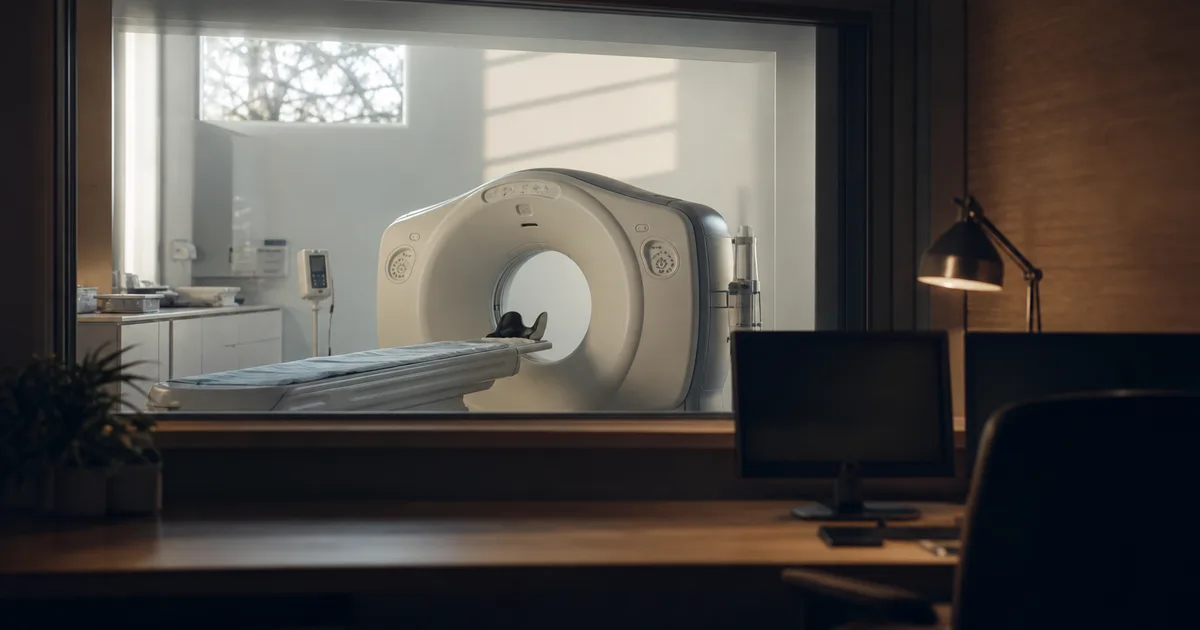
You trained for years in a specialized field. You know how to position a patient for a lumbar spine series, optimize a CT protocol, or troubleshoot MRI artifacts. Your skills are genuinely in demand — the US Bureau of Labor Statistics projects steady growth in medical imaging jobs through the decade. But knowing you're needed and actually converting that need into a visa sponsorship offer are two very different things.
The challenge for international rad techs, sonographers, and CT/MRI specialists is that healthcare hiring in the US moves through highly specific credentialing gatekeepers, and most immigration guides skip the details that matter in imaging. This post covers exactly what you need: how ARRT and state licensure intersect with your visa path, which employer types are most likely to sponsor, how OPT and STEM OPT work in this field, and the green card routes you should plan for from day one.
Why medical imaging is a strong sponsorship field
Healthcare is one of the most reliable sectors for H-1B sponsorship outside of technology. Unlike software engineering roles, where employers sometimes treat sponsorship as optional, hospitals and health systems frequently have immigration counsel on retainer and process dozens of sponsorship cases per year. The driver is simple — imaging departments can't run short-staffed, qualified candidates are hard to find locally in rural and mid-tier markets, and replacing a skilled MRI or CT technologist is expensive.
Several structural advantages work in your favor.
Specialty-occupation status is defensible. USCIS evaluates H-1B eligibility on whether the role normally requires a bachelor's degree or higher in a specific specialty. Radiologic technology programs accredited by the Joint Review Committee on Education in Radiologic Technology (JRCERT) are bachelor's- or associate's-level, and employers increasingly hire at or require the bachelor's level. The DOL's Occupational Requirements Survey, combined with ARRT's own data showing a growing share of bachelor's-prepared technologists, gives your employer's attorney solid ground to argue specialty occupation. Not every petition will sail through — employers with weak documentation or ambiguous job descriptions do get RFEs — but the specialty-occupation case is far stronger here than in many service-sector healthcare roles.
Cap-exempt pathways are common. If you secure a position at a university hospital, nonprofit hospital, or government research facility, your employer may file a cap-exempt H-1B — meaning you bypass the annual lottery entirely. For a field where clinical skills take years to build and a single lottery miss costs you 12 months, cap-exempt status is a genuine strategic advantage. See the full breakdown in our cap-exempt healthcare and university hospital H-1B guide.
Credentials you need before the visa conversation
No employer will sponsor your H-1B before you can legally work in the role. In medical imaging, that means two layers of credentialing.
ARRT certification
The American Registry of Radiologic Technologists (ARRT) is the primary credentialing body for radiographers, CT technologists, MRI technologists, mammographers, and several other imaging modalities. Sonographers typically credential through the American Registry for Diagnostic Medical Sonography (ARDMS) or the Society of Diagnostic Medical Sonography (SDMS-affiliated credential via ARDMS).
ARRT's primary pathways require:
- Completion of an ARRT-recognized education program (must be JRCERT-accredited for most pathways)
- Clinical competency verification
- Passing the ARRT examination in your modality
If you trained outside the US, you face an additional credentialing hurdle. ARRT does accept internationally trained applicants but requires that your education meets their standards through an equivalency evaluation. This process can take several months and may require supplemental coursework if gaps are identified. Start this process as early as possible — ideally before you arrive in the US or while on your initial visa status.
State licensure
Most states require a separate state license to practice as a radiologic technologist. Licensing requirements vary: some states accept ARRT certification as the primary requirement, others have additional examinations or application steps. A few states have no licensure requirement, which affects where you can realistically work. Factor state licensing timelines — which can range from a few weeks to several months — into your job search timeline.
The combined effect on your visa timeline
If you're on F-1 OPT, you have a 90-day unemployment clock running from the day OPT begins. If ARRT credentialing or state licensure takes longer than expected, you could burn through a significant portion of that window without authorized employment. Plan your ARRT application to be submitted well before OPT starts, ideally timed so you receive credentials within a few weeks of your program completion date.
OPT and STEM OPT in medical imaging
If you graduated from a US-accredited program, post-completion OPT gives you 12 months of work authorization. The degree field matters for STEM OPT eligibility — check whether your specific CIP code appears on DHS's current STEM-designated degree program list. Radiologic Sciences, Medical Imaging, and Diagnostic Medical Sonography programs are increasingly STEM-designated, but verify your specific program because the list does get updated.
With STEM OPT, you get a 24-month extension for a total of 36 months of authorized employment. During STEM OPT your employer must be enrolled in E-Verify and must submit a signed Form I-983 training plan with USCIS. The 90-day unemployment limit still applies during the initial OPT period.
Thirty-six months is meaningful runway. Use it strategically: your H-1B petition for the following fiscal year lottery (if cap-subject) can be filed as early as April 1 for an October 1 start, so with STEM OPT you have multiple lottery shots before status becomes critical.
For a broader view of how these timelines interact, see our OPT vs STEM OPT vs CPT comparison guide.
Employer types and sponsorship likelihood
Not every imaging employer has the same immigration infrastructure. Here's a practical breakdown.
| Employer Type | H-1B Lottery | Sponsorship Likelihood | Notes |
|---|---|---|---|
| University-affiliated academic medical center | Cap-exempt | High | Best path; bypass lottery entirely |
| Nonprofit community hospital | Cap-exempt (if 501c3) | High | Verify 501(c)(3) status with employer |
| For-profit hospital system (HCA, Tenet, etc.) | Cap-subject | Moderate-High | Large systems have in-house immigration teams |
| Outpatient imaging chain (RadNet, SimonMed, etc.) | Cap-subject | Moderate | Variable; ask about immigration support early |
| Mobile imaging company | Cap-subject | Low-Moderate | Smaller companies may lack immigration infrastructure |
| Veterans Affairs hospital | Cap-exempt (federal) | Moderate | Federal hiring adds complexity; requires authorization to work for federal employer |
| Teleradiology company | Cap-subject | Moderate | Fully remote; may require additional RFE documentation for offsite roles |
The most reliable strategy is to target large academic medical centers first. They have dedicated HR immigration teams, they understand the ARRT credentialing requirements, and they sponsor consistently. Look for systems that appear repeatedly in the USCIS H-1B employer disclosure data — that public dataset, released annually, shows which employers filed H-1B petitions and how many, which is the clearest signal of genuine sponsorship infrastructure.
How to structure your job search
Step-by-step approach
- Complete your credentials first. ARRT certification plus state licensure in your target state before applying aggressively. Without these, sponsorship conversations are premature.
- Target academic and nonprofit systems. Build a primary list of 15-20 academic medical centers and large nonprofit health systems in states where you're licensed or can get licensed quickly.
- Research employer H-1B history. Use the USCIS H-1B disclosure data. Look for employers who filed 10+ petitions in recent years — that volume signals an active immigration program, not a one-off filing.
- Use clinical rotations and externships as a network entry point. Medical imaging hires heavily from known candidates. If you did rotations at a system, reconnect with supervisors before applying cold.
- Be explicit and early about your status. State your OPT/STEM OPT dates and that you will need H-1B sponsorship in your cover letter or initial recruiter communication. Healthcare HR teams are more experienced with this conversation than most industries — don't delay it.
- Apply to travel imaging positions carefully. Travel rad tech roles pay a premium and are readily available, but most travel staffing companies cannot sponsor H-1B because the multi-site, variable-assignment nature creates LCA problems. These are fine for OPT but are rarely a path to H-1B.
Our guide to finding employers that sponsor H-1B covers the research workflow in detail and applies directly to healthcare job searching.
The H-1B petition for medical imaging roles
Your employer's immigration attorney will need to build the specialty-occupation argument. Common supporting evidence includes:
- DOL O*NET data showing educational requirements for the occupation
- ARRT's workforce reports showing percentage of practitioners with bachelor's degrees
- Job postings for similar positions at peer institutions requiring a bachelor's degree
- Your own credentials (ARRT, degree transcripts, clinical hours)
The LCA must list a wage at or above the prevailing wage for the role in the employer's geographic area at the DOL wage level appropriate to your experience. Most entry-to-mid-level rad tech roles fall at Level I or II. Make sure the LCA wage matches what you'll actually be paid — a mismatch is an automatic denial.
One RFE pattern specific to imaging: USCIS occasionally challenges whether the role is sufficiently "specialized" relative to associate's-degree-level hiring that still occurs in the field. Your attorney should address this proactively by documenting that your employer specifically requires a bachelor's and that the duties involve the kind of independent clinical judgment and specialized knowledge that distinguishes bachelor's-prepared practitioners.
For broader context on RFE responses and H-1B petition strategy, see our H-1B RFE response playbook.
Green card planning from day one
You should be thinking about your long-term path from the moment you take your first sponsored role. The immigration timeline in this field rewards early movers.
EB-3 via PERM is the most common path. Your employer files a PERM application with DOL documenting that no qualified US worker was available for the role, then files an I-140 immigrant petition. Once the I-140 is approved, you're in the green card queue based on your priority date (the date the PERM was filed) and country of birth. Workers born in India and China face significant backlogs in EB-3. Workers born in most other countries will see a much shorter wait.
EB-2 requires the employer to demonstrate the role normally requires an advanced degree, or requires a waiver. EB-2 National Interest Waiver (NIW) is theoretically available for healthcare workers who can argue their work serves the national interest — there is precedent for this argument in underserved healthcare settings — but it requires a strong record of contribution and is not a realistic first approach for most staff technologists. If you're in a research-oriented role at a university hospital, discuss this option with an immigration attorney.
EB-1 extraordinary ability (or the O-1 bridge visa) applies to imaging professionals who have published research, presented at national conferences, or developed widely adopted clinical protocols. For academic radiologists and imaging researchers this is a real option; for clinical staff technologists it is generally not.
Ask your employer about I-140 filing at the one-year mark. The sooner the I-140 is approved, the sooner your priority date is locked in — which matters if you ever want to change jobs and take your priority date with you under AC21 portability.
For parallel context on how other allied health professionals approach the same green card problem, our physical therapist and allied health visa sponsorship guide and clinical laboratory scientist visa guide cover nearly identical pathways in complementary fields.
Salary and wage levels in 2026
USCIS requires that H-1B wages meet or exceed the prevailing wage published by DOL for the relevant occupation and geography. Prevailing wages for radiologic technologists vary significantly by metropolitan area — major markets like San Francisco, New York, and Seattle will show meaningfully higher prevailing wages than smaller markets, which affects both your pay floor and what employers in those markets must pay.
When evaluating an offer, confirm the wage level (I-IV) on the LCA matches your experience profile. Being slotted at Level I when your experience warrants Level II means you may be underpaid relative to what the employer is legally required to pay at your actual seniority level.
For a broader framework on interpreting compensation offers with visa considerations, see our health IT and informatics H-1B guide which walks through how DOL wage levels translate to real offers in healthcare-adjacent tech roles.
Common mistakes
Assuming the ARRT exam can wait. Employers will not hold offers open for months while you complete credentialing. Get certified before you start applying for sponsored roles.
Applying to travel imaging contracts expecting H-1B sponsorship. Travel positions work on short assignment cycles and multi-site LCAs — they almost never support H-1B. Use them for OPT income if you need to, but don't count on them as your sponsorship path.
Not disclosing visa status upfront in healthcare applications. Healthcare HR teams run background and credential checks early in the process. Discovering a status issue late wastes both your time and theirs. Lead with your OPT end date and sponsorship need.
Accepting an offer without asking explicitly about the green card timeline. Some employers are willing to sponsor H-1B but will not commit to PERM for two or three years. Given EB-3 backlogs for certain countries, a two-year delay before PERM filing has compounding effects. Ask directly: "Does the company typically begin PERM within the first year?"
Overlooking community hospitals and regional health systems. Large academic centers are the obvious target, but mid-size nonprofit regional systems are often easier to get hired into, have imaging departments that genuinely need international talent, and are just as capable of sponsoring H-1B. Don't skip them because they're not famous names.
Letting the 90-day OPT unemployment clock pass unnoticed. If you're between rotations or waiting on state licensure and not yet employed, the clock is running. Know your exact OPT start date and track days without employment carefully. Our guide to beating the OPT 90-day unemployment clock has the tactical details.
Frequently asked questions
Does radiologic technology qualify as an H-1B specialty occupation?
Yes. USCIS has consistently treated radiologic technology as a specialty occupation because the role requires at minimum a bachelor's degree (or equivalent) in radiologic science, medical imaging, or a related field. Most employers require an accredited degree plus ARRT credentials, which reinforces the specialty-occupation argument. That said, your employer's attorney should build a strong petition with supporting evidence from DOL wage data and professional association standards.
Can I work as a rad tech on OPT while I find an H-1B sponsor?
Yes. If you graduated from a US-accredited program in radiologic technology, diagnostic medical sonography, or a closely related field, you are eligible for 12-month OPT. If your degree is in a STEM-designated field (check DHS's STEM-designated degree program list), you may qualify for a 24-month STEM OPT extension, giving you up to 36 months of authorized work. During this window you can work for any employer that files the required I-983 training plan for STEM OPT.
Do I need to be ARRT-certified before an employer will sponsor my H-1B?
Almost universally, yes. Most hospital systems and outpatient imaging centers make ARRT certification a condition of employment, and sponsoring an uncertified technologist is rare. Obtain primary-pathway certification in Radiography (R), CT, MRI, or your modality before you begin the sponsorship conversation. Some employers will sponsor after a conditional offer contingent on passing ARRT boards, but this is the exception, not the rule.
Which employers are most likely to sponsor medical imaging visa applicants?
Large academic medical centers and health systems such as Mayo Clinic, Cleveland Clinic, Kaiser Permanente, HCA Healthcare, Ascension, and comparable regional systems have established immigration programs. Teaching hospitals affiliated with universities are often cap-exempt, which means your H-1B does not enter the annual lottery. Outpatient chains and mobile imaging companies also sponsor but tend to have more variable immigration infrastructure. Prioritize organizations with a track record visible in the USCIS H-1B disclosure data.
What is the green card path for a radiologic technologist?
Most imaging professionals pursue EB-3 (skilled worker) through PERM labor certification. Your employer files a PERM application with DOL, then an I-140 immigrant petition, then you wait for a visa number to become available based on your country of birth and priority date. EB-2 is possible if the role requires an advanced degree and your employer supports the filing. EB-1 extraordinary ability is realistic only for academic radiologists or researchers with publication records — not typically available for staff technologists.
If you're an international imaging professional navigating credentialing, OPT timing, or H-1B sponsorship negotiations, F1Jobs works with healthcare candidates on exactly these situations — reach out and we'll walk you through the specifics.
Frequently asked questions
Does radiologic technology qualify as an H-1B specialty occupation?
Yes. USCIS has consistently treated radiologic technology as a specialty occupation because the role requires at minimum a bachelor's degree (or equivalent) in radiologic science, medical imaging, or a related field. Most employers require an accredited degree plus ARRT credentials, which reinforces the specialty-occupation argument. That said, your employer's attorney should build a strong petition with supporting evidence from DOL wage data and professional association standards.
Can I work as a rad tech on OPT while I find an H-1B sponsor?
Yes. If you graduated from a US-accredited program in radiologic technology, diagnostic medical sonography, or a closely related field, you are eligible for 12-month OPT. If your degree is in a STEM-designated field (check DHS's STEM-designated degree program list), you may qualify for a 24-month STEM OPT extension, giving you up to 36 months of authorized work. During this window you can work for any employer that files the required I-983 training plan for STEM OPT.
Do I need to be ARRT-certified before an employer will sponsor my H-1B?
Almost universally, yes. Most hospital systems and outpatient imaging centers make ARRT certification a condition of employment, and sponsoring an uncertified technologist is rare. Obtain primary-pathway certification in Radiography (R), CT, MRI, or your modality before you begin the sponsorship conversation. Some employers will sponsor after a conditional offer contingent on passing ARRT boards, but this is the exception, not the rule.
Which employers are most likely to sponsor medical imaging visa applicants?
Large academic medical centers and health systems (Mayo Clinic, Cleveland Clinic, Kaiser Permanente, HCA Healthcare, Ascension, and comparable regional systems) have established immigration programs. Teaching hospitals affiliated with universities are often cap-exempt, which means your H-1B does not enter the annual lottery. Outpatient chains and mobile imaging companies also sponsor but tend to have more variable immigration infrastructure. Prioritize organizations with a track record visible in the USCIS H-1B disclosure data.
What is the green card path for a radiologic technologist?
Most imaging professionals pursue EB-3 (skilled worker) through PERM labor certification. Your employer files a PERM application with DOL, then an I-140 immigrant petition, then you wait for a visa number to become available based on your country of birth and priority date. EB-2 is possible if the role requires an advanced degree and your employer supports the filing. EB-1 extraordinary ability (O-1 bridge) is realistic only for academic radiologists or researchers with publication records — not typically available for staff technologists.