Returning to the US After a Long Absence on H-1B: Reentry Rules, Visa Validity, and Risks 2026
Returning to the US on H-1B after months abroad involves rules most holders don't discover until they're at the port of entry.
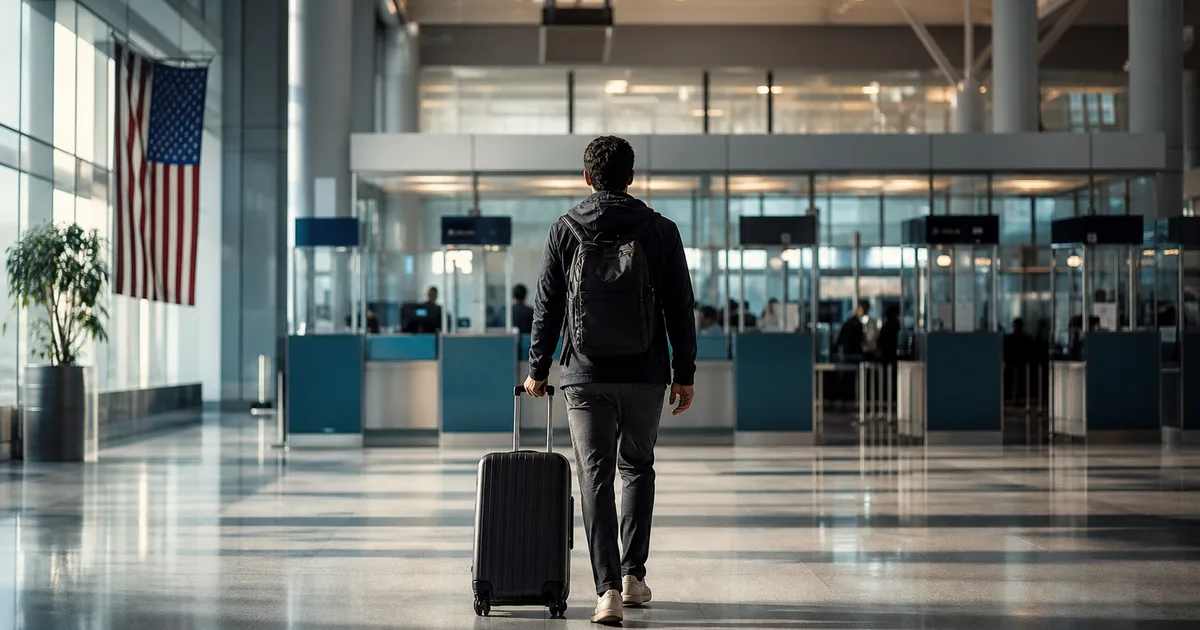
You've been outside the United States for four months. Maybe longer. A family emergency stretched a planned two-week trip into something much bigger, or your employer sent you on an extended overseas assignment. Your H-1B approval is still valid, your job is waiting for you, and now you need to get back. So you start wondering: does my visa stamp still work? Will the CBP officer ask difficult questions? Is there anything I should be doing right now that I'm not?
These are the right questions to be asking, and the answers depend on facts that are surprisingly easy to get wrong. The rules around H-1B reentry after extended travel are scattered across USCIS guidance, CBP operating procedures, State Department visa policy, and a handful of statutory provisions that most H-1B holders have never needed to read. This guide pulls them into one clear picture so you know exactly where you stand before you board the return flight.
What "H-1B status" actually means when you're abroad
The first thing to understand is the distinction between your H-1B status and your H-1B visa stamp — two separate things that people often treat as one.
Your H-1B status is the legal authorization granted by USCIS that allows you to work for a specific US employer in a specific role. It is documented by your I-797 approval notice and reflected in your I-94 record. Status continues as long as your petition period is valid and you maintain the employer-employee relationship.
Your H-1B visa stamp is a physical (or electronic) endorsement in your passport issued by a US consulate or embassy. It is the document that authorizes you to apply for admission at the US port of entry. Once you're inside the US, the visa stamp has no effect — your status is what matters. But the moment you leave the US and attempt to reenter, the visa stamp becomes critical for nearly every nationality.
Extended trips abroad don't automatically cancel your H-1B status, but they can complicate your reentry in two distinct ways: visa stamp expiration and the question of whether you've maintained your nonimmigrant intent.
The visa stamp rule for reentry
Unless you fall into the narrow exception described below, you need a valid, unexpired H-1B visa stamp to reenter the United States as an H-1B holder after travel abroad.
This requirement catches people off-guard because many long-term H-1B holders (particularly those working toward their green card) have visas that expired years ago. Inside the United States, an expired stamp is perfectly fine — you're working on status, not on the visa. But the moment you leave and attempt to return, CBP requires you to present a valid stamp at the port of entry.
If your H-1B visa stamp is expired and you are not a Canadian or Mexican national, you must visit a US consulate abroad to obtain a new stamp before returning. This is true even if your I-797 approval covers years into the future, even if your priority date has been current for months, and even if you've been on H-1B for a decade without any issues.
For Canadian nationals: Canadians are generally visa-exempt for most nonimmigrant categories and can reenter the US on H-1B by presenting the valid I-797 approval notice and supporting documentation at the port of entry. No visa stamp is required.
For Mexican nationals: Mexicans holding valid H-1B petitions generally need the visa stamp, but in practice cross-border reentry from Mexico (especially via land ports) follows slightly different procedures. An immigration attorney familiar with US-Mexico border reentry should be consulted for extended absences.
The automatic revalidation rule — and its sharp limits
You may have heard of automatic revalidation as a workaround for an expired visa. Here is exactly what it covers and where it ends.
Automatic revalidation (8 CFR §214.1(b)) allows a nonimmigrant with an expired visa stamp to reenter the US from a brief trip to Canada, Mexico, or adjacent islands without obtaining a new visa — provided all of the following are true:
- The trip was to Canada, Mexico, or an adjacent island (not a third country)
- The trip was brief — immigration attorneys generally treat trips under 30 days as clearly covered; longer trips are more fact-specific
- You did not apply for a new visa at a US consulate while abroad
- You did not receive a refusal of a visa application while abroad
- You do not have a pending visa application at a consulate
- Your underlying status has not expired (valid I-797 still covers you)
- You are not subject to a bar or inadmissibility ground
If your extended absence took you to a third country — India, Nigeria, the Philippines, the UK, anywhere outside Canada, Mexico, and adjacent islands — automatic revalidation does not apply. You need a new visa stamp.
If you traveled to Canada for a week, didn't apply for a visa, and your I-797 is current, you likely qualify for automatic revalidation on return. If you spent four months in India visiting family, automatic revalidation is not available to you.
How long is too long? The "abandoned status" risk
There is no statutory provision in the Immigration and Nationality Act that strips H-1B status after a specific number of days abroad. The law does not say "90 days and your status expires." What the law does say is that nonimmigrant status requires maintaining the conditions under which it was granted — and for H-1B, that means actively working for the sponsoring employer in the approved role.
This is where extended absences create real risk. CBP officers at the port of entry have the authority to determine whether an arriving traveler is admissible. If an officer concludes that you have abandoned your US nonimmigrant intent or your H-1B employment during the absence, they can place you in removal proceedings or issue a formal refusal of admission.
Factors that draw scrutiny at the port of entry after a long absence:
| Factor | Lower-Risk Signal | Higher-Risk Signal |
|---|---|---|
| Duration of absence | Under 3 months | Over 6 months |
| Reason for absence | Medical, family emergency, employer-directed | Unclear or vague |
| Employment during absence | Employer confirms active status, you were on payroll | No payroll, employer unaware of absence length |
| US ties maintained | Active lease, US bank accounts, US family | All US ties terminated |
| Intent to continue H-1B | Returning to same job, same employer | Job has changed significantly or uncertain |
| Documentation at entry | I-797, pay stubs, employer letter, lease | Minimal documentation |
The longer and less documented your absence, the more important it is to arrive well-prepared.
Getting a new visa stamp after an extended trip
If your visa has expired and you need a new stamp, here is the sequence of steps:
- Confirm your I-797 approval is current. The consulate will not issue a stamp for an expired petition. If your petition expired during your trip, contact your employer's immigration counsel immediately — you may need a new petition filed before you can return.
- Gather your documents. You will need your valid passport, Form DS-160 (completed online), the USCIS I-797 approval notice, a copy of your LCA, evidence of your employer's legitimacy (annual report, financial statements), your current resume matching your H-1B role, and proof of continuous employment.
- Schedule a visa appointment at the US consulate in the country where you are located. For popular locations like Mumbai, Chennai, Hyderabad, or Lagos, wait times can be several months — check visa appointment availability early. Our guide to H-1B stamping in India in 2026 covers India-specific logistics in detail.
- Prepare for the visa interview. You will be asked about your employer, your role, and your job duties. You may also be asked to explain the extended absence. Have a clear, honest, documented answer ready.
- Account for administrative processing (221g). Some H-1B stamping appointments result in a 221g administrative processing hold — additional review by the consulate before a final decision. This can add weeks or months. See our guide to consular 221g administrative processing for what to do if you receive a 221g. Factor this into your timeline before booking a return flight.
- Once stamped, book your return. After you receive the new stamp, you can proceed to the port of entry. Carry the complete document packet at every step.
What to carry at the port of entry
Do not leave this to chance. CBP officers work fast and you will have a short window to make your case. Carry the following organized and accessible:
- Passport with valid H-1B visa stamp (or, for Canadians, the I-797)
- I-797 approval notice for the current petition period — the original, not a scan
- Letter from your US employer confirming you are an active employee, your role title, your start date, your salary, and that the company expects your return
- Recent pay stubs showing you remained on payroll during the absence (even if zero hours were worked, payroll continuity helps)
- Copy of your LCA confirming the wage level and job site
- Evidence of US ties — current lease agreement, US bank account statements, US cell phone bill
- Copy of any prior I-94 record showing your authorized stay was valid when you departed
- If applicable, a letter from your immigration attorney summarizing your status and authorizing documentation
Being asked about your trip in detail is normal. Being referred to secondary inspection is uncommon but not unusual for long absences. Stay calm, be honest, and let your documentation speak.
H-1B reentry and pending green card applications
If you have a pending I-140 or are waiting on a priority date, extended travel adds an additional consideration. The I-140 itself does not grant travel authorization and does not affect your reentry rules — your H-1B visa status is still the operative document. However, if you have an I-485 (adjustment of status) pending, you cannot leave the US without an advance parole document (Form I-131) unless you also hold a valid H-1B or H-4 status, because departing without advance parole typically abandons the I-485.
For H-1B holders with a pending I-485, international travel requires either:
- A valid unexpired H-1B visa stamp (this serves as the reentry document alongside the pending I-485), or
- A valid advance parole document
If you departed without one of these and have a pending I-485, seek immigration counsel immediately before attempting to return. This is a scenario that can result in the I-485 being considered abandoned. Our advance parole and visa stamping guide covers this situation for those who need to navigate it.
Maintaining employment during the absence
One of the most important things you can do during an extended absence is maintain your formal employment status. Talk to your HR department and immigration counsel before departing for a long trip. Options include:
- Unpaid leave of absence — some employers will keep the H-1B petition active during unpaid leave, but this requires careful documentation. An employer is technically still the H-1B sponsor during unpaid leave.
- Remote work from abroad — if your employer permits and the work arrangement is legal in the host country, continuing to work remotely keeps the employment relationship active. Note that working remotely from abroad while on H-1B raises separate questions about tax residency and immigration in the host country.
- Communication records — even informal evidence that you stayed in contact with your employer (emails, Slack messages, performance reviews scheduled) supports the narrative that you never abandoned your US employment.
If your employer terminated your employment during your absence (layoffs happen), your H-1B status technically ended at termination. The 60-day grace period applies to H-1B holders who lose their job, but it only applies while you are inside the US. If you are abroad when your employment ends, you cannot use the 60-day grace period to reenter and file a new petition. You would need a new H-1B petition approved and a new visa stamp before returning.
The cap-gap scenario and travel
A separate reentry situation affects F-1 students transitioning to H-1B who have a pending H-1B petition and travel during the cap-gap period. If you travel outside the US during cap-gap (after October 1 of the H-1B start year and before your H-1B is approved), you risk losing your F-1 status and cannot reenter on the cap-gap extension. The H-1B cap-gap travel risks guide covers that scenario specifically — the reentry rules in this guide apply to established H-1B holders, not cap-gap travelers.
Common mistakes
Assuming an expired visa stamp doesn't matter. This is the most frequent misunderstanding. You may have worked in the US for five years on H-1B without touching your visa book. The moment you fly to India for three months and try to come back, that expired stamp matters. Plan for stamping before or during your trip.
Booking return travel before confirming stamping timeline. Consulates in high-demand countries (India in particular) can have appointment wait times of two to six months. Booking a return flight for next month without checking appointment availability first is a common trap.
Traveling without the full document packet. Showing up at the port of entry with just your passport and I-797 is inadequate after a long absence. Employers who hire internationally experienced this: their employee returned without a pay stub, couldn't answer the CBP officer's employment questions confidently, and ended up in a two-hour secondary inspection. The paperwork takes fifteen minutes to assemble before you leave.
Applying for a new visa while in Canada and then expecting automatic revalidation. Automatic revalidation is disqualified the moment you apply for a new visa at a consulate while abroad — even if the application is pending, not yet refused. If you applied for a new stamp at a Canadian consulate and it hasn't come through yet, you cannot use automatic revalidation to slip across the border.
Not telling your employer how long you'll be abroad. If CBP calls your employer (this happens in secondary inspection) and the HR representative doesn't know you were traveling for four months, that creates an impression of unauthorized absence. Keep your employer in the loop so the story matches at the port of entry.
Failing to check if your I-797 covers your return date. If your H-1B petition expires while you are abroad and there is no extension filed, you have no valid H-1B status to return to, even if you get a new visa stamp. The stamp is only valid during the petition period. Check your I-797 end date before every international departure.
Relying on the H-1B transfer in transit. If your employer filed an H-1B transfer while you were abroad, the portability rule (AC21 §105) that allows you to start work on the receipt notice applies only to workers inside the US. You cannot start working for the new employer by simply landing with a new employer's receipt notice. You need the new employer's petition fully approved (and a visa stamp if needed) to reenter as an H-1B beneficiary of the new petition. See our H-1B transfer playbook for transfer timing details.
Frequently asked questions
Can I return to the US on H-1B if my visa stamp is expired?
Only in one specific situation — if you are a Canadian or Mexican national, you can generally reenter using a valid approved H-1B petition and I-94 record without a visa stamp. All other nationalities must obtain a new visa stamp at a US consulate abroad before they can reenter, even if their underlying H-1B status and approved petition are still valid. A valid I-797 approval notice does not replace the visa stamp for non-Canadian and non-Mexican nationals.
What is the automatic revalidation rule and does it help H-1B holders?
Automatic revalidation allows certain visa holders to reenter the US from a brief trip (typically under 30 days) to Canada, Mexico, or adjacent islands without needing a new visa stamp — even if their visa has expired — as long as they have a valid status and have not applied for a new visa abroad. However, automatic revalidation does not apply if you have traveled to a third country (outside Canada, Mexico, or adjacent islands), if you applied for a new visa while abroad and it was refused or is pending, or if you have been outside the US for an extended period. It is a narrow exception, not a general workaround for expired stamps.
How long can an H-1B holder stay outside the US before it creates a problem?
There is no hard legal rule that strips your H-1B status after a fixed number of days abroad, but extended absences create practical and legal risks. If CBP determines at reentry that you have effectively abandoned your US domicile or that you are no longer maintaining your H-1B employment, they can question or deny your admission. A general rule of thumb among immigration attorneys is that absences beyond six months require strong documentation showing you maintained your employment relationship and US ties throughout. Absences beyond one year can be particularly difficult to explain at the port of entry.
What documents should I carry when returning to the US on H-1B after a long trip?
Carry your valid H-1B visa stamp (or, for Canadians, the approved I-797 and supporting documents), your I-797 approval notice for the current petition period, a recent pay stub or employer letter confirming active employment, evidence that you remained on payroll during your absence, your current I-94 departure record, a copy of the LCA, and any additional evidence of US ties such as lease agreements or bank statements. The more documentation you carry showing continuous employment and intent to return, the smoother the CBP inspection is likely to go.
What happens if CBP questions my reentry after a long H-1B absence?
CBP officers at the port of entry have broad authority to question and, in rare cases, refuse entry. If an officer has concerns, you may be referred to secondary inspection, where a more detailed interview occurs. In secondary inspection, officers review your documents, call your employer if needed, and make a final determination. Refusing entry results in a formal removal or withdrawal of application for admission. If you anticipate questions because of a very long absence, consider traveling with a letter from an immigration attorney and thorough employment documentation. Being honest, calm, and fully documented is the best approach.
Navigating reentry after a long absence is one of the trickier situations H-1B holders face — and the details matter more than most people expect. F1Jobs works with H-1B holders through travel planning, employer coordination, and the return process every month. Reach out before you book your flight.
Frequently asked questions
Can I return to the US on H-1B if my visa stamp is expired?
Only in one specific situation -- if you are a Canadian or Mexican national, you can generally reenter using a valid approved H-1B petition and I-94 record without a visa stamp. All other nationalities must obtain a new visa stamp at a US consulate abroad before they can reenter, even if their underlying H-1B status and approved petition are still valid. A valid I-797 approval notice does not replace the visa stamp for non-Canadian and non-Mexican nationals.
What is the automatic revalidation rule and does it help H-1B holders?
Automatic revalidation allows certain visa holders to reenter the US from a brief trip (typically under 30 days) to Canada, Mexico, or adjacent islands without needing a new visa stamp -- even if their visa has expired -- as long as they have a valid status and have not applied for a new visa abroad. However, automatic revalidation does NOT apply if you have traveled to a third country (outside Canada, Mexico, or adjacent islands), if you applied for a new visa while abroad and it was refused or is pending, or if you have been outside the US for an extended period. It is a narrow exception, not a general workaround for expired stamps.
How long can an H-1B holder stay outside the US before it creates a problem?
There is no hard legal rule that strips your H-1B status after a fixed number of days abroad, but extended absences create practical and legal risks. If CBP determines at reentry that you have effectively abandoned your US domicile or that you are no longer maintaining your H-1B employment, they can question or deny your admission. A general rule of thumb among immigration attorneys is that absences beyond six months require strong documentation showing you maintained your employment relationship and US ties throughout. Absences beyond one year can be particularly difficult to explain at the port of entry.
What documents should I carry when returning to the US on H-1B after a long trip?
Carry your valid H-1B visa stamp (or, for Canadians, the approved I-797 and supporting documents), your I-797 approval notice for the current petition period, a recent pay stub or employer letter confirming active employment, evidence that you remained on payroll during your absence, your current I-94 departure record, a copy of the LCA, and any additional evidence of US ties such as lease agreements or bank statements. The more documentation you carry showing continuous employment and intent to return, the smoother the CBP inspection is likely to go.
What happens if CBP questions my reentry after a long H-1B absence?
CBP officers at the port of entry have broad authority to question and, in rare cases, refuse entry. If an officer has concerns, you may be referred to secondary inspection, where a more detailed interview occurs. In secondary inspection, officers review your documents, call your employer if needed, and make a final determination. Refusing entry results in a formal removal or withdrawal of application for admission. If you anticipate questions because of a very long absence, consider traveling with a letter from an immigration attorney and thorough employment documentation. Being honest, calm, and fully documented is the best approach.