Robotics Engineer at Warehouse Automation Startups: Visa Sponsorship and the Amazon Effect
Warehouse automation is one of the few sectors where mid-size startups sponsor H-1B and OPT workers almost as readily as Big Tech — here is how to find them.
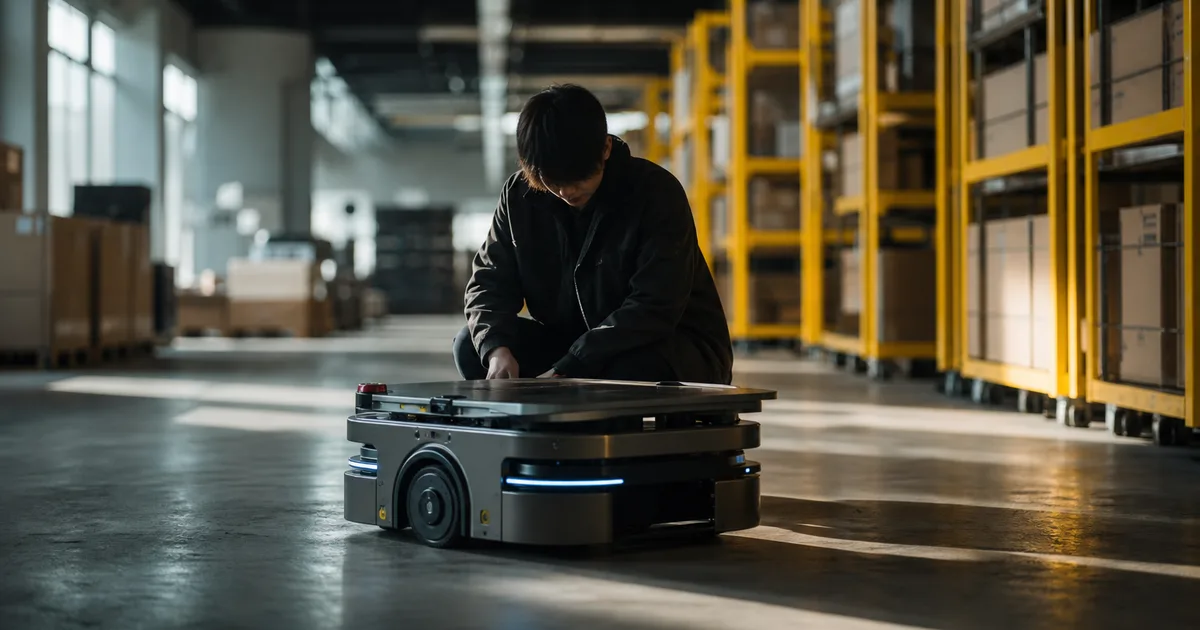
You are a robotics or mechanical engineer on F-1 OPT, staring at a landscape of job boards full of roles that quietly assume US citizenship or permanent residency. Meanwhile, you have watched warehouse robotics explode — autonomous mobile robots, goods-to-person systems, sortation arms, AI-driven picking — and you know the people building these systems look a lot like you. The question is whether the companies hiring them will sponsor you.
The short answer is yes, at a meaningfully higher rate than most of the market. Here is why — and exactly how to position yourself to take advantage of it.
Why Warehouse Automation Is Different From Generic Tech
In most software categories, an employer has hundreds of qualified domestic candidates for every open role. Visa sponsorship becomes a cost-and-risk calculation that often ends in "no." Warehouse robotics is structurally different for three reasons.
The talent pool is small and specialized. There are not many engineers in the United States who have shipped production-grade AMR (autonomous mobile robot) navigation stacks, designed conveyor-integrated pick arms, or debugged real-time motion planning systems in noisy warehouse environments. That scarcity shifts negotiating power toward qualified international candidates.
The sector is growing faster than domestic supply can fill. E-commerce growth, post-pandemic labor economics, and large retailers accelerating capital expenditure on automation have created a sustained hiring surge. Companies that are raising Series B and C rounds on aggressive deployment timelines cannot wait three years for domestic talent to graduate.
The Amazon Effect has normalized international hiring. Amazon Robotics (formerly Kiva Systems) built its engineering organization by recruiting heavily from international graduate programs at Carnegie Mellon, MIT, Georgia Tech, and other top robotics programs. Engineers who trained there — many on OPT and H-1B — later founded or joined Locus Robotics, Symbotic, 6 River Systems, Berkshire Grey, Vecna Robotics, and dozens of smaller startups. Those founders and hiring managers understand the visa process, have immigration counsel on retainer, and expect to sponsor.
The Landscape of Companies That Sponsor
Understanding which companies to target saves months of misdirected effort. The warehouse automation sector breaks into several segments:
| Segment | Example Companies | Sponsorship Posture |
|---|---|---|
| Large public automation platforms | Symbotic, Zebra Technologies | Active H-1B sponsorship, established immigration team |
| VC-backed growth-stage startups | Locus Robotics, Vecna, Ambi Robotics, Pickle Robot | Generally sponsor; immigration counsel often shared |
| Acquired startups (now subsidiaries) | 6 River Systems (Shopify), Canvas Technology (Amazon) | Parent company handles sponsorship; typically strong |
| Robotics arms of large industrials | Honeywell Intelligrated, Dematic (KION Group), Swisslog | Large HR apparatus; sponsor regularly for technical roles |
| E-commerce in-house robotics labs | Amazon Robotics, Walmart Global Tech, Target Fulfillment | Sponsor at scale; treat as large tech employers |
For further context on which employers tend to sponsor across robotics broadly, see our guide on robotics engineer H-1B sponsorship jobs.
One caveat applies to all of the above: sponsorship willingness is not the same as sponsorship certainty. A startup that sponsored three engineers two years ago may have changed immigration policy, run into financial pressure, or experienced leadership turnover. Always verify current sponsorship posture during the recruiter screen — our guide on how to check if a company sponsors H-1B covers exactly how to do that.
Your Visa Timeline as a Robotics Engineer
The typical path for an international student entering warehouse automation follows a predictable sequence. Understanding it lets you plan proactively rather than reactively.
OPT Phase (Year 1-3)
- Graduation and OPT EAD activation. You have 12 months of standard OPT authorization. Your EAD card is your work authorization — keep it current. Robotics roles overwhelmingly qualify as STEM positions under CIP codes for mechanical, electrical, and computer engineering.
- STEM OPT extension application. File Form I-765 with the STEM OPT extension request before your standard OPT expires. Your employer must sign and maintain Form I-983 (Individual Training Plan). The 24-month extension gives you up to 36 months total on OPT.
- 90-day unemployment limit. Across your entire OPT period, you cannot accumulate more than 90 days of unemployment (60 days on standard OPT + 30 on STEM extension, or redistributed depending on DSO interpretation — confirm with your DSO). A gap between an offer and start date, or time between jobs, counts toward this limit.
- H-1B lottery entry (April of Year 1 or 2). Your employer registers you in the USCIS H-1B lottery during the electronic registration window in March. If selected, the petition is filed by June 30 for an October 1 start date. STEM OPT holders benefit from the cap-gap provision: if your OPT expires between April 1 and September 30 and your H-1B petition was timely filed, you remain authorized to work through September 30 (or October 1 when the H-1B starts).
H-1B Phase (Years 3-9+)
- H-1B approval and specialty-occupation standard. Robotics engineering maps cleanly to specialty-occupation criteria. Your degree in mechanical, electrical, or computer engineering directly ties to the job duties. Prepare your employer's immigration attorney with a detailed position description that emphasizes the technical specialization (ROS/ROS2, motion planning, computer vision, simulation) to minimize RFE risk.
- H-1B extensions. Initial H-1B is three years, renewable for another three. If your I-140 is approved and you are waiting on a priority date, you can receive one-year extensions beyond the six-year maximum under AC21 §106.
- Green card — PERM or self-petition. See the FAQ section below for a summary of paths.
For a detailed look at H-1B mechanics in engineering contexts, our embedded systems engineer H-1B guide covers overlapping technical credentialing considerations.
What Roles Exist and What Skills Get You In
Warehouse automation companies need a broader range of engineers than most candidates realize. The entry points are not limited to PhD-level motion planning researchers.
Roles with strong sponsorship history
- Software Engineer, Robotics (navigation, perception, motion planning) — Typically requires CS or related BS/MS; strong Python, C++, ROS/ROS2
- Controls and Embedded Systems Engineer — Firmware, PLC programming, real-time operating systems; EE or CE background
- Computer Vision Engineer — Object detection, depth sensing, pick point estimation; often requires MS or strong portfolio
- Simulation and Test Engineer — Gazebo, Isaac Sim, hardware-in-the-loop testing; underrepresented skillset with good sponsorship odds
- Mechanical Design Engineer — End-effector design, conveyor integration, structural analysis; BS ME + CAD portfolio
- Systems Integration Engineer — Deployment and commissioning in live warehouses; high travel but strong demand
- Data Engineer / ML Engineer supporting robotics — Fleet telemetry pipelines, model training infrastructure; more general tech role but embedded in robotics companies
Skills that differentiate international candidates
Many international MS and PhD candidates from robotics programs hold skill combinations that are rare in the domestic early-career pool: fluency in ROS2, familiarity with optimization solvers (MoveIt, OMPL, Drake), and hands-on hardware debugging. If you have shipped code on physical robots, even in a lab setting, call that out explicitly in your resume. Hiring managers at growth-stage companies frequently tell candidates that real hardware experience — not just simulation — is the differentiator.
For resume framing tailored to ATS systems and US hiring norms, see our ATS resume tips for international students.
Identifying Startups That Will Sponsor Before You Apply
Not every automation startup can sponsor. A company needs to be at a minimum financial stability threshold to commit to the multi-year obligation of H-1B sponsorship. Before investing time in a company, run a quick check:
- USCIS H-1B disclosure data. The DOL publishes annual H-1B Labor Condition Application data. Search the employer's legal name to see how many LCAs they have certified in prior years and at what wage levels. A company that filed zero LCAs in the last two fiscal years may not have the infrastructure in place.
- LinkedIn headcount and growth trajectory. A startup that grew from 50 to 200 employees in 18 months on traceable VC funding is a better sponsorship bet than one that has been flat at 30 for three years.
- Crunchbase / PitchBook funding history. Series B and beyond generally means the company has enough capital runway to support multi-year immigration proceedings and PERM costs (which can run $5,000-$15,000 in attorney and filing fees per application).
- Ask directly during recruiter screen. Something like "Has your company sponsored H-1B or OPT STEM extensions before?" is a completely normal question. A recruiter who hesitates or says "I'll have to check" is telling you something.
Our startup H-1B checklist gives a structured framework for this evaluation.
Negotiating Visa Sponsorship Into an Offer
Once you have an offer, the question shifts from "will they sponsor" to "what exactly are they sponsoring and who pays what." Key points to confirm in writing:
- Who pays immigration attorney fees? Standard practice at legitimate employers is that the employer pays attorney fees for the H-1B petition. The USCIS base filing fee (currently around $730-$2,460 depending on company size and petition type) is always the employer's obligation by law. The optional premium processing fee ($2,965 as of March 2026) is often but not always covered — negotiate it explicitly.
- Do they sponsor green card (PERM)? Many startups will sponsor H-1B but are vague on PERM. For Indian or Chinese nationals, the earlier PERM is filed, the better — retrogression means the priority date matters enormously. Try to get a written commitment or at least a verbal acknowledgment of their green card policy during offer negotiation. Our green card negotiation guide covers the exact language to use.
- What happens if they are acquired? Warehouse automation is actively consolidating. If the company is acquired, your H-1B transfers to the new employer if the job duties and terms remain substantially similar (Matter of Simeio notwithstanding). Ask about the acquisition policy during the offer stage if the company is an obvious acquisition target.
Common Mistakes That Warehouse Robotics Candidates Make
Applying only to the largest names
Candidates default to Amazon Robotics, Boston Dynamics, and a handful of other marquee names. Those companies receive enormous application volume. The more tractable targets — Symbotic, Locus (or its successors), Ambi Robotics, Pickle Robot, Mujin, Bright Machines — receive far fewer applications from international candidates and often have more urgent hiring needs.
Ignoring the systems integration track
Many robotics engineers fixate on algorithm roles (perception, planning, control). Systems integration engineers — who deploy and tune robots in live warehouse environments — are in extremely high demand, often earn comparable salaries, and are frequently overlooked by candidates who want to stay in algorithm-land. The role also gives you direct exposure to production systems, which accelerates your technical credibility faster than years of simulation work.
Letting OPT expire without a backup plan
If you are in STEM OPT year two and your H-1B was not selected in the lottery, you need a plan before the extension ends. Options include: entering the lottery again next April (if you still have time), exploring cap-exempt employment (a university robotics lab or federally funded research center), applying for an O-1A visa (extraordinary ability — more achievable in robotics than candidates realize if you have publications, patents, or significant open-source contributions), or pursuing an L-1 if your employer has a qualifying international parent company. Do not wait until the last 60 days. Our H-1B backup plans guide walks through each option in depth.
Treating salary negotiation as an afterthought
H-1B workers are required to be paid the prevailing wage as defined by DOL Wage Level determinations. But the prevailing wage is a floor, not a ceiling. Robotics engineers at well-funded startups regularly negotiate total compensation — base salary, equity, signing bonus — well above prevailing wage. If you assume you have no negotiating leverage because you need sponsorship, you are leaving money on the table.
Skipping the LCA public access file check
Before accepting any H-1B offer, verify that the employer's Labor Condition Application accurately reflects your actual title, wage, and worksite location. An LCA that lists a wage level below what is appropriate for your experience creates legal exposure for the employer and can be a red flag about how carefully they manage immigration compliance.
Frequently Asked Questions
Do warehouse automation startups actually sponsor H-1B visas for robotics engineers?
Yes — many mid-size and growth-stage warehouse automation companies sponsor H-1B regularly. Firms like Symbotic, Locus Robotics, 6 River Systems (Shopify), Berkshire Grey, and Vecna Robotics have filed H-1B petitions for robotics and software engineers in recent years. Sponsorship rates are not identical to Big Tech, but the talent shortage in this niche makes employers considerably more willing to sponsor than in general software roles.
Can I work at a warehouse automation company on OPT or STEM OPT before the H-1B lottery?
Yes. Most robotics and software roles at automation companies qualify as STEM-eligible positions, which means your F-1 OPT covers the initial 12 months and a 24-month STEM OPT extension is likely available. You must maintain a valid training plan (Form I-983) with your employer and stay within the 90-day unemployment limit across your OPT period. Many candidates use the two STEM OPT years to build a track record before the H-1B petition is filed.
What is the Amazon Effect in warehouse robotics hiring?
The Amazon Effect refers to the way Amazon Robotics's enormous investment in warehouse automation has anchored an entire talent ecosystem around it. Amazon trained thousands of robotics engineers — many of them international — through its internal robotics labs and acquisitions. Those engineers have spun out into startups, attracted VC funding, and created demand for more robotics talent across the sector. The net result is a cluster of well-funded automation companies that are used to hiring international engineers and often willing to sponsor.
How does the H-1B specialty-occupation requirement apply to robotics engineering?
Robotics engineering comfortably meets the H-1B specialty-occupation standard. A bachelor's degree in mechanical engineering, electrical engineering, computer science, or a directly related field is normally required for entry, which satisfies the DOL and USCIS specialty-occupation test. RFEs are relatively uncommon for robotics engineers compared to roles like business analyst or HR specialist where the degree-to-duty link is less direct. Having a degree title that explicitly maps to the role strengthens the petition.
What green card path is most realistic for a warehouse robotics engineer on H-1B?
The most common path is EB-2 or EB-3 via PERM labor certification. For Indian and Chinese nationals, retrogression means the wait can be very long. If you have extraordinary ability — patents, published research, conference presentations, significant industry recognition — EB-1A self-petition or EB-2 NIW are worth exploring and bypass the PERM process entirely. Some robotics engineers at university-affiliated labs may access cap-exempt employment and can build toward EB-1A faster.
Putting It Together
The warehouse robotics sector is one of the strongest hiring environments for international engineers in the current market. The combination of skills scarcity, well-capitalized employers, and a culture shaped by Amazon's international hiring norms creates a window that generalist software engineers at generic tech companies often do not have. Your robotics degree, your hardware exposure, and your willingness to deploy in distribution center environments are genuinely valued in ways that translate into sponsorship.
Be strategic about which companies you approach, verify sponsorship posture before you invest effort, and use the OPT period to build credentials that make your H-1B petition bulletproof. The path is navigable — and it is more accessible than the job-board noise suggests.
For a full supply chain perspective on sponsorship patterns that intersect with warehouse automation, see our supply chain and logistics H-1B guide.
Have questions about whether a specific company or role is the right fit for your visa situation? F1Jobs works directly with international candidates in robotics and automation to map out their sponsorship strategy.
Frequently asked questions
Do warehouse automation startups actually sponsor H-1B visas for robotics engineers?
Yes — many mid-size and growth-stage warehouse automation companies sponsor H-1B regularly. Firms like Symbotic, Locus Robotics, 6 River Systems (Shopify), Berkshire Grey, and Vecna Robotics have filed H-1B petitions for robotics and software engineers in recent years. Sponsorship rates are not identical to Big Tech, but the talent shortage in this niche makes employers considerably more willing to sponsor than in general software roles.
Can I work at a warehouse automation company on OPT or STEM OPT before the H-1B lottery?
Yes. Most robotics and software roles at automation companies qualify as STEM-eligible positions, which means your F-1 OPT covers the initial 12 months and a 24-month STEM OPT extension is likely available. You must maintain a valid training plan (Form I-983) with your employer and stay within the 90-day unemployment limit across your OPT period. Many candidates use the two STEM OPT years to build a track record before the H-1B petition is filed.
What is the Amazon Effect in warehouse robotics hiring?
The Amazon Effect refers to the way Amazon Robotics's enormous investment in warehouse automation has anchored an entire talent ecosystem around it. Amazon trained thousands of robotics engineers — many of them international — through its internal robotics labs and acquisitions. Those engineers have spun out into startups, attracted VC funding, and created demand for more robotics talent across the sector. The net result is a cluster of well-funded automation companies that are used to hiring international engineers and often willing to sponsor.
How does the H-1B specialty-occupation requirement apply to robotics engineering?
Robotics engineering comfortably meets the H-1B specialty-occupation standard. A bachelor's degree in mechanical engineering, electrical engineering, computer science, or a directly related field is normally required for entry, which satisfies the DOL and USCIS specialty-occupation test. RFEs are relatively uncommon for robotics engineers compared to roles like business analyst or HR specialist where the degree-to-duty link is less direct. Having a degree title that explicitly maps to the role (e.g., BS Robotics Engineering, BS Mechanical Engineering) strengthens the petition.
What green card path is most realistic for a warehouse robotics engineer on H-1B?
The most common path is EB-2 or EB-3 via PERM labor certification. For Indian and Chinese nationals, retrogression means the wait can be very long under EB-2 and EB-3. If you have extraordinary ability (patents, published research, conference presentations, significant industry recognition), EB-1A self-petition or EB-2 NIW are worth exploring and bypass the PERM process entirely. Some robotics engineers at university-affiliated labs may access cap-exempt employment and can build toward EB-1A faster.