Telecom and 5G Engineering H-1B Sponsorship 2026
Telecom and 5G roles are among the most visa-friendly engineering disciplines in 2026 — here is how to land one that sponsors H-1B.
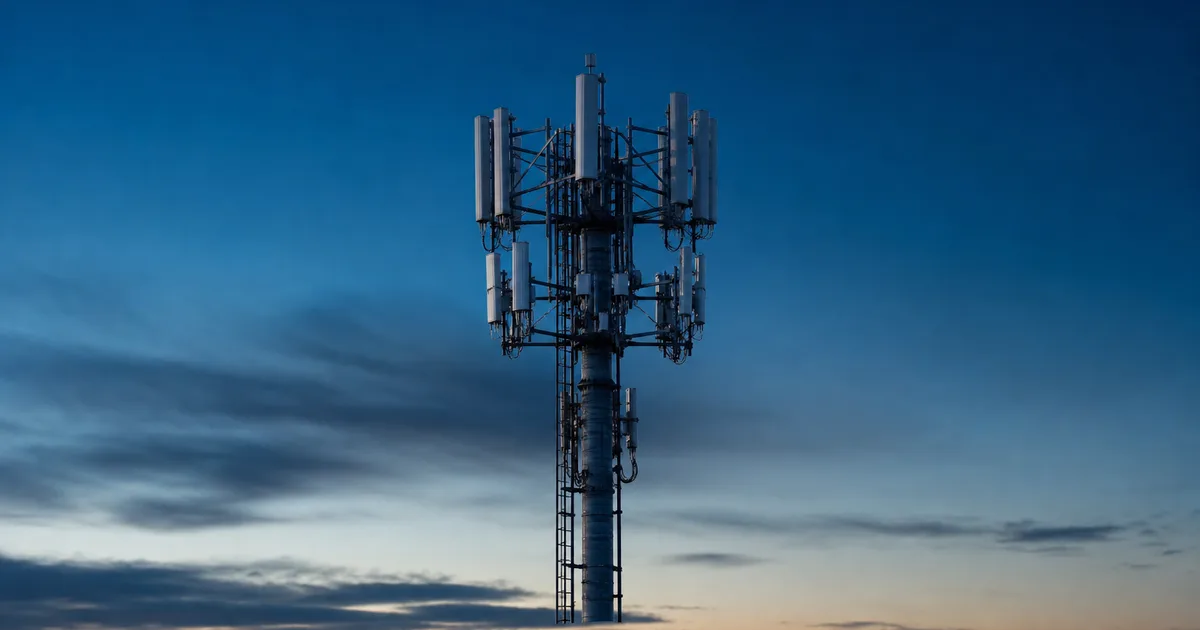
You studied electrical or computer engineering, you understand RF propagation and protocol stacks, and you want a US career in the infrastructure that everyone is rushing to build. The frustrating part is that telecom does not generate the same recruiting noise as software or AI — so you are not sure which employers actually sponsor visas, whether your skills translate cleanly to H-1B specialty-occupation requirements, or how to survive two lottery cycles on OPT before landing a permanent path.
The good news is that telecom and 5G engineering is one of the more sponsorship-friendly engineering verticals in the US. The major carriers, the global equipment vendors, the hyperscalers building private 5G, and the tower operators all rely heavily on engineers with international training. The H-1B specialty-occupation case for RF, network, and wireless systems roles is generally cleaner than for ambiguous IT roles. And the sector has structural hiring demand that does not evaporate overnight. This guide gives you the full picture for 2026.
Why telecom and 5G engineering works well for international candidates
The US telecom industry is in the middle of a multi-year build cycle. Carriers are deploying mid-band and millimeter-wave 5G, the Rural Digital Opportunity Fund is pushing broadband into underserved areas, and hyperscalers are building private wireless networks for factories and campuses. None of that slows down because of visa paperwork — employers who need engineers find a way to sponsor them.
Internationally trained engineers hold a structural advantage in this field. Graduate programs in India, China, South Korea, and much of Europe produce strong RF and wireless systems engineers. US graduate programs — at schools like Georgia Tech, Virginia Tech, NYU WIRELESS, UIUC, and UT Austin — actively recruit international students for telecom-adjacent research, which creates a natural pipeline from graduate school to employer sponsorship.
The specialty-occupation argument is also cleaner here than in many tech roles. An RF engineer or network architect role has a well-defined degree requirement (Electrical Engineering, Telecommunications Engineering, or Computer Engineering), which maps neatly onto what USCIS looks for: a degree in the specific specialty that the job requires. Contrast that with "software engineer" roles that sometimes face USCIS scrutiny over whether the degree requirement is genuine. Telecom roles rarely face that challenge.
Employers that sponsor H-1B in telecom and 5G
The LCA disclosure data from the Department of Labor is the most reliable check. Here is a breakdown of the employer categories most relevant to international telecom engineers:
| Employer Category | Examples | H-1B Sponsorship Pattern |
|---|---|---|
| Tier-1 Carriers | AT&T, Verizon, T-Mobile | Consistent, large volume — network engineers, RF planners, systems architects |
| Equipment Vendors | Ericsson, Nokia, Samsung Networks | Very consistent, multinational workforce, strong petition track record |
| Hyperscaler Telecom | AWS (Private 5G), Google (network infra), Microsoft (Azure private MEC) | Consistent sponsorship, high salary levels |
| Tower Companies | American Tower, Crown Castle, SBA Communications | Moderate sponsorship, more site engineers and project managers |
| Network Integrators | Accenture Federal, Capgemini, Wipro | Consistent but some staffing-firm issues — verify petition structure |
| Satellite / Non-terrestrial | SpaceX Starlink, Viasat, Hughes Network | Selective, high-demand for RF and propulsion-adjacent roles |
| University Research Labs | NYU WIRELESS, Georgia Tech, MIT Lincoln Lab affiliates | Cap-exempt, strong for early career while waiting for lottery |
A practical rule: check the DOL LCA Search for any employer before you apply. Look for the employer name, the job title, and the offered wage relative to the prevailing wage for that MSA. If an employer is submitting LCAs for roles similar to yours, they are an active H-1B filer. If you find nothing, that is a red flag.
Also read our guide on how to check if a company sponsors H-1B for a step-by-step search method.
Roles and degree requirements
The most hireable telecom and 5G profiles for international engineers in 2026:
RF Engineer — antenna design, link budgets, propagation modeling, drive testing. Degree requirement: Electrical Engineering (RF/microwave emphasis), Telecommunications Engineering. Specialty-occupation case is very clean.
Wireless Systems Engineer / 5G RAN Engineer — 3GPP standards knowledge, gNB configuration, O-RAN architecture, network slicing. Degree requirement: Electrical Engineering, Computer Engineering, or Computer Science with wireless specialization.
Network Planning Engineer — capacity planning, coverage analysis, frequency coordination. Degree: Electrical Engineering or Telecommunications Engineering.
Network Architect / Solutions Architect — end-to-end network design, vendor selection, MPLS/SD-WAN, core network (EPC, 5GC). Degree: Electrical Engineering, Computer Science, or Computer Engineering. Senior enough roles may qualify for EB-2 NIW arguments.
Core Network Engineer — IMS, VoLTE, 5GC, PCRF, network function virtualization. Degree: Electrical or Computer Engineering.
Systems Integration Engineer — lab integration and testing of RAN or core network equipment. Degree: Electrical Engineering or Computer Engineering.
Network Security Engineer (Telecom) — 5G network slicing security, roaming security, SIM/eSIM fraud. Degree: Computer Science, Computer Engineering, or Electrical Engineering. Cross-listed with our cybersecurity H-1B guide.
For all of these, a master's degree from a US or internationally recognized program significantly strengthens both the specialty-occupation argument and your candidacy.
Your OPT and STEM OPT runway in telecom
If you are currently on F-1, your work authorization runway is:
- 12-month OPT — starts after graduation, gives you one shot at the H-1B lottery (April filing for October 1 start)
- 24-month STEM OPT extension — available if your degree is in an eligible STEM CIP code (Electrical Engineering: 14.1001, Computer Engineering: 14.0901, Telecommunications Engineering: 14.1004, and related codes). This covers two additional lottery cycles.
The critical rule on STEM OPT: you have a 90-day unemployment limit — no more than 90 cumulative days without a qualifying employer during the initial 12-month OPT, and no more than 150 cumulative days during the STEM extension. You also need your employer to file a Form I-983 training plan with your DSO. For a legitimate telecom engineering role at a real company, the I-983 is straightforward — the role must be related to your STEM degree, and for an RF engineer or 5G systems engineer, that relationship is direct.
The 24-month STEM extension means you have effectively three lottery cycles (initial OPT year + two more on STEM OPT) to win the H-1B lottery before your OPT expires. With a win probability in a given cycle of roughly 20-30% depending on the year and wage level, three cycles gives most candidates a reasonable statistical chance. Wage-weighted lottery rules that took effect in recent years mean that roles at higher wage levels have somewhat better selection odds — another reason to push for the most senior title your experience supports.
For a deeper breakdown of OPT mechanics, see our OPT vs STEM OPT vs CPT 2026 guide.
H-1B specialty occupation: the petition case for telecom roles
The H-1B petition requires a Labor Condition Application (LCA) filed with DOL and an I-129 petition filed with USCIS. The LCA certifies that the employer will pay at least the prevailing wage (determined by the DOL's Online Wage Library at the relevant Level I–IV for the MSA and job title). The I-129 argues that the role qualifies as a "specialty occupation" requiring a bachelor's or higher degree in a specific field.
For telecom engineering, the specialty occupation argument rests on:
- Standard entry requirements for similar positions in the industry require a bachelor's in Electrical Engineering or Telecommunications Engineering
- The nature of the job duties — RF propagation modeling, 3GPP protocol design, network architecture — is complex and directly tied to the knowledge base of those degrees
- The employer normally requires a degree or its equivalent for this type of position
Because these arguments are well-supported for telecom roles, RFE rates tend to be lower than for generic software roles. However, if your employer titles your role something ambiguous like "Technical Specialist" or "Network Consultant," USCIS may question the specialty-occupation nexus. Work with your employer's immigration counsel to title the role accurately and provide detailed duty descriptions that map to specific degree requirements.
The wages matter too. Prevailing wages for RF engineers and network architects in major metro areas (San Jose, Dallas, Atlanta, Chicago, NYC) typically sit well above H-1B Level I thresholds, which is in your favor — the new wage-weighted lottery system provides better selection odds at higher wage levels.
See our electrical engineer H-1B sponsorship guide for specialty-occupation details that overlap with telecom roles.
Step-by-step timeline: F-1 to H-1B in telecom
- Graduate (Year 0): Apply for OPT EAD 90 days before graduation. Start job search immediately — do not wait for the EAD card to arrive before applying.
- Month 1-3 on OPT: Land a full-time role at a carrier, equipment vendor, or research lab. Confirm they sponsor H-1B before accepting the offer.
- October–December (Year 1): Begin internal H-1B process with employer. USCIS opens H-1B registration in mid-March; employer needs your info before then.
- March (Year 1 or later): Employer submits your H-1B registration in the USCIS online lottery system. The registration fee is $215 per beneficiary as of 2026.
- Late March–early April: USCIS announces lottery selection results. If selected, your employer files the full I-129 petition by June 30.
- October 1: H-1B status begins (or earlier if premium processing approved earlier and a valid change-of-status or consular processing route applies).
- If not selected: Continue on OPT. If you have a STEM extension, you have two more lottery cycles. Explore cap-exempt options (university research, nonprofit labs) in parallel.
- Green card planning: If you are on H-1B and your employer is willing, begin PERM labor certification after year 1. For roles with significant research output, consult an attorney about EB-2 NIW as an alternative.
Cap-exempt employers in telecom research
If you exhaust your OPT runway or want a safe harbor during lottery uncertainty, cap-exempt H-1B employment at universities and nonprofit research organizations is a legitimate path. In the telecom space, this means:
- University wireless research centers — NYU WIRELESS, Georgia Tech's School of Electrical and Computer Engineering, UIUC, UT Austin Wireless Networking and Communications Group, MIT, Stanford
- Federally funded research centers — National labs with telecom or wireless research components (NIST's Communications Technology Laboratory, for example)
- Nonprofit research organizations — Some industry consortia organized as nonprofits qualify
Cap-exempt employment has no lottery. USCIS processes the petition on a standard or premium timeline, and you can start working once it is approved (or for transfers from cap-subject status, on receipt under AC21 portability). The trade-off is that salaries are lower than at carriers or equipment vendors, and the path to a green card may take longer.
Read our full cap-exempt H-1B employer guide for eligibility criteria and how to verify whether a specific employer qualifies.
Green card paths for telecom engineers
Most telecom engineers pursue PERM-based green cards (EB-2 or EB-3):
EB-3 (skilled workers) — Requires only a bachelor's degree. PERM process (DOL labor market test) + I-140 petition + wait for priority date current in the Visa Bulletin. For Indian and Chinese nationals, the EB-3 India backlog is multi-year; for most other nationalities, EB-3 is faster.
EB-2 — Requires either an advanced degree (master's or PhD) or a bachelor's plus 5+ years of progressive experience. The "advanced degree" category covers most MS-level telecom engineers. Same PERM + I-140 path, but with slightly faster priority dates in most cases.
EB-2 NIW (National Interest Waiver) — Skips PERM entirely. You self-petition if you can demonstrate your work benefits the US national interest substantially. The 5G buildout argument is legitimately strong here — national security, rural broadband access, and economic infrastructure are all explicitly listed interest areas. Network architects, principal RF engineers with patent portfolios, and researchers publishing in IEEE journals are the most competitive applicants. An attorney familiar with NIW petitions for engineers can assess your case. See our EB-1A vs EB-2 NIW for engineers breakdown.
EB-1A (extraordinary ability) — No employer required. Requires demonstrating extraordinary ability through evidence like major awards, published work with high citation counts, invited peer review, media coverage, or judging of others' work. Realistic only for engineers at the top of their field.
For the PERM route: begin as early as your employer allows. PERM labor market tests take roughly 8-12 months when BALCA backlogs are clear; I-140 processing then adds several months. The earlier your priority date, the shorter your eventual wait.
Common mistakes
Targeting only well-known carriers and ignoring equipment vendors. Ericsson, Nokia, and Samsung Networks collectively hire thousands of US-based telecom engineers and have strong, well-practiced H-1B sponsorship programs. Many international candidates overlook them in favor of AT&T or Verizon, creating less competition for vendor roles.
Accepting a contractor arrangement assuming it is equivalent to direct H-1B sponsorship. Some staffing agencies offer H-1B sponsorship as a passthrough for placement at telecom clients. The practical risk is the "third-party worksite" issue — USCIS has historically scrutinized petitions where the actual work is at a client site rather than the petitioning employer's premises. If you go through a staffing firm, confirm the firm has a strong petition track record and ideally get a direct offer from the end client when possible.
Not confirming the STEM OPT I-983 training plan with your employer before you accept the offer. Some employers are unfamiliar with the I-983 requirement. Find out early whether HR has handled this before, so you are not scrambling 11 months into your OPT.
Letting the 90-day OPT unemployment clock run without a plan. If you are between jobs on OPT, every day counts. Telecom job cycles can be longer than software roles — procurement cycles and budget approvals are real factors. Factor this into your timeline and start your next search before your current role ends.
Underpricing yourself to appear more attractive to sponsors. The wage-weighted lottery gives higher odds to higher-wage petitions. Accepting a below-market salary does not help your odds and costs you real money for years. For salary benchmarking, read our tech compensation breakdown for new grads.
Skipping attorney review on the I-129 petition. Most denials trace to petition packaging problems, not candidate qualifications. An experienced immigration attorney is worth the cost — especially for mid-size employers who may have weaker in-house immigration teams than the major carriers.
Certifications and credentials that strengthen your profile
Unlike some regulated engineering fields, telecom does not have a mandatory licensing body for most roles — there is no telecom equivalent of the Professional Engineer (PE) license. However, certifications meaningfully improve candidacy:
- Ericsson Certified Associate / Professional (RAN or Core) — recognized by carriers and operators worldwide
- Nokia Bell Labs Certifications — network as code, microwave and optical networking
- Cisco Certified Network Professional (CCNP) or Expert (CCIE) — particularly the Service Provider track, relevant for core network roles
- AWS Certified Advanced Networking — for private 5G and cloud-native telecom roles
- 3GPP standard familiarity — not a certification, but demonstrated knowledge of 3GPP Release 15/16/17/18 specs is a signal in interviews
Certifications do not change your H-1B petition materially, but they strengthen your resume screening performance and signal employer commitment to you as a candidate.
Frequently asked questions
Do telecom employers commonly sponsor H-1B visas for 5G engineers?
Yes — major carriers and their equipment vendor partners are among the more consistent H-1B sponsors in engineering. Roles in RF engineering, network planning, and systems integration regularly appear on USCIS LCA disclosure data. Smaller regional carriers and tower companies are less consistent, so always verify on the DOL LCA search tool before applying.
Can I use STEM OPT to work as a 5G or RF engineer while waiting for H-1B?
Yes, provided your degree is in an eligible STEM field such as Electrical Engineering, Computer Engineering, or Telecommunications Engineering. STEM OPT gives you up to 24 months of work authorization beyond your initial 12-month OPT, covering two H-1B lottery cycles. Your employer must sign a Form I-983 training plan, which most telecom engineering roles qualify for without difficulty.
What is the specialty-occupation argument for telecom engineering roles?
USCIS requires a theoretical and practical application of highly specialized knowledge with a minimum of a bachelor's degree in the specific specialty. Telecom roles — RF engineer, network architect, systems integration engineer — map cleanly to Electrical Engineering or Telecommunications Engineering degree requirements, making specialty-occupation petitions relatively straightforward compared to ambiguous IT roles.
Are there cap-exempt employers in the telecom space?
Yes. University research labs working on 5G, MIMO, and mmWave technology — at institutions such as NYU WIRELESS, Stanford, UT Austin, and Georgia Tech — are cap-exempt H-1B employers. National labs funded by agencies like NIST and DARPA that contract telecom research also qualify. These are viable landing spots that avoid the lottery while you build US experience.
What green card path makes the most sense for a telecom engineer?
Most telecom engineers pursue EB-2 or EB-3 through PERM labor certification sponsored by their employer. If your role is a network architect or principal engineer with a track record of patents or major project leadership, EB-1A or EB-2 NIW are worth exploring — especially given the national infrastructure arguments for 5G buildout. Indian-born and Chinese-born engineers should review current EB-2 and EB-3 India priority dates before relying on a PERM timeline.
Telecom and 5G engineering is a strong visa sponsorship field in 2026 — structurally sound specialty-occupation arguments, consistent demand from carriers and vendors, and a plausible green card path through PERM or NIW. The work is to pick the right employers, protect your OPT clock, and start green card planning early.
If you want help identifying specific 5G and telecom roles that match your profile and sponsor H-1B, F1Jobs works with international engineers on exactly this — from employer targeting through petition review.
Frequently asked questions
Do telecom employers commonly sponsor H-1B visas for 5G engineers?
Yes — major carriers and their equipment vendor partners are among the more consistent H-1B sponsors in engineering. Roles in RF engineering, network planning, and systems integration regularly appear on USCIS LCA disclosure data. Smaller regional carriers and tower companies are less consistent, so always verify on the DOL LCA search tool before applying.
Can I use STEM OPT to work as a 5G or RF engineer while waiting for H-1B?
Yes, provided your degree is in an eligible STEM field such as Electrical Engineering, Computer Engineering, or Telecommunications Engineering. STEM OPT gives you up to 24 months of work authorization beyond your initial 12-month OPT, covering two H-1B lottery cycles. Your employer must sign a Form I-983 training plan, which most telecom engineering roles qualify for.
What is the specialty-occupation argument for telecom engineering roles?
USCIS requires a theoretical and practical application of highly specialized knowledge with a minimum of a bachelor's degree in the specific specialty. Telecom roles — RF engineer, network architect, systems integration engineer — map cleanly to Electrical Engineering or Telecommunications Engineering degree requirements, making specialty-occupation petitions relatively straightforward compared to ambiguous IT roles.
Are there cap-exempt employers in the telecom space?
Yes. University research labs working on 5G, MIMO, and mmWave technology — at institutions such as NYU WIRELESS, Stanford, UT Austin, and Georgia Tech — are cap-exempt H-1B employers. National labs funded by agencies like NIST and DARPA that contract telecom research also qualify. These are viable landing spots that avoid the lottery while you build US experience.
What green card path makes the most sense for a telecom engineer?
Most telecom engineers pursue EB-2 or EB-3 through PERM labor certification sponsored by their employer. If your role is a network architect or principal engineer with a track record of patents or major project leadership, EB-1A (extraordinary ability) or EB-2 NIW (National Interest Waiver) are worth exploring — especially given the national infrastructure arguments for 5G buildout. Indian-born and Chinese-born engineers should review current EB-2 and EB-3 India priority dates before relying on a PERM timeline.