Virginia H-1B Jobs 2026: Northern Virginia Tech, Contractors & Cloud Campuses
Northern Virginia is the world's largest data center cluster — here is how international students and H-1B candidates can land sponsored cloud roles in NoVA.
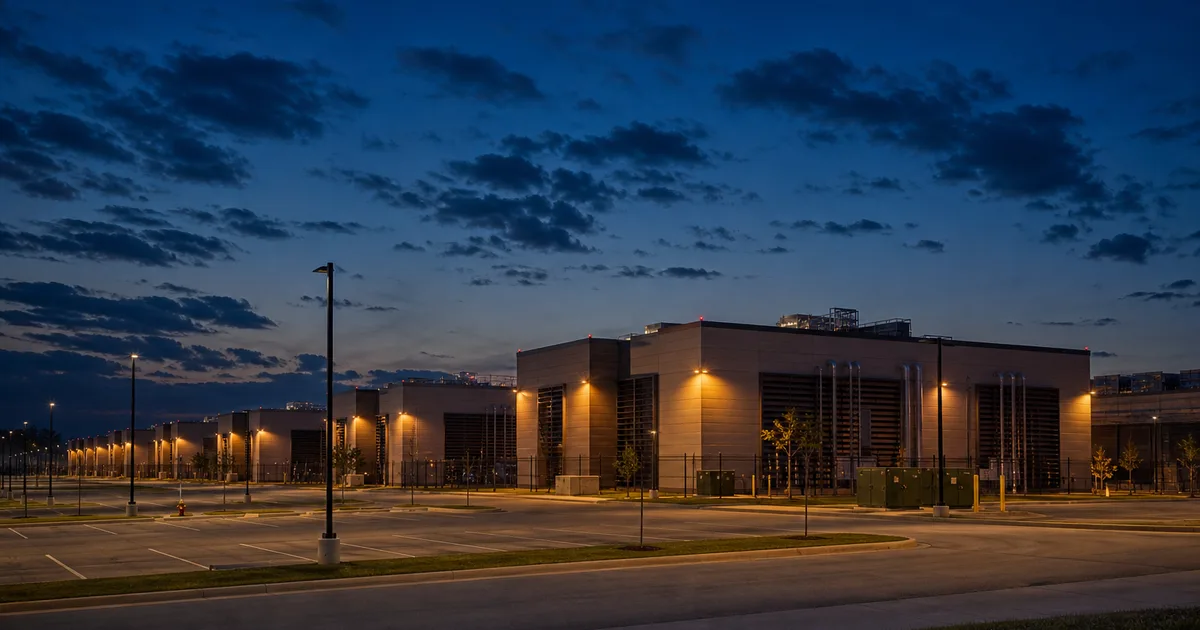
You graduated with a computer science or cloud engineering degree and you're watching your OPT clock. Or you're already on H-1B and considering a move to the DC metro area for the career growth. Northern Virginia looks like the obvious choice: the world's largest concentration of data centers, three hyperscaler campuses within thirty miles of each other, and a tech labor market that has been growing faster than almost any other metro outside of San Francisco and Seattle.
The catch is the noise around government contractors. Booz Allen Hamilton, Leidos, SAIC, and dozens of mid-tier defense IT firms have huge footprints in NoVA and post engineering roles constantly — but the fine print on most of those listings will stop you cold if you don't have a US security clearance. For F-1, OPT, and H-1B candidates, NoVA requires a deliberate strategy: stay in the commercial cloud lane, understand the lottery math, and know where the cap-exempt alternatives sit. This guide lays that out precisely.
The NoVA tech landscape for international candidates
Northern Virginia — Ashburn, Reston, McLean, Tysons, and the surrounding Loudoun County corridor — is home to the world's largest data center cluster. AWS, Microsoft Azure, and Google Cloud all operate significant infrastructure campuses in this region. The density exists because of the area's fiber connectivity, access to cheap power, and proximity to federal clients. That same infrastructure magnet has pulled in a wide ecosystem of commercial employers: SaaS platforms, cybersecurity vendors, cloud consulting firms, fintech companies, and enterprise software providers.
For you as an international candidate, the distinction that matters most is whether a role touches federal government work. If it does, there is almost certainly a security clearance requirement — and security clearances are only available to US citizens (and in limited cases lawful permanent residents). F-1 and H-1B status categorically bars you from DoD and IC clearance eligibility.
The commercial cloud sector is a different story entirely. These employers routinely sponsor H-1B, file LCAs through the DOL, and have well-established immigration programs. The guide to cloud and DevOps H-1B sponsorship covers the broader landscape; below we focus specifically on what makes NoVA different from other cloud markets.
The three hyperscaler campuses
| Employer | NoVA Campus Focus | Common Sponsoring Roles |
|---|---|---|
| Amazon Web Services | Ashburn / Herndon (AWS East) | Cloud Support Engineer, Solutions Architect, SDE |
| Microsoft Azure | Reston / Chevy Chase | SWE, Cloud Operations, Security Engineer |
| Google Cloud | Reston | Customer Engineer, SWE, Data Engineer |
Each of these employers has a long and verifiable H-1B filing history. You can cross-reference their LCA filings in the DOL's public disclosure data to see wage levels and job titles for prior years — this is the most reliable way to gauge whether a specific role is likely to be sponsored at your target salary band.
The contractor question — reading the fine print
The government contractor citizenship barrier guide explains the full clearance landscape, but here is the practical summary for Virginia.
Large contractors like Booz Allen Hamilton, Leidos, SAIC, and Peraton post thousands of roles in the NoVA area. A meaningful portion of their work — particularly on intelligence community and DoD contracts — requires at minimum a Secret clearance, more often a Top Secret/SCI clearance. These are unavailable to non-citizens, full stop.
However, these same firms have internal IT, corporate technology, and commercial technology divisions that do not touch classified work. Roles in these divisions can and do sponsor H-1B. The key is reading the job description carefully:
- If the listing says "Active Secret clearance required" or "Must be a US citizen" — skip it entirely.
- If the listing describes internal enterprise software, commercial cloud migration, or corporate IT modernization with no clearance mention — it may be viable. Confirm directly with the recruiter before investing time.
The Washington DC H-1B jobs and government contractors guide covers the broader DC metro picture including Maryland. NoVA is where the highest concentration of commercial cloud roles sits, but the DC and Maryland sides of the metro add more options.
How the wage-weighted lottery affects your strategy in NoVA
The H-1B lottery as of FY2026 is wage-weighted — USCIS allocates registrations across four wage tiers derived from the DOL Occupational Employment Statistics prevailing wage levels. Higher-wage registrations are selected at higher rates. This changes the calculus for where and how you apply.
Under DHS wage-weighted lottery modeling, cloud engineering roles in NoVA priced at Level II (entry to early-career) have a projected selection rate of approximately 30.6%. Level III (mid-career, fully qualified) comes in at approximately 45.9%. The exact figures DHS modeled are based on the overall registration pool; your individual year's rate depends on total registrations filed, but the relative advantage of Level III over Level II holds consistently.
What this means in practice:
- Target Level III or Level IV roles when you have the experience. A Senior Cloud Engineer or Staff Infrastructure Engineer title in NoVA typically commands a Level III wage, which falls in the higher selection bracket. An Associate or Junior title will land at Level I or II.
- NoVA's cost of living pushes wages up naturally. DOL prevailing wages for cloud roles in the Washington-Arlington-Alexandria MSA are among the highest in the country for their occupation codes. This means even mid-level roles often clear Level III thresholds naturally, without employers having to stretch.
- The wage premium matters even after cost of living. The higher lottery selection odds at Level III/IV are a meaningful career lever, not just a pay raise. Targeting roles that land you in a higher wage tier is one of the most actionable things you can do to improve your H-1B odds.
For a deeper breakdown of how to reverse-engineer job descriptions to predict wage levels, see the reverse-engineer H-1B wage level guide.
Cap-exempt pathways through Virginia universities
If you want to sidestep the lottery entirely, Virginia has three universities that qualify as cap-exempt H-1B employers:
| Institution | Location | Common Cap-Exempt Roles |
|---|---|---|
| George Mason University (GMU) | Fairfax / Arlington | Research IT, Data Science, Systems Engineering |
| University of Virginia (UVA) | Charlottesville | Research Computing, Bioinformatics, IT |
| Virginia Tech (VT) | Blacksburg / Arlington | Research roles, Applied Science, Computing |
A position at any of these institutions — even part-time or as a research associate — qualifies your H-1B for cap-exempt filing. USCIS processes cap-exempt petitions year-round, and there is no lottery. The $100K fee proclamation (effective September 21, 2025) does not apply to H-1B transfers, extensions, or cap-exempt filings for workers already inside the US.
GMU in particular has a strong tie to the NoVA commercial tech ecosystem through its Arlington campus (formerly the Amazon HQ2 corridor), making it a realistic bridge employer option — work at GMU on a sponsored H-1B, build US work history, then transfer to a commercial cloud employer once you have your cap-subject petition approved through the lottery. See the cap-exempt bridge strategy guide for the full sequencing.
The FY2027 cap situation
The FY2027 H-1B cap has been reached. For practical purposes this means:
- New H-1B petitions for workers without prior US H-1B status must wait for the FY2028 registration window (typically opening in March 2027).
- Workers already on H-1B can transfer employers now, year-round, using the AC21 portability rule without entering the lottery again.
- Cap-exempt employers (universities, qualifying nonprofit research organizations) are not affected and can file petitions immediately.
- Premium processing remains available for extensions and transfers — it does not speed up cap-subject new petitions that missed the lottery.
If you are currently on OPT or STEM OPT and your H-1B registration was not selected in FY2027, you have time on the clock. Use it strategically: build deeper skills in cloud platforms (AWS, Azure, GCP certifications carry real weight with NoVA employers), expand your professional network in the Reston and Tysons tech community, and consider whether a cap-exempt bridge role makes sense before the FY2028 window opens.
Step-by-step job search timeline for NoVA
Here is a realistic timeline for an international candidate targeting NoVA cloud roles:
- Months 1-2: Research employers using DOL LCA disclosure data and tools like MyVisaJobs. Build a target list of commercial cloud employers with strong H-1B filing histories. The LCA employer data hub guide explains the methodology.
- Month 2: Map job titles to DOL wage levels for the Washington-Arlington-Alexandria MSA. This tells you which titles land at Level III vs Level II and helps you calibrate your application targets.
- Months 2-3: Apply to roles at commercial employers first — cloud providers, SaaS companies, cybersecurity vendors. Flag any role mentioning clearances or citizenship requirements and skip those.
- Month 3: Begin networking in the NoVA tech community. The AWS re:Invent region meetups, Northern Virginia Technology Council (NVTC) events, and GMU's tech alumni network are productive starting points.
- Months 3-4: Interview and receive offers. At the offer stage, ask directly about H-1B sponsorship policy and the employer's prior H-1B filing volume. Large cloud employers have established immigration teams; smaller SaaS companies may need more lead time.
- Month 4-5 (if cap-exempt route): Explore parallel conversations with GMU, UVA, or VT for bridge roles while running your commercial search.
- FY2028 window (March 2027 for most): If your OPT timeline allows, register for the cap-subject lottery with your commercial employer.
Common mistakes
Applying to cleared positions without reading the description. This is the highest-frequency mistake for international candidates in NoVA. "Active clearance required" or "US persons only" in the first paragraph means the role is closed to you. Filter it out at the search stage.
Conflating the NoVA market with the broader DMV area. The DC and Maryland sides of the metro have different employer mixes — more federal agencies, more nonprofit research institutions. NoVA is the commercial cloud concentration. Your search strategy should reflect which sub-market you're targeting.
Ignoring the wage-level/lottery math. Many candidates focus entirely on getting an interview without thinking about whether the role's wage tier improves or hurts their lottery odds. At Level II you are at approximately 30.6% selection; at Level III you are at approximately 45.9%. That difference compounds across multiple lottery attempts.
Assuming all large contractors are closed. Firms like Booz Allen and Leidos have internal commercial technology divisions that can sponsor H-1B. The mistake is applying to their cleared programs rather than specifically targeting their commercial or enterprise IT openings.
Waiting until OPT ends to start the cap-exempt conversation. Universities process cap-exempt H-1Bs year-round, but they still take time — and you want the petition filed before your OPT expires. Start conversations at least four to five months before your OPT end date.
Not using premium processing for transfers. If you are already on H-1B and transferring to a NoVA employer, premium processing (currently $2,965, guaranteeing adjudication within 15 business days) is almost always worth the cost given the stakes of a transfer gap. The H-1B transfer playbook covers this in full.
Frequently asked questions
Can international students on F-1 OPT get jobs in Northern Virginia?
Yes, many commercial tech employers in Northern Virginia — including the major cloud providers and SaaS companies — hire on OPT and sponsor H-1B. The important distinction is to target commercial cloud roles rather than government contractor positions, which typically require a US security clearance that bars most F-1 and H-1B candidates.
Do government contractors like Booz Allen or Leidos sponsor H-1B visas?
Some roles at large contractors do carry H-1B sponsorship, but the majority of their billable work requires a DoD or IC security clearance, which is only available to US citizens and certain permanent residents. As an F-1 or H-1B candidate, focus on their commercial or internal IT divisions rather than cleared program work. Read the clearance requirement line carefully on every job description.
How does the wage-weighted H-1B lottery affect cloud engineering roles in Northern Virginia?
Under DHS wage-weighted lottery modeling, cloud engineering roles in NoVA priced at Level II or Level III have projected selection rates of approximately 30.6% to 45.9% respectively. Higher-wage Level III and Level IV roles are selected at higher rates, so targeting senior cloud engineer or staff engineer titles — which come with higher wage levels — can meaningfully improve your lottery odds.
Are there cap-exempt H-1B employer options in Virginia?
Yes. George Mason University, the University of Virginia, Virginia Tech, and several affiliated research institutes qualify as cap-exempt H-1B employers. A position at one of these institutions lets you bypass the annual lottery entirely. This is a real alternative pathway worth considering, particularly if you are pursuing research, data science, or IT roles.
What is the FY2027 H-1B situation for Virginia employers?
The FY2027 cap has been reached. Virginia cap-subject employers — including the cloud campuses — must wait for the FY2028 filing window or use premium processing for extensions and transfers. The cap-exempt university route remains open year-round and is not affected by the annual cap.
NoVA is genuinely one of the best US metros for international candidates in cloud and infrastructure — provided you navigate the contractor landscape carefully and understand the lottery math. The density of commercial cloud work, the wage levels that push you into higher lottery tiers, and the cap-exempt university options all work in your favor.
If you want help building your target employer list, identifying which roles land at which DOL wage levels, or sequencing your OPT and H-1B strategy for the NoVA market, F1Jobs works with candidates on exactly this kind of job search planning.
Frequently asked questions
Can international students on F-1 OPT get jobs in Northern Virginia?
Yes, many commercial tech employers in Northern Virginia — including the major cloud providers and SaaS companies — hire on OPT and sponsor H-1B. The important distinction is to target commercial cloud roles rather than government contractor positions, which typically require a US security clearance that bars most F-1 and H-1B candidates.
Do government contractors like Booz Allen or Leidos sponsor H-1B visas?
Some roles at large contractors do carry H-1B sponsorship, but the majority of their billable work requires a DoD or IC security clearance, which is only available to US citizens and certain permanent residents. As an F-1 or H-1B candidate, focus on their commercial or internal IT divisions rather than cleared program work. Read the clearance requirement line carefully on every job description.
How does the wage-weighted H-1B lottery affect cloud engineering roles in Northern Virginia?
Under DHS wage-weighted lottery modeling, cloud engineering roles in NoVA priced at Level II or Level III have projected selection rates of approximately 30.6% to 45.9% respectively. Higher-wage Level III and Level IV roles are selected at higher rates, so targeting senior cloud engineer or staff engineer titles — which come with higher wage levels — can meaningfully improve your lottery odds.
Are there cap-exempt H-1B employer options in Virginia?
Yes. George Mason University, the University of Virginia, Virginia Tech, and several affiliated research institutes qualify as cap-exempt H-1B employers. A position at one of these institutions lets you bypass the annual lottery entirely. This is a real alternative pathway worth considering, particularly if you are pursuing research, data science, or IT roles.
What is the FY2027 H-1B situation for Virginia employers?
The FY2027 cap has been reached. Virginia cap-subject employers — including the cloud campuses — must wait for the FY2028 filing window or use premium processing for extensions and transfers. The cap-exempt university route remains open year-round and is not affected by the annual cap.