What to Wear to a US Job Interview When You're Building a Wardrobe on OPT Wages
You don't need a $400 suit to get hired. Here's what actually matters when your OPT paycheck hasn't started yet.
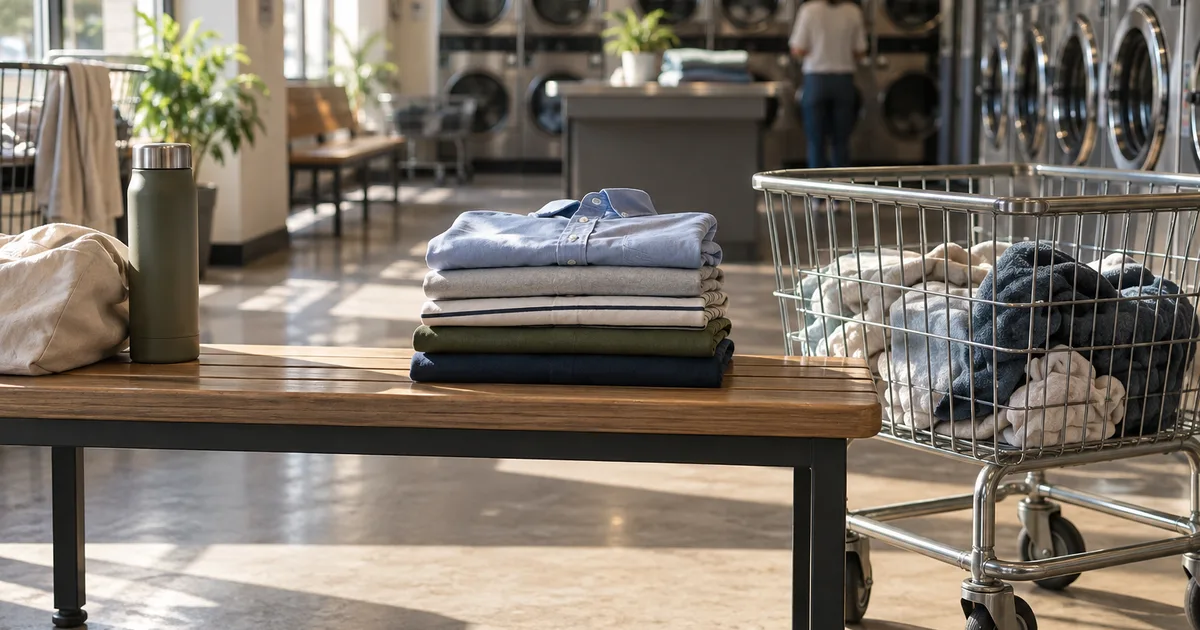
You've made it to the interview. Now you're staring at a closet built for a home country climate and a student budget, wondering whether the one blazer you own is enough, whether you need an actual suit, and whether spending real money on clothes before you've earned a single OPT paycheck is even reasonable. It is a real tradeoff — every dollar spent on interview clothes on OPT is a dollar not going toward rent, the SEVIS fee, or the emergency fund you're trying to build while your work authorization clock runs.
The short answer: match the employer's culture, not the most formal outfit you can imagine, and buy the fewest pieces that let you look put-together and rewear them across every interview in your pipeline. A well-fitted blazer over dress pants covers most tech, startup, and operations interviews. A suit is worth the spend for finance, law, consulting, and most large corporate first rounds. Below is exactly how to tell which situation you're in, what to buy first, and how to stretch a small budget across an entire interview cycle — because on OPT, one outfit usually has to do the work of five.
Why this is a different problem for you than for a US-born candidate
Generic "what to wear to an interview" advice assumes an unlimited closet, a stable paycheck, and a wardrobe built up over years in the US job market. None of that is true for most people reading this. You may be:
- Interviewing while still a student, with no income yet and a shrinking bank balance
- Coordinating outfits for a mix of virtual, phone, and onsite formats — sometimes for the same role, as covered in onsite interview loop logistics for international candidates
- Running multiple interview processes at once against your OPT 90-day unemployment clock, where time spent shopping is time not spent applying or prepping
- Working with a wardrobe built for a different climate, since a lot of international students arrive with clothes suited to home-country weather, not a Midwest February interview loop
- Budgeting interview clothes against other unavoidable OPT-era costs — rent, health insurance, the I-765 EAD application if you're mid-transition, and eventually STEM OPT or H-1B related expenses
None of this changes what recruiters expect to see. It does change how you should spend the limited money and time you have, which is the point of this guide.
Match the dress code to the industry, not the other way around
Overdressing is a smaller sin than underdressing, but showing up in a full suit to a casual startup interview or in jeans to an investment bank first round both send a signal you don't intend: that you didn't research the company. Use this as a starting default, then confirm with anything the recruiter or job posting tells you about "casual," "business casual," or "professional" dress.
| Industry / role type | Typical dress norm | What that looks like |
|---|---|---|
| Investment banking, law, government, consulting (MBB) | Business professional (suit) | Dark suit, dress shirt, conservative tie for men; suit or tailored dress/pantsuit for women, minimal jewelry |
| Corporate (Fortune 500, insurance, healthcare admin) | Business professional to business casual | Blazer + dress pants/skirt is usually safe even where a full suit is not required |
| Tech (mid-size to large companies) | Business casual | Blazer optional, collared shirt or blouse, dress pants or a clean dark denim in more casual offices |
| Startups, creative, marketing agencies | Smart casual | Neat, well-fitted clothing without a tie or full suit; still no sneakers-and-hoodie for the interview itself |
| Manufacturing, engineering site visits | Business casual, closed-toe shoes required | Check in advance if the loop includes a floor tour — steel-toe or closed shoes may be mandatory for safety |
When you genuinely cannot tell, dress one notch more formal than you expect the interviewer to be. It is far easier to remove a tie or jacket in the lobby than to explain up an outfit you can't change.
Build a five-piece OPT-budget capsule wardrobe
You do not need a different outfit for every interview. You need pieces that combine into 3-4 different looks and survive repeated wear. Build in this order:
- One well-fitted blazer in navy, black, or charcoal. This single piece does the most work — it upgrades a plain top into "business casual" and layers under nothing for "business professional" if paired with matching trousers.
- One pair of tailored dress pants or a knee-length skirt in a neutral color. Fit matters far more than fabric quality at this price point; a $40 pair that's hemmed correctly looks better than a $150 pair that bunches at the ankle.
- Two to three solid-color tops or blouses in mid-tones (light blue, white, soft gray) that mix and match with the blazer and pants, so a five-interview week doesn't require five unique outfits.
- One pair of closed-toe, polished shoes — plain leather or leather-look oxfords, loafers, or low block heels. Skip anything with visible wear, scuffs, or sneakers, even for a "casual" office.
- A suit, only if your target industry requires one. If you're only interviewing in tech or startups, you can likely skip this line item entirely and put that money elsewhere.
For where to find these without paying retail: outlet stores and off-season clearance racks carry the same brands at 40-60% off; consignment and thrift stores are genuinely strong sources for blazers and suiting, since structured pieces hold their shape and quality is easy to check by trying them on; and many universities run free or low-cost "professional clothing closets" through career services specifically for this situation — check with your international student office or career center before spending anything.
Dressing for each interview format
Your outfit needs shift by format, and OPT job searches typically mix all three in a single week.
- Phone screens: No camera, no outfit requirement — but many candidates report that dressing even slightly more professionally changes posture and voice tone enough to matter. Not required, but worth testing for yourself.
- Video interviews: Dress the same as in-person from the waist up, at minimum. Choose solid, mid-toned colors — pure white and busy patterns both perform poorly on typical webcams and video compression. Do a test recording in the room and lighting you'll actually use, not just a mirror check. If you're deep into the loop, the mock interview routine for international students is a good place to also rehearse how you look and sound on camera, not just what you say.
- Onsite loops: Assume a full day, possibly with a facility tour, a team lunch, and back-to-back interviewers. Layer with a blazer you can remove if the office runs warm, bring a portable lint roller and stain wipe, and check ahead whether any part of the loop (a lab, a manufacturing floor) has its own dress or safety requirements. Full logistics — including what to bring and how to plan travel time — are in the onsite interview loop guide for international candidates.
Common mistakes
- Buying a full suit before confirming the industry needs one. If your entire pipeline is tech and startups, that money is better spent on a blazer plus a coding interview prep subscription or a professional resume review.
- Wearing the exact same visible outfit to every round with the same interviewer. For a multi-round onsite loop with the same panel, rotate at least the top or add a different scarf/accessory — it signals you have more than one outfit, which matters less than people assume, but a same-day change between morning and afternoon sessions is worth doing if the loop runs long.
- Ignoring fit in favor of brand name. A $200 designer blazer that doesn't fit your shoulders reads worse than a $50 blazer that does. Get sleeves and shoulders tailored if you can — alterations are usually $15-30 and make the biggest visible difference of anything on this list.
- Treating video interview attire as optional. "They can only see my top half" is true, but recruiters do notice mismatched formality (blazer over visible pajama pants is a real, recurring story) if you have to stand up mid-call.
- Spending OPT-era money on clothes before budgeting the rest of the search. Interview attire is one line item in a job search that also includes application tools, prep resources, and possibly travel for onsite loops — see the OPT job search cadence and budget framework for how to sequence spending against your unemployment clock instead of front-loading it all on wardrobe.
- Assuming attire compensates for weak answers, or the reverse. Recruiters form a fast first impression from clothing, but every offer decision comes down to your answers, your fit for the role, and — separately — the employer's own visa sponsorship calculus. Dressing well removes a distraction; it does not substitute for interview preparation itself.
Frequently asked questions
What should I actually wear to a US job interview as an international student? Match the employer's dress culture rather than defaulting to the most formal option you own. A tailored suit fits finance, law, consulting and most large corporate interviews. Business casual — dress pants or a knee-length skirt with a button-down or blouse, no tie required — is the safer default for tech, startups and most in-house corporate roles. When you cannot find any dress-code signal, one step more formal than the interviewer is the standard rule of thumb.
Do I need to buy a suit if I have not started earning OPT wages yet? Not always. If you are interviewing in finance, law, government or traditional consulting, a well-fitted suit is close to mandatory and worth budgeting for even before your first paycheck. For tech, startups, marketing and most operations roles, one blazer paired with dress pants or a skirt covers the vast majority of interviews and costs far less than a full suit.
What should I wear to a virtual video interview? Dress the same as you would in person from the waist up, since interviewers notice inconsistency between a sharp collar and a t-shirt logo peeking through. Choose a solid, mid-toned top rather than busy patterns or pure white, which can wash out on webcams, and confirm the outfit looks right on camera in a test call before the real interview.
How do I build an interview wardrobe on a tight OPT budget? Buy fewer, better pieces you can rewear across interviews rather than a different outfit each time — one or two neutral tops or blouses, one pair of well-fitted dress pants, and one blazer will carry you through most first-round and even onsite interviews. Outlet stores, off-season sales, and consignment or thrift shops for blazers and suiting are the highest-value places to spend limited money, since fit and fabric quality matter more than the brand name.
Does what I wear to an interview affect whether an employer will sponsor my visa? No. Sponsorship decisions turn on the role, the employer's H-1B or other visa strategy, budget, and your qualifications, not on your outfit. What attire does affect is the first, fastest impression an interviewer forms before you say a word, so the goal is to remove clothing as a distraction so your answers about your work and your sponsorship needs get full attention.
Sources
- USCIS Form I-765, Application for Employment Authorization — the OPT/STEM OPT EAD filing referenced above
- CareerOneStop, a US Department of Labor sponsored career resource
Getting the outfit right takes the guesswork out of one small piece of a much bigger process. If you want help with the rest of it — building your interview pipeline, prepping answers, and managing the OPT clock alongside a real job search — reach out to F1Jobs and we'll walk you through what a structured search actually looks like.
Frequently asked questions
What should I actually wear to a US job interview as an international student
Match the employer's dress culture rather than defaulting to the most formal option you own. A tailored suit fits finance, law, consulting and most large corporate interviews. Business casual — dress pants or a knee-length skirt with a button-down or blouse, no tie required — is the safer default for tech, startups and most in-house corporate roles. When you cannot find any dress-code signal, one step more formal than the interviewer is the standard rule of thumb.
Do I need to buy a suit if I have not started earning OPT wages yet
Not always. If you are interviewing in finance, law, government or traditional consulting, a well-fitted suit is close to mandatory and worth budgeting for even before your first paycheck. For tech, startups, marketing and most operations roles, one blazer paired with dress pants or a skirt covers the vast majority of interviews and costs far less than a full suit.
What should I wear to a virtual video interview
Dress the same as you would in person from the waist up, since interviewers notice inconsistency between a sharp collar and a t-shirt logo peeking through. Choose a solid, mid-toned top rather than busy patterns or pure white, which can wash out on webcams, and confirm the outfit looks right on camera in a test call before the real interview.
How do I build an interview wardrobe on a tight OPT budget
Buy fewer, better pieces you can rewear across interviews rather than a different outfit each time — one or two neutral tops or blouses, one pair of well-fitted dress pants, and one blazer will carry you through most first-round and even onsite interviews. Outlet stores, off-season sales, and consignment or thrift shops for blazers and suiting are the highest-value places to spend limited money, since fit and fabric quality matter more than the brand name.
Does what I wear to an interview affect whether an employer will sponsor my visa
No. Sponsorship decisions turn on the role, the employer's H-1B or other visa strategy, budget, and your qualifications, not on your outfit. What attire does affect is the first, fastest impression an interviewer forms before you say a word, so the goal is to remove clothing as a distraction so your answers about your work and your sponsorship needs get full attention.