Canada PR for H-1B Holders: When Express Entry Beats Waiting in the EB-2 India Line
EB-2 India did not move in November and Express Entry changes its points on November 3. Here is when Canadian PR is a smart hedge, and when it is not.
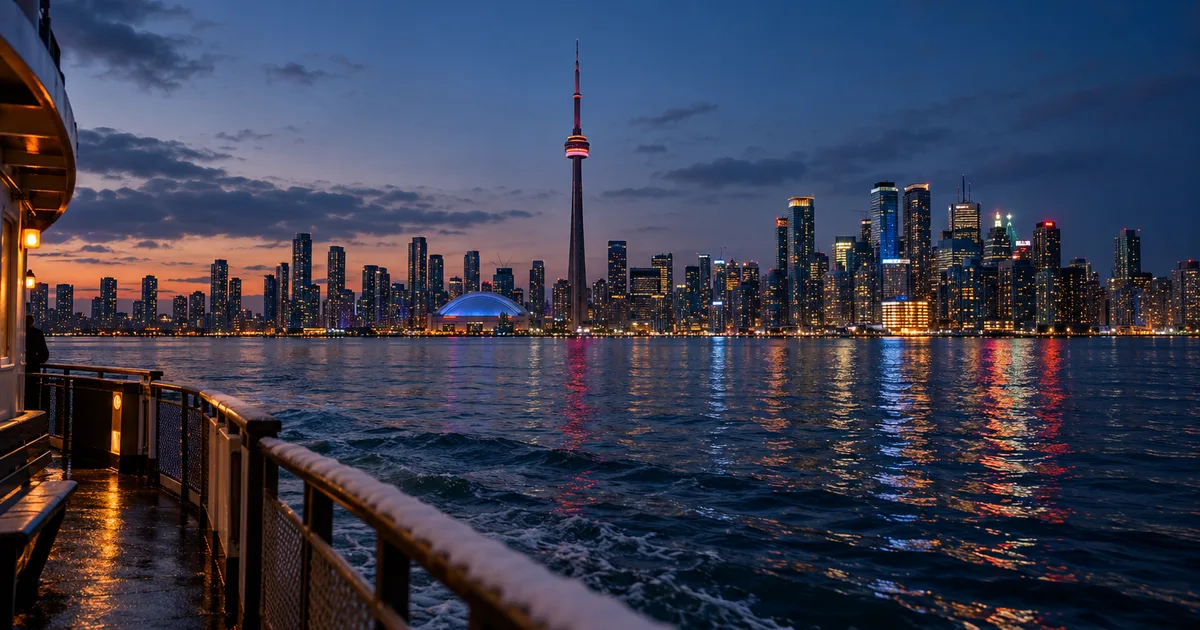
Yes, you can apply for Canada PR from the US while you hold an H-1B. The usual route is Express Entry's Federal Skilled Worker Program, which counts skilled work gained "in Canada or abroad," so your US job can make you eligible. US experience earns far fewer ranking points than Canadian experience, though, and because the application goes to Immigration, Refugees and Citizenship Canada (IRCC), not USCIS, it does not by itself change your H-1B or your US green card case.
Status as of November 1, 2026:
- US queue (published). The November 2026 Visa Bulletin kept EB-2 India's Final Action Date at 2013-11-01 and moved EB-3 India to 2014-01-22. December figures are forecasts.
- Express Entry points (scheduled). New job-offer and Canadian-experience rules start 2026-11-03, with invitation rounds paused during recalculation (check IRCC's rounds of invitations page for the restart).
- H-1B pathway (announced, not open). IRCC has published no eligibility rules or application process.
- 2027-2029 Levels Plan (not tabled, reported). According to reports we reviewed, Canada had not tabled its next multi-year immigration levels plan as of 2026-11-01. Check canada.ca for it.
Canada PR for H-1B holders: the short answer
An H-1B worker can build an Express Entry profile from the US with one year of paid, skilled work in the last ten years, CLB 7 language results, an assessed degree and enough settlement funds. US experience gets you into the pool but does not rank you highly, and the Canadian application is separate from every US filing you have.
Why the EB-2 India line makes a Canadian hedge worth pricing
The 2013-11-01 cutoff means the EB-2 India cases being reached now have priority dates about 13 years old (our arithmetic). USCIS's EB I-485 inventory as of 2026-10-05 lists 71,417 pending India cases, a floor because it counts only published cells. Behind them, USCIS's approved-petition data showed 491,773 India primary beneficiaries waiting for visas as of June 2026 (EB-2 356,360; EB-3 106,214), dependents excluded.
USCIS policy memo PM-602-0199 (2026-05-21) also calls adjustment "a matter of discretion and administrative grace." The memo is in effect and challenged in AAUP v. Mullin, with no ruling as of 2026-11-01. A hedge is not a prediction that your case fails; it is a second option run by a different government.
How long would an India-born H-1B worker wait for a US green card?
No government source publishes a wait estimate for someone filing today, and we will not invent one. The cutoff shows how old the cases being reached are, not how fast the line will move. Our EB-2 and EB-3 India priority date tracker explains both charts, and our walkthrough of the EB-2 India I-485 inventory counts the filed cases ahead of a given date.
For November, USCIS says employment-based I-485s "must use the Dates for Filing chart" (2015-01-15 for EB-2 and EB-3 India), per its adjustment filing charts page; consular cases use Final Action Dates. On the Final Action chart, a priority date from 2013-11-01 through 2014-01-21 is current in EB-3 India but not EB-2. If that is you, read our EB-3 downgrade strategy guide and talk to your attorney before any Canadian plan.
Can H-1B holders apply for Canada PR from the US?
Yes. IRCC's Federal Skilled Worker Program page (modified 2026-10-16) sets these minimums:
- Work. One year of continuous paid work, or 1,560 hours, in TEER 0, 1, 2 or 3, "obtained within the last 10 years, in Canada or abroad."
- Language. CLB 7 in all four abilities on CELPIP, IELTS General Training or PTE Core (English) or TEF Canada or TCF Canada (French), with results less than two years old at profile and application, per IRCC's language testing page.
- Education. An educational credential assessment (ECA) for the non-Canadian degrees you claim, your US master's included, less than five years old, per IRCC's ECA page.
- Funds. Settlement money of your own, unless you can already work legally in Canada and hold a valid Canadian job offer.
- Selection grid. At least 67 of 100 points on the FSW grid, separate from the ranking score.
Meeting the minimums only puts you in the pool; invitations go to the top Comprehensive Ranking System (CRS) scores.
Does US work experience count for Express Entry?
It counts for eligibility and only partly for ranking. The Canadian Experience Class requires experience "gained by working in Canada," per IRCC's CEC page, so H-1B work never qualifies you for it. In the CRS, IRCC's criteria page gives foreign work experience points only through skill-transferability combinations.
How US H-1B experience is treated in Express Entry (as of 2026-11; IRCC pages modified 2026-10-16)
| Express Entry factor | Does US H-1B work count? | What IRCC shows |
|---|---|---|
| Federal Skilled Worker eligibility | Yes, "in Canada or abroad" | Up to 15 of the 100 grid points; 67 needed |
| Canadian Experience Class | No | Not available |
| CRS Canadian work experience | No | Up to 70 (with spouse) or 80; reworked from 2026-11-03 |
| CRS foreign work plus language | Yes | CLB 7+: 13 (1-2 years) or 25 (3+); CLB 9+: 25 or 50 |
| CRS foreign work plus Canadian work | Only alongside Canadian work | Up to 50 |
| STEM, healthcare, trade, education, transport categories | Yes, "in Canada or abroad," for listed jobs | 12 months in the last 3 years in one listed occupation |
| Senior manager, researcher and physician categories | No, "in Canada" only | Not available |
| Provincial nomination | Depends on the province | 600 points |
Each transferability combination is capped at 50 points and all of them together at 100. Language is your lever: going from CLB 7 to CLB 9 doubles what three years of US experience is worth, from 25 points to 50.
A catch for software engineers. The STEM table on IRCC's category-based selection page includes cybersecurity specialists (NOC 21220) but, as we read it on 2026-11-01, omits software engineers (21231), software developers (21232) and data scientists (21211).
What changes in Express Entry on November 3, 2026
The rules on IRCC's 2026 changes page are scheduled to take effect 2026-11-03. They add a Labour Market Integration factor worth up to 150 points and drop the LMIA requirement for job offers. The key line: "You can only receive points for Canadian work experience or an eligible job offer, not both." Offer points follow the occupation's Canadian median wage against the average: 100, 70 or 50 for high-wage occupations, zero otherwise. On IRCC's high-wage list, software engineers, software developers, data scientists and cybersecurity specialists sit in the "at least 1.5 times, but less than twice" tier, worth 70 points by our reading.
Express Entry, old rule vs new rule (as of 2026-11; IRCC pages modified 2026-10-16)
| Topic | Through 2026-11-02 | From 2026-11-03 (scheduled) | What to do differently |
|---|---|---|---|
| LMIA for a job offer | Generally needed for an offer to count | Not needed, and adds no points | Ask for a valid written offer, not an LMIA |
| Job offer points | None in the CRS tables | 100, 70 or 50 for high-wage occupations | Check your NOC on the high-wage list |
| Canadian work experience | Up to 70 or 80, by length | Length plus high-wage points, up to 140 or 150 | Out of reach without Canadian work |
| Skill transferability | Foreign work plus language, up to 50 | "Not changing" | Raise your language score |
| Invitation rounds | Regular | Paused during recalculation | Expect a gap before the next draw |
IRCC says recalculating profiles "could take up to two weeks." An offer must still be written, from one employer, paid, full-time, non-seasonal, for at least one year and in TEER 0 to 3, per the job offer page. Your US job is not a Canadian job offer.
Is there a special Canada pathway for H-1B holders?
Not one you can apply to as of 2026-11-01. Canada's one-time H-1B open work permit was a work permit, not PR, and IRCC's page for it now reads "Closed": "We reached the cap of 10,000 applications for this initiative on July 17, 2023."
The newer idea is an "accelerated pathway" whose form, permanent residence or work permit, IRCC has not described. In briefing notes for a December 4, 2025 House of Commons committee appearance, IRCC wrote that "in the coming months IRCC will develop and launch an accelerated pathway for H1-B visa holders" (IRCC committee binder). None of the IRCC Express Entry pages we checked on 2026-11-01 names H-1B holders, and we found no program page with rules or an application process. Until one exists, it is an announcement, not an option. Provincial nominee programs add 600 CRS points, but each province sets its own streams.
If you are still choosing where to study rather than planning a mid-career hedge, our US vs Canada vs UK vs Australia post-study work comparison fits that decision better.
Will applying for Canada PR hurt my US green card or H-1B?
Not by itself; nothing is filed with USCIS or the State Department. H-1B is dual intent: under 8 CFR 214.2(h)(16)(i), an approved labor certification or a filed preference petition "shall not be a basis for denying" an H-1B petition or extension. That rule concerns US permanent residence; a Canadian application is not a US filing at all (our reading). The risks come after Canada says yes.
The landing trip
IRCC's approval page says: "We can't extend your COPR, so you should make sure to travel to Canada before it expires." Coming back is an ordinary US re-entry. With an I-485 pending, leaving without advance parole is generally treated as abandonment; the H and L exception in 8 CFR 245.2(a)(4)(ii)(C) requires, among other things, that you are "coming to resume employment with the same employer" and hold a valid H or L visa if one is required.
If your H-1B visa stamp has expired, settle the return before you book. Automatic visa revalidation under 22 CFR 41.112(d) can treat an expired visa as extended after an absence of no more than 30 days "solely in contiguous territory," such as Canada, but only with an unexpired I-94, maintained status and no new visa application while abroad, among other conditions. Otherwise you need a new stamp, applied for in your country of nationality or residence since 2025-09-06 (for many readers, India), and H-1B applicants interview in person under the State Department's interview waiver update. Have your attorney confirm which applies.
If you move to Canada
Your H-1B status depends on your US job. An approved I-140 generally lets you keep its priority date under 8 CFR 204.5(e), unless USCIS revokes the approval for fraud, willful misrepresentation, a revoked or invalidated labor certification, or material error. But a PERM-based green card still generally needs a real US job offer when the date is reached, so ask your attorney before you resign and a cross-border tax professional before you move.
If you hold both
Canada's residency obligation is "at least 730 days during the last five years," not necessarily continuous, and falling short does not end PR automatically: "you will stay a PR until an official decision is made on your status." If you later get a US green card, USCIS's travel guidance for permanent residents says "A general guide used is whether you have been absent from the United States for more than a year," and shorter trips can also count, so a life based in Canada can put a later US green card at risk.
What Canada PR costs an H-1B household
IRCC fees and settlement funds (as of 2026-11, Canadian dollars)
| Item | Amount | Note |
|---|---|---|
| Principal applicant (processing fee plus right of PR fee) | $1,590 | IRCC fee list, modified 2026-09-21 |
| Spouse or partner | $1,590 | Same |
| Each dependent child | $270 | Same |
| Biometrics | $85 a person; $170 family maximum | Same |
| Settlement funds, 1 person | $15,263 | Proof-of-funds table updated July 7, 2025 |
| Settlement funds, family of 4 | $28,362 | Same |
| Language test, ECA, medical exam, police certificates | Set by each provider | Check current prices |
The $600 right of PR fee is refunded if you withdraw or are refused, per the IRCC fee list. Settlement funds must be available when you apply and when IRCC issues the PR visa, and "you can't borrow this money from another person," per the proof of funds page.
When Express Entry beats waiting in the EB-2 India line
Express Entry earns its cost when most of these are true:
- Your EB-2 or EB-3 India priority date is years behind the November 2026 cutoffs.
- You have at least one year of TEER 0-3 work in the last ten years, ideally three or more.
- You can reach CLB 9 in all four abilities.
- Your spouse can add points through language, education or Canadian experience (up to 40).
- Your occupation is on IRCC's high-wage list and a Canadian employer could make you a valid offer.
- You would actually live in Canada 730 days in five years if the US stopped working.
Waiting is stronger when your date is current or close in EB-3 India, when an I-485 is pending and travel is risky, or when your approved I-140 already supports three-year extensions under AC21 section 104(c), as our guide to H-1B extensions after six years explains. The plans can run together: build the Canadian profile as insurance and keep the US case alive.
A Canadian PR in hand matters most if your US job ends suddenly. Under 8 CFR 214.1(l)(2), H-1B workers now get up to 60 days after the job ends, or until their authorized stay ends if sooner. DHS has proposed eliminating that period for H-1B and other workers (RIN 1615-AD22); the proposal is not law and the 60 days still applies. Comments close 2026-11-10 (watch the Federal Register for what follows), and our grace period proposal explainer covers what it would change.
A worked timeline: an EB-2 India hedge from Seattle
Say you were born in India, work in Seattle as a software developer (NOC 21232) on H-1B, and your EB-2 I-140 is approved with a 2019-06-15 priority date.
- November 2026. The Final Action Date is 2013-11-01 and the Dates for Filing date 2015-01-15, so you cannot file an I-485, and no pending I-485 limits your travel.
- From 2026-11-03. IRCC recalculates profiles for up to two weeks with no rounds; you book a language test and order ECAs for both degrees.
- December 2026 to January 2027. You start your profile; IRCC's profile page says "You have 60 days to complete and submit your Express Entry profile." Three-plus years of US work at CLB 9 earns 50 transferability points, and a valid Canadian offer for a NOC 21232 job would add 70 by our reading of the new rules. Age, education and language make up most of the rest of the score; IRCC's CRS tool gives the total, and we do not estimate it here.
- If invited. Your invitation "is valid for 60 days only," per IRCC's application page. You need an immigration medical exam and police certificates for each country where you spent six months or more in a row since age 18 in the last ten years, here the US and India. Your current country's certificate must be issued no more than six months before you submit, per IRCC's police certificate page.
- After approval. You land before the COPR expires, return to Seattle on a valid H-1B stamp, and your five-year residency window has started.
How to start Express Entry while on H-1B
- Match your US job duties to a NOC code and check the Federal Skilled Worker minimums.
- Book CELPIP, IELTS General Training, PTE Core, TEF Canada or TCF Canada, aiming for CLB 9 in all four abilities.
- Order an ECA from a designated organization, such as World Education Services, for each non-Canadian degree you will claim.
- Estimate your score with IRCC's CRS tool once the 2026-11-03 rules are live.
- Create your Express Entry profile in your IRCC account and submit it within 60 days.
- Request your Indian police certificate early and time the FBI check to the six-month rule.
- Pay the IRCC fees and submit your PR application within 60 days of an invitation.
- Ask your US immigration attorney to review re-entry, your visa stamp and any pending I-485 before a landing trip.
- Check the monthly Visa Bulletin on travel.state.gov for your US date.
Common mistakes
Common misconception: "Canadian PR makes me eligible for a TN." Correction: USCIS's TN page requires that "You are a citizen of Canada or Mexico." PR is not citizenship, and IRCC's citizenship page requires 1,095 days of physical presence in five years.
- Expecting a Canadian passport to move you out of the India queue. Under 8 USC 1152(b), chargeability "shall be determined by birth," with narrow exceptions, such as being charged to a spouse's or an accompanying parent's country of birth.
- Leaving the US with an I-485 pending before your attorney checks advance parole or the H-1B exception.
- Letting test results or an ECA expire. Language results must be under two years old and the ECA under five, both at profile creation and at application.
- Borrowing proof of funds. IRCC does not accept it.
Who to ask: a US immigration attorney for your H-1B, I-140, I-485 and travel; a Canadian immigration lawyer or regulated consultant for Express Entry; a cross-border tax professional for the move. On F-1 OPT or STEM OPT instead, take SEVIS and travel questions to your DSO first.
Frequently asked questions
Can H-1B holders apply for Canada PR from the US?
Yes. Express Entry's Federal Skilled Worker Program counts skilled work gained in Canada or abroad, so one year of paid, continuous TEER 0-3 work in the last ten years, including H-1B work, can make you eligible. You also need CLB 7 in all four language abilities, a credential assessment for the non-Canadian degree you claim and settlement funds (IRCC pages modified 2026-10-16).
Does US work experience count for Express Entry?
It counts toward Federal Skilled Worker eligibility and some category draws, but never toward the Canadian Experience Class. In the ranking score it earns points only through skill-transferability combinations, up to 50 with CLB 9 language results. From November 3, 2026, a valid Canadian job offer in a high-wage occupation can add 50, 70 or 100 points.
Will applying for Canada PR hurt my US green card or H-1B?
The application goes to IRCC, not USCIS, so it does not by itself change your H-1B status or your approved I-140. The risks come later, from a landing trip that could abandon a pending I-485 or a move that ends the US job your case depends on, so have a US immigration attorney review either step first.
Is there a special Canada pathway for H-1B holders?
Not one you can apply to as of November 1, 2026. The 2023 H-1B open work permit closed when it reached its 10,000-application cap on July 17, 2023, and the accelerated H-1B pathway IRCC said it would develop has no published rules or application process. Treat it as an announcement until IRCC posts a program page.
How long would an India-born H-1B worker wait for a US green card?
No official estimate exists for someone filing today. In the November 2026 Visa Bulletin the EB-2 India Final Action Date was 2013-11-01, so cases being reached now have priority dates about 13 years old. As of June 2026, 356,360 EB-2 India primary beneficiaries held approved petitions still waiting for visas, dependents excluded.
Sources
- IRCC: Federal Skilled Worker Program, Canadian Experience Class, CRS criteria, 2026 points changes, high-wage occupations, rounds of invitations, category-based selection, closed H-1B work permit, committee binder on talent attraction, fee list, proof of funds, police certificates, PR status
- USCIS: adjustment filing charts, EB I-485 inventory, October 2026, approved petitions awaiting visas, PM-602-0199, TN professionals, travel as a permanent resident
- State Department: Visa Bulletin, interview waiver update
- Regulations and statute (Cornell LII): 8 CFR 214.2, 8 CFR 204.5, 8 CFR 245.2, 22 CFR 41.112, 8 USC 1152
- Federal Register: proposed end of the 60-day grace period
How we checked this: we read the IRCC pages above (most modified 2026-10-16), the USCIS November 2026 filing chart and data files, and the cited regulations on November 1 and 2, 2026.
This is general information, not legal or tax advice. Your own I-797, I-94 and IRCC correspondence, and your attorney, govern your case.
If you want your US job search to keep moving while you build a Canadian backup, F1Jobs can help you target employers that sponsor.
Frequently asked questions
Can H-1B holders apply for Canada PR from the US
Yes. Express Entry's Federal Skilled Worker Program counts skilled work gained in Canada or abroad, so one year of paid, continuous TEER 0-3 work in the last ten years, including H-1B work, can make you eligible. You also need CLB 7 in all four language abilities, a credential assessment for the non-Canadian degree you claim and settlement funds (IRCC pages modified 2026-10-16).
Does US work experience count for Express Entry
It counts toward Federal Skilled Worker eligibility and some category draws, but never toward the Canadian Experience Class. In the ranking score it earns points only through skill-transferability combinations, up to 50 with CLB 9 language results. From November 3, 2026, a valid Canadian job offer in a high-wage occupation can add 50, 70 or 100 points.
Will applying for Canada PR hurt my US green card or H-1B
The application goes to IRCC, not USCIS, so it does not by itself change your H-1B status or your approved I-140. The risks come later, from a landing trip that could abandon a pending I-485 or a move that ends the US job your case depends on, so have a US immigration attorney review either step first.
Is there a special Canada pathway for H-1B holders
Not one you can apply to as of November 1, 2026. The 2023 H-1B open work permit closed when it reached its 10,000-application cap on July 17, 2023, and the accelerated H-1B pathway IRCC said it would develop has no published rules or application process. Treat it as an announcement until IRCC posts a program page.
How long would an India-born H-1B worker wait for a US green card
No official estimate exists for someone filing today. In the November 2026 Visa Bulletin the EB-2 India Final Action Date was 2013-11-01, so cases being reached now have priority dates about 13 years old. As of June 2026, 356,360 EB-2 India primary beneficiaries held approved petitions still waiting for visas, dependents excluded.