Chemical Engineering H-1B Sponsorship: Industry Jobs for International Grads
Chemical engineers are among the most in-demand STEM workers for H-1B sponsorship — here is exactly where to find those jobs and how to land them.
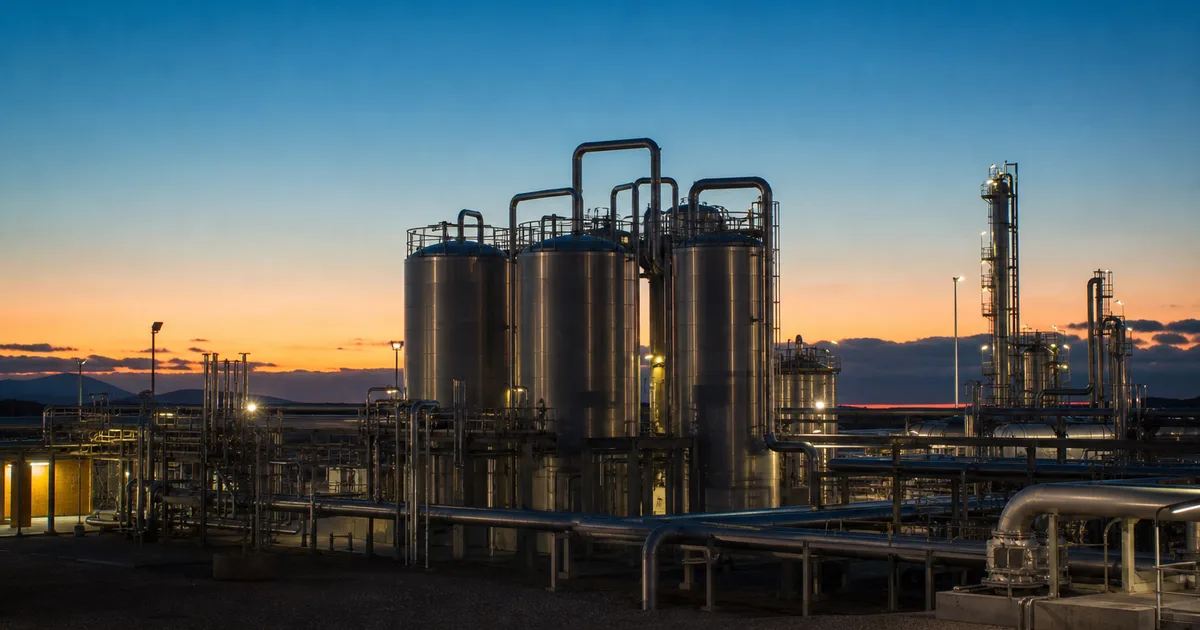
You graduated with a chemical engineering degree, spent years mastering reaction kinetics, thermodynamics, and process simulation — and now you're staring at job boards wondering whether any of those great-sounding process engineer roles will actually consider sponsoring you. The short answer is yes, and more reliably than in many other fields.
Chemical engineering sits at the intersection of several industries that have historically filed large numbers of H-1B petitions: petrochemicals, pharmaceuticals, specialty chemicals, semiconductor fabrication, and clean energy. Demand for process engineers, R&D chemists, and manufacturing engineers has stayed strong even as the broader tech labor market softened. If you know where to look and how to position yourself, ChemE visa sponsorship is achievable — this guide shows you exactly how.
Why Chemical Engineering Is a Solid H-1B Field
The H-1B program requires employers to show a role qualifies as a "specialty occupation" — meaning it normally requires at minimum a bachelor's degree in a relevant technical discipline. Chemical engineering clears that bar easily for the vast majority of positions: process engineer, R&D engineer, manufacturing engineer, quality engineer, environmental engineer in process industries.
USCIS has a consistent record of approving ChemE H-1B petitions across industries. Unlike some fields where the specialty-occupation argument is contentious, a process engineer at a refinery or a formulations scientist at a pharma company presents a straightforward case. That matters because a cleaner petition means fewer Requests for Evidence (RFEs) and faster approvals.
Beyond specialty occupation, ChemE also benefits from:
- Strong employer demand. Process industries require engineers throughout the facility lifecycle — design, commissioning, operations, optimization.
- Cap-exempt pathways. University research positions and national labs are cap-exempt, bypassing the H-1B lottery entirely.
- Overlap with clean energy and semiconductors. Both sectors are expanding, and both rely heavily on chemical engineers.
For more on how to assess whether a specific employer files H-1Bs, see our guide on how to check if a company sponsors H-1B.
Industries That Sponsor Chemical Engineers Most Actively
Not all ChemE employers sponsor with the same frequency or reliability. Here is a breakdown of the strongest sectors:
| Industry | Typical Roles | Sponsorship Reliability | Notes |
|---|---|---|---|
| Oil, Gas, and Petrochemicals | Process Engineer, Refinery Engineer, Operations Eng | High | ExxonMobil, Chevron, Shell, LyondellBasell file consistently |
| Specialty and Commodity Chemicals | R&D Chemist, Process Engineer, Product Dev Eng | High | Dow, BASF, Eastman, Olin, Celanese |
| Pharmaceuticals and Biotech | Process Development Eng, Mfg Sci, Validation Eng | High | Pfizer, Merck, Lilly, AbbVie, Genentech |
| Semiconductor Fabrication | Process Integration Eng, Etch/Dep Engineer | High | TSMC USA, Intel, Applied Materials, Lam Research |
| Food Science and Consumer Products | Food Process Eng, R&D Formulations, Mfg Eng | Moderate-High | Archer Daniels, Cargill, P&G, Unilever |
| Clean Energy and Batteries | Electrochemical Eng, Materials Process Eng | Growing | Albemarle, Livent, battery gigafactories |
| Engineering Consulting (EPC) | Process Design Eng, FEED Engineer | Moderate | Depends on firm size and client project base |
| University / National Labs | Research Scientist, Postdoctoral Researcher | Cap-exempt | DOE labs, top research universities |
For the cap-exempt university and national lab track, which bypasses the lottery entirely, see our cap-exempt H-1B employers guide.
Using OPT and STEM OPT as a ChemE
Your visa journey typically starts before H-1B even enters the picture. Here is the standard timeline for an international ChemE graduate:
- Graduate and apply for OPT EAD. File with USCIS via your DSO at least 90 days before graduation. The initial OPT period is 12 months.
- Start working. You have work authorization from OPT EAD start date. Keep the 90-day unemployment rule in mind — any total unemployment across the OPT period beyond 90 days is a status violation.
- Apply for STEM OPT extension. ChemE qualifies as a STEM field (CIP code 14.0701). Your employer must be enrolled in E-Verify and sign a formal training plan (Form I-983). File before your initial OPT expires. The extension adds 24 months, giving you up to 36 months total.
- Enter the H-1B lottery (April filing season). USCIS opens registration in March for the following October 1 start date. Most large employers file for all eligible OPT employees each year.
- If selected: Your employer files I-129 petition in April-May. With STEM OPT and H-1B cap-gap, you stay authorized through April 1 of the next fiscal year even if your STEM OPT card technically expires — the cap-gap rule under the H-1B Modernization Rule (effective January 17, 2025) extended this protection to April 1.
- If not selected: Your STEM OPT continues for the remaining months. You can re-enter the lottery the following year. Meanwhile, consider cap-exempt employer options.
If your STEM OPT runs out before you get picked in the lottery, the options include cap-exempt employers, O-1A for extraordinary ability researchers, or departing and re-entering on a fresh F-1 if you enroll in a new degree program.
For parallel backup planning, see our H-1B backup plans after lottery guide.
Where to Find ChemE H-1B Sponsorship Roles
Job Boards and Search Filters
Standard boards (LinkedIn, Indeed, Glassdoor) surface chemical engineering roles, but you need to filter for sponsorship-active employers. The U.S. Department of Labor's H-1B disclosure data is public — search it by employer name to see how many H-1B petitions they have filed in recent years before you apply.
Beyond mainstream boards, industry-specific channels produce better signal:
- AIChE Career Center — the American Institute of Chemical Engineers job board attracts employers who specifically seek ChemE graduates
- Chegg / Handshake — strong for new grads from U.S. programs
- Company career portals — for large process-industry employers (Dow, ExxonMobil, Lilly, TSMC), apply directly; their HR teams are accustomed to processing international candidates
For a broader set of tools, see our guide on H-1B job boards beyond LinkedIn.
Targeting the Right Company Size
Large integrated companies (Fortune 500 petrochemical, big pharma, semiconductor equipment) have full-time immigration teams and file H-1Bs routinely. Small startups and boutique engineering consultancies may want to sponsor but lack the administrative infrastructure — and first-time H-1B filers sometimes make costly procedural errors.
Mid-sized companies (500–5,000 employees) in specialty chemicals, food processing, or industrial gases can be excellent — they have enough scale to sponsor but enough flexibility that your candidacy doesn't get lost. Ask during the recruiter screen whether the company has sponsored H-1Bs in the past three years. That question is appropriate and saves everyone time.
For a practical checklist on whether a specific company can actually pull off a sponsorship, see our startup H-1B sponsorship checklist.
The H-1B Petition Process for ChemE Roles
Once an employer selects you and agrees to sponsor, here is how the petition process unfolds:
- Labor Condition Application (LCA). The employer files an LCA with the Department of Labor, certifying they will pay at least the prevailing wage for your role in your work location. LCA certification typically takes about seven business days. The prevailing wage is set using the Bureau of Labor Statistics OES data — for process engineers this is commonly Wage Level I or II at entry level.
- H-1B Registration (March). USCIS opens the electronic lottery registration in March. The employer registers you; if selected, they then file the full petition.
- I-129 Petition filing (April–May after selection). The full petition includes the LCA, employer support letter, your educational credentials, and evidence the role is a specialty occupation.
- USCIS adjudication. Standard processing has varied across service centers. Premium processing ($2,965 as of March 2026) guarantees an adjudicative action — approval, denial, or RFE — within 15 business days.
- October 1 start date. H-1B employment begins October 1 at the earliest for new cap-subject cases.
If you receive an RFE, a common issue is the employer's attorney needing to establish that the job duties genuinely require a ChemE bachelor's degree rather than a more general science or business background. For process-specific roles this is usually straightforward to defend. For a deeper look at RFE responses, see H-1B RFE response playbook.
Green Card Planning for Chemical Engineers
H-1B is a dual-intent visa with a 6-year maximum (extendable if a green card process is underway). Chemical engineers pursuing permanent residence typically use one of these paths:
EB-3 (Skilled Worker): Requires a bachelor's degree and employer sponsorship via PERM labor certification. PERM involves DOL auditing that the employer tried to hire a U.S. worker first. For ChemE, this is the most common employer-sponsored path.
EB-2 (Advanced Degree or Exceptional Ability): If you hold a master's or PhD in chemical engineering, EB-2 with employer PERM sponsorship is available. PERM timelines have been unpredictably long — sometimes 1-2+ years.
EB-2 NIW (National Interest Waiver): You self-petition without employer sponsorship, arguing your work is in the national interest. Chemical engineers working on clean energy, critical materials, pharmaceutical manufacturing, semiconductor processes, or other strategic sectors have succeeded with EB-2 NIW petitions. This is especially attractive for researchers and those with publication records. For a full comparison, see our EB-1A vs EB-2 NIW guide.
EB-1A (Extraordinary Ability): Higher bar — requires national or international acclaim. Relevant for prominent researchers with major publications, patents, or awards in ChemE. Cap-exempt and bypasses per-country backlog.
For Indian and Chinese nationals, per-country backlog in EB-2 and EB-3 India makes early PERM filing critical — priority dates matter more than almost anything else in your long-term immigration trajectory.
Overlap with Adjacent Fields
Chemical engineering skills transfer into several high-sponsorship-rate adjacent industries:
Biotech and life sciences: Upstream/downstream process development, bioreactor scale-up, and fill-finish manufacturing all draw heavily from ChemE talent. Biotech firms consistently sponsor H-1Bs. See our biotech and life sciences H-1B guide for more.
Pharmaceuticals: Drug substance and drug product manufacturing engineering roles at large pharma companies are among the most reliably sponsored positions. Related read: pharmaceutical industry visa sponsorship.
Clean energy and renewables: Battery electrode manufacturing, hydrogen electrolysis process engineering, and carbon capture technology development are growing areas with active hiring and sponsorship. See clean energy and renewables H-1B guide.
Semiconductor fab: Process engineers in etch, deposition, CMP, and integration at fabs like TSMC Arizona, Intel Fab 52, and Samsung Austin draw on ChemE and materials science backgrounds heavily. The CHIPS Act has expanded domestic fab capacity significantly, opening more roles.
Mechanical engineering crossover: Many process and manufacturing engineering roles sit at the ChemE/MechE boundary — equipment design, heat exchangers, compressor systems. If your background spans both disciplines, you have a wider sponsorship target set. See our mechanical engineer H-1B and OPT jobs guide for the overlap.
Food science: A less obvious but very active category — large food ingredient and consumer products companies sponsor ChemE graduates for process and formulations roles. Related reading: food science and agriculture H-1B sponsorship.
How to Position Yourself Competitively
You are competing with both domestic candidates and other international candidates. Here is what actually differentiates ChemE candidates in sponsorship-aware job searches:
Lead with simulation and modeling tools. Aspen Plus, HYSYS, COMSOL, and process simulation proficiency signals immediate plant-floor value. List specific tools and the contexts you used them in — not just "familiar with Aspen."
Quantify process improvements. "Reduced utility consumption by X% through heat integration study" is more compelling than "conducted process optimization." Hiring managers in process industries think in terms of throughput, yield, and cost-per-ton.
Address the visa question proactively but briefly. The interview question "do you need sponsorship?" is coming. A clear, confident one-sentence answer — "Yes, I will need H-1B sponsorship, and I am currently on OPT/STEM OPT with [X] months remaining" — signals professionalism. For full prep on this, see how to answer the visa sponsorship interview question.
Target roles where STEM OPT gap is narrow. If you are 18 months into STEM OPT, focus on employers who have filed H-1Bs in multiple recent years, not first-time filers. The more experienced their immigration team, the lower your risk.
Leverage professional societies. AIChE student chapters and regional sections host industry networking events. Many hiring managers at petrochemical and specialty chemical companies rely on their AIChE networks for candidate sourcing.
Common Mistakes
Applying only to tech-heavy companies. Software-first companies sometimes have rigid headcount requirements that deprioritize ChemE roles. Your stronger bet is companies where chemical engineers are core to the business model — refineries, chemical plants, pharma manufacturing, fab facilities.
Ignoring cap-exempt employers during OPT. If you are running out of OPT months, a university research role or national lab position keeps you authorized while you re-enter the lottery. This is not a step down — it is a viable parallel track.
Conflating PE licensure with H-1B eligibility. ChemE H-1B petitions do not require a PE license. Confusing these requirements leads some candidates to unnecessarily delay applications or assume they are ineligible.
Not requesting STEM OPT early enough. USCIS processing for STEM OPT extensions can take months. File as early as possible — ideally 90 days before your initial OPT expires. Running out of OPT before the extension is approved creates a very stressful gap.
Accepting roles at companies with poor immigration track records. A company that has never sponsored an H-1B before is a riskier bet than one that files routinely. Do your DOL disclosure data research before investing in the interview process.
Underselling technical depth. ChemE graduates often have rigorous quantitative training — thermodynamics, reaction engineering, transport phenomena — that translates to credibility in interviews. Do not bury this behind generic "problem-solving" language on your resume.
Waiting too long to discuss green card timelines. If you are from a high-backlog country, the gap between H-1B approval and green card can be very long under EB-2/EB-3. Discussing PERM timeline expectations with your employer early — ideally within the first year — helps you plan realistically.
Frequently Asked Questions
Which industries sponsor H-1B visas most reliably for chemical engineers?
Petrochemicals, specialty chemicals, pharmaceuticals, semiconductor fabrication, and food science are the strongest sponsors. Large integrated companies — ExxonMobil, Dow, BASF, Chevron Phillips, and major pharma firms — file hundreds of H-1B petitions annually and have mature immigration support teams. University research positions are cap-exempt and a solid fallback if you miss the lottery.
Does a chemical engineering role qualify as a specialty occupation for H-1B purposes?
Yes, in almost every case. USCIS has consistently approved chemical and process engineering roles as specialty occupations because the job normally requires at minimum a bachelor's degree in chemical engineering or a closely related field. Roles like process engineer, R&D chemist, or refinery process engineer clear this bar easily. Entry-level technician roles tied to a different SOC code can sometimes face challenges, so make sure your offer letter accurately reflects engineering-level duties.
How do I use STEM OPT while searching for H-1B sponsorship as a ChemE?
After your initial 12-month OPT period, ChemE graduates from qualifying STEM programs can apply for a 24-month STEM OPT extension, giving you up to 36 months of authorized work. Your employer must be E-Verify enrolled and sign a formal training plan. Watch the 90-day unemployment limit across your total OPT period — any gap longer than 90 days triggers a status violation. Use that runway to find a sponsor willing to file your H-1B in the April lottery.
Do I need a PE license to get H-1B sponsorship as a chemical engineer?
No. Unlike civil engineering roles that may require a Professional Engineer license for certain projects, most chemical and process engineering positions in manufacturing, oil and gas, pharma, and semiconductors do not require PE licensure for H-1B sponsorship. The FE and PE exams administered by NCEES are useful for career advancement but are not a prerequisite for H-1B filing. Some environmental consulting roles may eventually require a PE, but that comes later in your career.
What green card path makes the most sense for chemical engineers?
Most ChemE professionals pursue EB-2 (advanced degree or National Interest Waiver) or EB-3 (skilled worker, bachelor's degree). EB-2 NIW is attractive for researchers and those in critical industries like semiconductors or clean energy because you self-petition without employer sponsorship. EB-1 extraordinary ability is harder to qualify for but cap-exempt and has no per-country backlog. For Indian and Chinese nationals, priority-date retrogression makes the EB-2/EB-3 India track very long, so early PERM filing matters.
Ready to connect with employers who actively sponsor chemical engineers? F1Jobs works with international ChemE candidates every day — from OPT job search through H-1B filing and beyond.
Frequently asked questions
Which industries sponsor H-1B visas most reliably for chemical engineers?
Petrochemicals, specialty chemicals, pharmaceuticals, semiconductor fabrication, and food science are the strongest sponsors. Large integrated companies — ExxonMobil, Dow, BASF, Chevron Phillips, and major pharma firms — file hundreds of H-1B petitions annually and have mature immigration support teams. University research positions are cap-exempt and a solid fallback if you miss the lottery.
Does a chemical engineering role qualify as a specialty occupation for H-1B purposes?
Yes, in almost every case. USCIS has consistently approved chemical and process engineering roles as specialty occupations because the job normally requires at minimum a bachelor's degree in chemical engineering or a closely related field. Roles like process engineer, R&D chemist, or refinery process engineer clear this bar easily. Entry-level technician roles tied to a different SOC code can sometimes face challenges, so make sure your offer letter accurately reflects engineering-level duties.
How do I use STEM OPT while searching for H-1B sponsorship as a ChemE?
After your initial 12-month OPT period, ChemE graduates from qualifying STEM programs can apply for a 24-month STEM OPT extension, giving you up to 36 months of authorized work. Your employer must be E-Verify enrolled and sign a formal training plan. Watch the 90-day unemployment limit across your total OPT period — any gap longer than 90 days triggers a status violation. Use that runway to find a sponsor willing to file your H-1B in the April lottery.
Do I need a PE license to get H-1B sponsorship as a chemical engineer?
No. Unlike civil engineering roles that may require a Professional Engineer license for certain projects, most chemical and process engineering positions in manufacturing, oil and gas, pharma, and semiconductors do not require PE licensure for H-1B sponsorship. The FE (Fundamentals of Engineering) exam and PE exam administered by NCEES are useful for career advancement but are not a prerequisite for H-1B filing. Some environmental consulting roles may eventually require a PE, but that comes later in your career.
What green card path makes the most sense for chemical engineers?
Most ChemE professionals pursue EB-2 (advanced degree or National Interest Waiver) or EB-3 (skilled worker, bachelor's degree). EB-2 NIW is attractive for researchers and those in critical industries like semiconductors or clean energy because you self-petition without employer sponsorship. EB-1 extraordinary ability is harder to qualify for but cap-exempt and has no per-country backlog. For Indian and Chinese nationals, priority-date retrogression makes the EB-2/EB-3 India track very long, so early PERM filing matters.