Clean Energy and Renewables Jobs That Sponsor H-1B (2026)
Clean energy is one of the fastest-hiring sectors in the US — and many of its largest employers actively sponsor H-1B visas for engineers, analysts, and project managers.
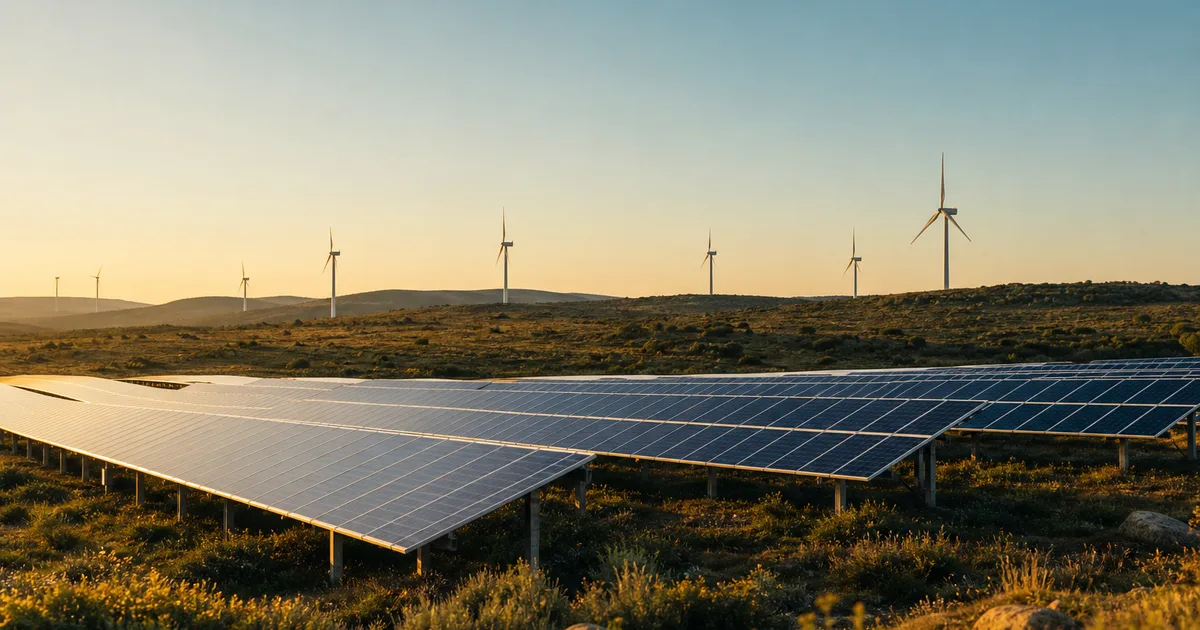
The clean energy transition in the United States is not a future story — it is a present hiring event. Hundreds of billions of dollars of investment flowing from the Inflation Reduction Act have turned solar developers, battery manufacturers, offshore wind operators, and grid-modernization firms into some of the most active employers in the country. If you are on F-1 OPT, STEM OPT, or H-1B and your background touches electrical engineering, mechanical engineering, project finance, environmental science, or data analysis, there is a real pipeline of roles that will sponsor your visa.
The challenge is knowing which companies file H-1B petitions consistently, which roles clear the specialty-occupation test at USCIS, and how to position yourself so an energy employer actually sees you as worth the immigration overhead. This guide answers all three questions.
Why Clean Energy Is a Stronger Sponsorship Market Than Most People Realize
Conventional wisdom says tech is where the sponsorship is. That is still largely true, but clean energy has quietly become one of the more active sponsoring sectors in the US economy. A few structural reasons for this:
Capital intensity creates engineering demand. A single utility-scale solar farm requires hundreds of person-hours of electrical design, permitting work, and interconnection engineering. The IRA tax credits made projects that were marginal in 2021 clearly profitable in 2025, so the pipeline exploded. Employers cannot fill that need from the domestic market alone.
The talent pool is globally educated. Power systems, grid modeling, and battery electrochemistry are graduate-level disciplines heavily populated by international students. US universities graduated thousands of MS and PhD students in electrical and mechanical engineering who went into the clean energy sector. Employers in this space are accustomed to the immigration process in a way that, say, a local construction firm is not.
Workforce geography helps. Many clean energy projects are in states like Texas, California, Arizona, and New York — states with legal and HR ecosystems that handle H-1B paperwork routinely.
Roles That Qualify as H-1B Specialty Occupations
For USCIS to approve an H-1B, the role must qualify as a "specialty occupation" — defined as requiring at least a bachelor's degree (or equivalent) in a specific field related to the duties. Most professional clean energy roles clear this bar easily. Here is a practical breakdown:
| Role | Typical Degree Requirement | Specialty-Occupation Risk |
|---|---|---|
| Power Systems Engineer | BS/MS Electrical Engineering | Low |
| Solar PV Design Engineer | BS Electrical or Civil Engineering | Low |
| Wind Turbine Structural Engineer | BS/MS Mechanical or Civil Engineering | Low |
| Battery Storage Engineer | BS/MS Chemical, Materials, or EE | Low |
| Grid Integration Analyst | BS Electrical Engineering or Physics | Low–Medium |
| Energy Storage Project Manager | BS Engineering (any) or Business | Medium (generic PM roles have faced RFEs) |
| Environmental Permitting Analyst | BS Environmental Science or Engineering | Medium |
| Energy Data Scientist | BS CS, Statistics, or Engineering | Low |
| Project Finance Analyst | BS Finance, Economics, or Engineering | Medium |
| Transmission Planning Engineer | BS Electrical Engineering | Low |
Roles with "Medium" specialty-occupation risk are not unfixable — they just need a petition that connects the specific job duties tightly to the degree field. An immigration attorney drafting the I-129 should flag these and build the supporting argument in the petition letter.
For electrical engineers, the path is particularly clean because USCIS has consistently treated power systems and grid roles as prototypical specialty occupations.
Types of Employers and Their Sponsorship Posture
Not all clean energy employers approach sponsorship the same way. Understanding the landscape saves you wasted applications.
Large Utilities and Independent Power Producers
Companies like NextEra Energy (the world's largest wind and solar operator by capacity), Dominion Energy, Xcel Energy, Duke Energy Renewables, and AES Corporation have HR and legal infrastructure that handles H-1B petitions as routine business. They have filed hundreds of petitions historically and are not deterred by the process.
Offshore Wind Developers
The US offshore wind sector — Ørsted, Equinor Wind US, Avangrid Renewables, Vineyard Wind — hired aggressively through the mid-2020s and has a strong European parent-company culture around international mobility. These employers are often comfortable with H-1B because their executives have navigated similar processes in the EU.
Solar and Wind Project Developers
Mid-size developers like Invenergy, EDF Renewables North America, Longroad Energy, and Terra-Gen regularly sponsor for engineering and development roles. The key filter is size — developers with fewer than 50 employees may want to sponsor but lack the internal capacity to manage the process smoothly. Aim for developers with at least a few hundred employees and a dedicated legal team.
Battery and Energy Storage Companies
This segment spans the electrochemistry-heavy battery manufacturers (Fluence, Form Energy, Eos Energy) and the grid-scale storage integrators. Roles in battery management systems, cell chemistry, and manufacturing process engineering map well to chemical engineering, materials science, and electrical engineering degrees — all of which USCIS treats favorably. See the companion post on chemical engineers for how to position that degree specifically.
National Laboratories (Cap-Exempt)
The National Renewable Energy Laboratory (NREL), Lawrence Berkeley National Laboratory (LBNL), Pacific Northwest National Laboratory (PNNL), Argonne National Laboratory, and Sandia National Laboratories are all DOE-affiliated entities that qualify as government research organizations. Their H-1B petitions are cap-exempt — they go directly to USCIS without entering the annual lottery. If you have a research or engineering background and can land a national lab offer, this is the cleanest visa pathway in the energy sector.
University research centers — Stanford's Precourt Institute, MIT Energy Initiative, UT Austin's Energy Institute — are cap-exempt through the university umbrella.
Semiconductor and Chip-Act Adjacencies
Clean energy intersects with the semiconductor sector in power electronics and wide-bandgap devices (silicon carbide, gallium nitride). If your background is in power electronics, the CHIPS Act hiring surge is creating adjacent demand worth tracking.
Using OPT and STEM OPT to Build Into the Sector
If you are still in school or in your early career, your F-1 work authorization timeline is an asset. Standard OPT gives you 12 months of unrestricted work authorization. If your degree is in a STEM field (most engineering, computer science, and physical science degrees qualify) and your employer is enrolled in E-Verify, you can extend OPT by 24 months under STEM OPT — giving you up to 36 months total.
The 90-day unemployment limit applies during all OPT phases. Aggregated unemployment beyond 90 days (60 days on STEM OPT extension) risks your F-1 status, so keep that clock in mind when between roles.
A smart OPT-to-H-1B plan for clean energy:
- Graduate with an engineering MS in spring (April–May).
- Apply for OPT. EAD arrives within 90 days; many students apply while still finishing coursework.
- Start in a clean energy role (intern-to-full-time conversion, direct hire, or rotational program) under OPT.
- Sit for the Fundamentals of Engineering (FE) exam within the first 12 months. This is the first step toward PE licensure and meaningfully differentiates you for senior roles.
- Apply for STEM OPT extension around month 10 (before OPT expires).
- Your employer files your H-1B petition in the April lottery (roughly 18–24 months after graduation, depending on timing).
- If selected in the lottery, H-1B status begins October 1 of that year. STEM OPT continues through the cap-gap period under the H-1B Modernization Rule, which extended cap-gap protection through April 1 of the fiscal year.
If your lottery number is not drawn, the STEM OPT buffer gives you another year to try again. You can also look at cap-exempt employers as a backup — national labs and universities that do energy research will take you without lottery exposure.
Step-by-Step Job Search Strategy
1. Identify target companies before you apply
Use the DOL LCA (Labor Condition Application) database as a filter. Every H-1B petition requires a certified LCA filed with DOL, and that data is public. Search for job titles like "Power Systems Engineer," "Renewable Energy Engineer," or "Energy Storage Engineer" to see which companies have filed recently. This removes guesswork about who sponsors. The F1Jobs guide on how to check if a company sponsors H-1B walks through the exact database queries to run.
2. Tailor your resume for energy roles specifically
A resume optimized for clean energy hiring looks different from a generic engineering resume. It leads with power systems coursework, relevant software (PSCAD, PSS/E, Homer Pro, PVSyst, MATLAB Simulink), and any project experience involving grid interconnection, solar design, or battery sizing — even from graduate coursework. The US resume guide for international students covers the structural principles; apply those principles with energy-specific content.
3. Target roles by company type based on your background
- Electrical engineering background → utilities, transmission developers, offshore wind, energy storage integrators
- Mechanical engineering background → wind turbine OEMs (GE Vernova, Vestas, Siemens Gamesa US offices), solar tracker manufacturers, thermal storage
- Chemical or materials engineering → battery cell manufacturers, green hydrogen companies, fuel cell developers (see also chemical engineer visa paths)
- Civil or structural engineering → wind foundation contractors, solar EPC firms, offshore platform developers
- Data science or CS background → grid optimization, energy forecasting, demand response analytics
4. Pursue FE/PE licensure in parallel
The Professional Engineer (PE) license is administered by state boards and overseen nationally by NCEES (National Council of Examiners for Engineering and Surveying). You do not need a PE license for most entry-level H-1B roles in clean energy, but it is increasingly expected for roles above mid-level. Starting the FE exam (no experience requirement) during OPT signals seriousness to employers and gives you a credential that does not expire with your visa status.
5. Leverage professional associations for networking
IEEE Power and Energy Society, the American Wind Energy Association (now merged into the American Clean Power Association), and Solar Energy Industries Association all run early-career programs. Conferences like WINDPOWER and Solar Power International include recruiting events where you can meet employers who are accustomed to sponsoring. For practical cold-outreach tactics, the networking guide for international students has frameworks you can adapt for energy.
Green Card Planning in Clean Energy
H-1B is a dual-intent visa, meaning you can pursue permanent residency while on H-1B without jeopardizing your status. For most clean energy hires, the path looks like this:
EB-2 or EB-3 via PERM: Your employer files a PERM labor certification with DOL, demonstrating that no qualified US worker was available for the role. PERM approval takes roughly one year as of 2026. After PERM, the employer files I-140 (immigrant petition). Priority date then governs how long you wait for a visa number.
EB-2 National Interest Waiver (NIW): If your work meaningfully advances the national interest — and clean energy and grid resilience qualify under the Dhanasar framework — you can self-petition for EB-2 NIW without an employer-sponsored PERM. Engineers and researchers with publications, patents, or documented project impact have used this path. The EB-1A vs EB-2 NIW analysis for engineers covers how to evaluate which petition makes sense for your profile.
India and China backlogs: If you were born in India or China, EB-2 and EB-3 priority dates are heavily retrogressed. EB-2 India is decades behind. This does not affect your H-1B status — you can extend H-1B in one-year or three-year increments once your I-140 is approved — but it is a planning consideration. The EB-2 India retrogression tracker has current dates.
Common Mistakes
Applying only to Big Tech spillover jobs. It is tempting to treat software-adjacent energy roles (energy analytics, software-defined grid) as safer bets because you know how to navigate tech hiring. But the purely technical engineering roles at utilities and developers often have less competition from other visa-sponsored candidates and more predictable sponsorship behavior.
Ignoring smaller project developers. Some of the most active H-1B filers in clean energy are mid-size developers you have never heard of. They hire engineers with real project responsibility from day one, which builds your green card case faster than being one engineer among hundreds at a large utility.
Treating the PE license as optional. It is optional for your first role, but skipping the FE exam entirely while on OPT is a missed opportunity. The FE exam has no experience requirement; you can sit for it immediately after graduation. PE licensure becomes a hard gate for certain senior project engineer titles.
Not using cap-exempt options as a backup. If the April lottery does not go your way, many international candidates in clean energy give up and leave. The national lab path — NREL, LBNL, Argonne, PNNL, Sandia — is a genuine and often excellent alternative that bypasses the lottery. The research experience also strengthens an NIW petition later.
Accepting a role at a company with no H-1B filing history. Small startups in green hydrogen, advanced geothermal, and distributed energy resources are exciting places to work, but if they have never filed an H-1B petition, your timeline is riskier than at an established employer. Use the LCA database check described above before accepting any offer. The checklist for whether a startup can sponsor H-1B is useful here.
Waiting until the last months of STEM OPT to start the H-1B process. H-1B petitions must be filed for the April lottery; if your STEM OPT expires before the following October 1, you need to have started the conversation with HR at least six months before your OPT expiration.
Frequently Asked Questions
Do clean energy companies actually sponsor H-1B visas?
Yes. Utilities, independent power producers, and large solar/wind developers regularly file H-1B petitions for engineers, grid analysts, and project managers. Companies like NextEra Energy, Invenergy, and Ørsted US have consistent H-1B filing histories. The IRA-driven hiring boom that began in 2022 has made energy one of the more active sponsoring sectors outside of tech.
What engineering degrees lead most directly to renewable energy H-1B jobs?
Electrical engineering is the most directly relevant because grid integration, inverter design, and power systems work dominate the technical roles. Mechanical engineering and civil engineering are close behind for turbine and structural work. Chemical and materials engineering open doors in battery storage and hydrogen. A PE license is not always required but is a strong differentiator for senior roles; starting the FE exam process early is smart.
Can I use OPT or STEM OPT to gain experience before H-1B?
Absolutely. Standard OPT gives you 12 months of work authorization and STEM OPT adds up to 24 more months if your employer is E-Verify enrolled — giving you up to 36 months total. During that window you can clear your FE exam, build project experience, and position yourself for an H-1B petition. The 90-day unemployment limit applies during OPT, so keep that clock in mind if you are between roles.
Are there cap-exempt paths in clean energy?
Yes. National labs like NREL, LBNL, and PNNL are affiliated with DOE and qualify as government research organizations exempt from the H-1B lottery cap. Universities also hire energy researchers under cap-exempt petitions. If you get a national lab offer, that petition bypasses the annual lottery entirely.
What green card path should I plan for in clean energy?
Most international hires in clean energy pursue EB-2 or EB-3 through PERM labor certification sponsored by their employer. Researchers and scientists with significant publications may qualify for EB-2 National Interest Waiver, which skips PERM and requires no employer sponsorship. For truly exceptional contributions, EB-1A is available but the bar is high.
The clean energy sector is one of the more welcoming corners of the US job market for international candidates right now. The capital is deployed, the hiring is real, and the engineering requirements are squarely in disciplines dominated by graduate-level international talent. Your job is to get in front of the right employers before your OPT window closes.
Want help identifying which clean energy employers are actively sponsoring and match your background? F1Jobs works with international candidates in engineering and energy every month — reach out and we can look at your specific situation.
Frequently asked questions
Do clean energy companies actually sponsor H-1B visas?
Yes. Utilities, independent power producers, and large solar/wind developers regularly file H-1B petitions for engineers, grid analysts, and project managers. Companies like NextEra Energy, Invenergy, and Ørsted US have consistent H-1B filing histories. The IRA-driven hiring boom that began in 2022 has made energy one of the more active sponsoring sectors outside of tech.
What engineering degrees lead most directly to renewable energy H-1B jobs?
Electrical engineering is the most directly relevant because grid integration, inverter design, and power systems work dominate the technical roles. Mechanical engineering and civil engineering are close behind for turbine/structural work. Chemical and materials engineering open doors in battery storage and hydrogen. A PE license is not always required but is a strong differentiator for senior roles; starting the FE exam process early is smart.
Can I use OPT or STEM OPT to gain experience before H-1B?
Absolutely. Standard OPT gives you 12 months of work authorization and STEM OPT adds up to 24 more months if your employer is E-Verify enrolled — giving you up to 36 months total. During that window you can clear your FE exam, build project experience, and position yourself for an H-1B petition. The 90-day unemployment limit applies during OPT, so keep that clock in mind if you are between roles.
Are there cap-exempt paths in clean energy?
Yes. National labs like NREL, LBNL, and PNNL are affiliated with DOE and qualify as government research organizations exempt from the H-1B lottery cap. Universities also hire energy researchers under cap-exempt petitions. If you get a national lab offer, that petition bypasses the annual lottery entirely.
What green card path should I plan for in clean energy?
Most international hires in clean energy pursue EB-2 or EB-3 through PERM labor certification sponsored by their employer. Researchers and scientists with significant publications may qualify for EB-2 National Interest Waiver, which skips PERM and requires no employer sponsorship. For truly exceptional contributions, EB-1A is available but the bar is high.