Manufacturing and Process Engineer H-1B Sponsorship: EV Battery and Semiconductor Fab Salary 2026
CHIPS Act fabs and IRA-funded battery plants are hiring manufacturing engineers who need H-1B sponsorship — here's how the 2026 lottery math and wage rules affect your path.
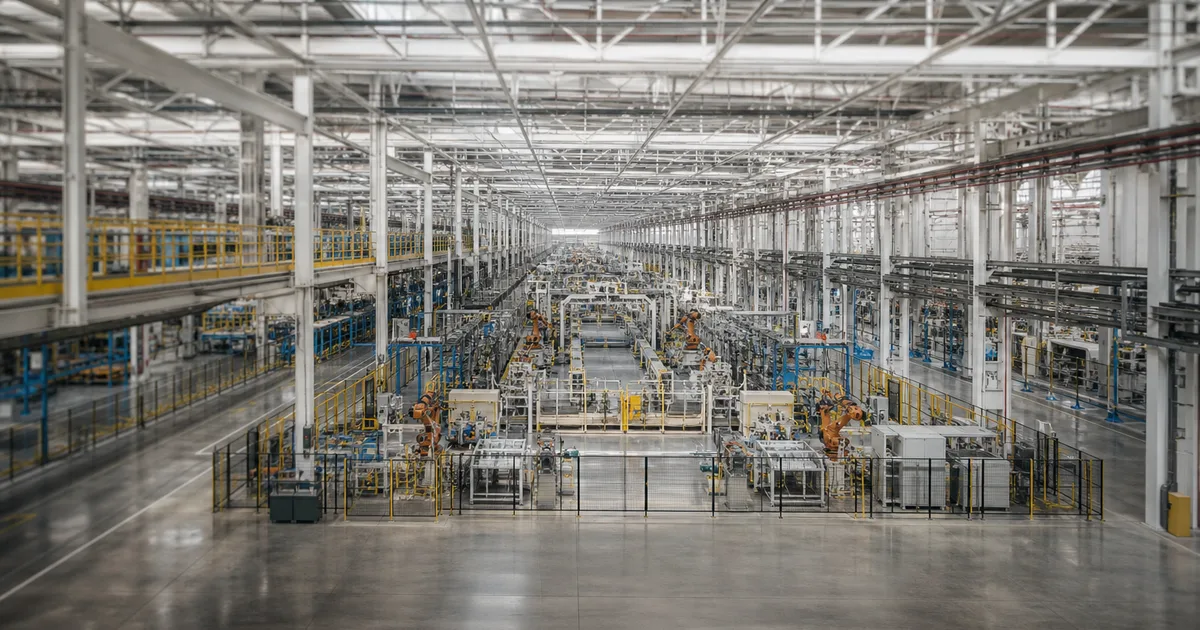
You studied materials science or mechanical engineering, maybe completed an internship at a fab or battery plant, and now you're looking at a job market genuinely hungry for your skills. Semiconductor fabs are being built or expanded across Arizona, Ohio, New York, and Texas under CHIPS Act funding. Gigafactories for EV batteries are coming online from Nevada to Georgia under Inflation Reduction Act incentives. These are capital-intensive facilities that need process engineers, manufacturing engineers, equipment engineers, and yield engineers now.
The catch is sponsorship. You're on F-1, OPT, or STEM OPT, and you need an employer willing to file an H-1B petition. This guide covers how sponsorship works in manufacturing specifically, how the 2026 lottery changes affect your odds, what STEM OPT means as a bridge, and how to position yourself for roles where companies actually sponsor.
Why manufacturing engineers have real sponsorship leverage in 2026
CHIPS Act and IRA funding have created a structural shortage of experienced process and manufacturing engineers in the US. A 300mm wafer fab cannot hire its way through a domestic-only pipeline fast enough — the talent pool is global, and companies know it. At major semiconductor OEMs, equipment suppliers, and Tier 1 EV battery joint ventures, sponsorship is an established practice, not an exceptional ask. The USCIS LCA employer data hub lets you verify how many LCAs any employer has certified in manufacturing engineering categories. Do this research before you apply.
For the EV manufacturing ecosystem, see EV and automotive industry H-1B sponsorship. For semiconductor-specific dynamics, the semiconductor and CHIPS Act H-1B guide covers fab hiring in depth.
The 2026 lottery and what it means for manufacturing engineers
The H-1B wage-weighted lottery took effect on February 27, 2026. Under this system, USCIS runs the lottery in tiers — higher-wage petitions are selected first. The FY2027 lottery used this framework.
Manufacturing and process engineers typically fall into DOL prevailing wage Level II (experienced, below fully competent) or Level III (fully competent). The strategic importance of Level III under the new system is significant: Level III carries a projected selection rate of approximately 45.9%, substantially better than Level I positions.
What this means practically: if you have two or more years of relevant experience — co-ops, internships, and prior OPT employment count — and the employer's job description reflects a fully competent engineer role, you may qualify for a Level III LCA. Work with your employer's immigration counsel to structure the petition correctly. Don't default to Level II out of caution if the facts support Level III.
At CHIPS Act fabs and IRA battery facilities, prevailing wages in manufacturing engineering are typically high enough to reach Level III or even Level IV in major metropolitan statistical areas. The wage floor at these projects tends to be competitive because companies need to attract talent.
DOL proposed wage increase — watch this closely
In March 2026, the Department of Labor published a proposed rule that would increase prevailing wage floors by approximately 21 to 33 percent across all wage levels. This rule is proposed, not final — it has not taken effect as of this writing. If finalized, it would raise the minimum LCA wages across engineering roles, which could affect how some employers structure their petitions.
Do not assume this rule is in effect when planning your job search. Check the DOL rulemaking docket or confirm with a qualified immigration attorney before your employer files an LCA. Frame it as a question during your offer negotiation: "Is the company aware of the pending DOL wage proposal and how are you planning for it?"
STEM OPT as your bridge
STEM OPT is the most important tool most manufacturing and process engineers have between graduation and an H-1B approval. Here is how it works in the manufacturing context:
You get an initial 12-month OPT EAD after completing your degree. If your degree is on the qualifying STEM Designated Degree Program list — which covers mechanical engineering, chemical engineering, electrical engineering, materials science, industrial engineering, and many related fields — you can apply for a 24-month STEM OPT extension. That gives you up to 36 months of work authorization total.
During STEM OPT, your employer must complete and sign Form I-983, a training plan. At semiconductor fabs and battery manufacturers, this is routine — these companies have dedicated HR and immigration support, and I-983 compliance is built into their onboarding process. Verify this before accepting an offer at a smaller equipment supplier or contract manufacturer; the I-983 is a hard requirement, not optional.
The 90-day unemployment limit applies during OPT and during STEM OPT. If you are terminated or leave a job during this period, you have 90 cumulative days of unemployment before you fall out of status. Budget accordingly.
The OPT application fee increased from $1,685 to $1,780 in 2026. Include this in your financial planning for the months after graduation.
For OPT sequencing details, see OPT to STEM OPT to H-1B sequencing and the 4-year rule.
Where manufacturing engineers find H-1B sponsors
Not every manufacturing company sponsors equally. Here is how the sponsorship landscape breaks down:
| Employer Type | Sponsorship Likelihood | Notes |
|---|---|---|
| Major semiconductor OEMs (fab operators) | High | CHIPS Act recipients have public commitments to domestic hiring that include sponsoring international talent |
| Semiconductor equipment companies | High | Tool suppliers staffing new fab installations have strong historical LCA volumes |
| EV battery joint ventures and gigafactories | High | IRA-funded projects, large headcount ramps, established HR infrastructure |
| Tier 2 automotive suppliers | Medium | Depends heavily on company size and existing immigration program |
| Contract manufacturers (EMS) | Low-Medium | More variable; some large players sponsor routinely, others do not |
| Small job shops | Low | Sponsorship is often infeasible without immigration counsel on retainer |
Research sequence before any application:
- Look up the company on the USCIS LCA data hub — search by employer name and look for titles similar to what you're applying for
- Cross-reference on myvisajobs.com for historical H-1B filing counts by job title and wage level
- Check the company's career page for explicit sponsorship language in postings
- During the recruiter screen, ask directly whether the company sponsors H-1B for this role and how many manufacturing engineering petitions they have filed recently
For target company research methods, see the industrial engineer H-1B sponsorship guide.
The H-1B petition process for manufacturing engineers
Once an employer is willing to sponsor, the petition follows the standard H-1B path with a few manufacturing-specific points.
Specialty occupation and degree requirement
USCIS requires the role to constitute a "specialty occupation" requiring at minimum a bachelor's degree in a specific field. For manufacturing and process engineering at a fab or battery plant, this is straightforward — the roles genuinely require engineering degrees. Your employer's attorney should tie the job description explicitly to the required degree; that is the foundation of the specialty-occupation argument.
Labor Condition Application and I-129
Your employer files an LCA with DOL before the I-129. The LCA certifies prevailing-wage compliance and posts a public notice for 10 days. Standard LCA processing takes about 7 calendar days. If you work across multiple sites (e.g., equipment qualification travel), each metropolitan statistical area may need its own LCA — confirm with immigration counsel.
The I-129 goes to USCIS after LCA certification. Standard processing takes months. Premium processing ($2,965 as of March 1, 2026) guarantees action within 15 business days. Most well-funded fab and battery plant employers use premium because they have hard project timelines. RFEs in this field most often challenge specialty occupation when the job description reads more like a technician role than an engineering role. A detailed job duties section and explicit degree requirement prevent most of them.
Cap-exempt paths worth knowing
If you don't win the lottery, or if you want to preserve lottery attempts for a strong position, cap-exempt employment is a legitimate path. Universities, nonprofit research organizations, and government research organizations are cap-exempt H-1B employers — they can file H-1B petitions any time of year without the lottery.
In manufacturing engineering, cap-exempt paths include university-affiliated research labs focused on materials science or energy storage, national laboratories (Argonne, Sandia, Oak Ridge, NREL), and nonprofit manufacturing research institutes within the Manufacturing USA network. Cap-exempt employment lets you build US work experience and transfer to a cap-subject employer later without re-entering the lottery under AC21 portability. See the cap-exempt H-1B employer guide for how this works.
Building toward permanent residence
The green card path for manufacturing engineers typically runs through EB-2 or EB-3 PERM. Most fab and battery employers will start PERM if you ask — and for India and China nationals, asking early is critical given long backlogs. PERM requires supervised recruitment, DOL certification, and an I-140 filing; then you wait for your priority date.
EB-2 NIW may be available to engineers whose work directly advances domestic semiconductor or clean energy manufacturing under CHIPS Act and IRA priorities, but the bar is higher than PERM and should be assessed with an immigration attorney.
Step-by-step timeline for manufacturing engineers on OPT
- Month 0-2 after graduation: Apply for OPT EAD ($1,780 fee in 2026). File early — processing takes weeks.
- Month 1-4: Job search targeting manufacturing engineering roles at verified H-1B sponsors. Use the LCA data hub and myvisajobs.com to vet companies.
- Months 4-10 of OPT: Secured and working in a sponsored role. Employer begins H-1B lottery registration in January-February of the cap year.
- Before 12-month OPT expires: Apply for STEM OPT extension. Employer signs I-983; school extends your I-20. You gain 24 additional months of work authorization.
- FY2027 or FY2028 lottery (March): Employer registers you. Your Level II or III wage classification determines your selection pool under the wage-weighted system.
- April-June of cap year: If selected, employer files I-129. Premium processing delivers a decision within 15 business days.
- October 1: H-1B status begins on approval.
If you don't get selected, STEM OPT keeps running — you get two more lottery shots before the 36-month mark.
Common mistakes
Assuming every engineering employer sponsors. Many manufacturing companies — smaller suppliers and job shops especially — have never filed an H-1B. The USCIS LCA data hub is free; use it before you invest weeks in an interview process.
Accepting a Level I LCA when your experience supports Level II or III. Under the wage-weighted lottery, this directly reduces your selection probability. Push back if your experience warrants a higher level.
Ignoring I-983 compliance during STEM OPT. Your employer must notify your DSO within 5 days if employment terminates. Track this yourself — a missed notification puts your status at risk.
Waiting until OPT is nearly expired to secure a sponsored role. Get into a sponsored position well before your STEM OPT's second year to leave room for lottery timing.
Not asking about green card sponsorship during the offer negotiation. For Indian and Chinese nationals, the PERM priority date backlog is years long. Starting early versus late can make a significant difference. Raise it at the offer stage.
Frequently asked questions
Do manufacturing and process engineers qualify for H-1B specialty occupation?
Yes. Roles requiring at minimum a bachelor's degree in engineering, materials science, or a related technical field meet the USCIS specialty-occupation standard. Roles at fabs and battery plants carry LCAs that specify the degree requirement, which strengthens the argument. Your employer's job description must reference the degree requirement explicitly.
What H-1B wage level should a manufacturing engineer target in 2026?
Most manufacturing engineers land at DOL Level II or Level III. Level III is strategically important under the wage-weighted lottery effective February 27, 2026 — it carries a projected selection rate of approximately 45.9%. If your experience supports Level III, structure the LCA accordingly, especially at CHIPS Act and IRA-funded facilities where prevailing wages support it.
How does STEM OPT bridge manufacturing engineers to H-1B?
STEM OPT gives you up to 24 additional months of work authorization beyond initial OPT, provided your employer completes Form I-983 and your degree is on the STEM Designated Degree Program list. Engineering and materials science degrees routinely qualify. You get two H-1B lottery shots during STEM OPT. The OPT fee is $1,780 in 2026.
Which companies sponsor H-1B for manufacturing engineers at EV battery and semiconductor plants?
CHIPS Act recipients and IRA-funded battery joint ventures are among the most active H-1B sponsors in manufacturing. Large fab expansions need hundreds of process engineers across equipment, integration, yield, and process development. Use the USCIS LCA data hub and myvisajobs.com to verify any company's filing history before accepting an offer.
What is the DOL proposed wage increase and how does it affect manufacturing engineers?
DOL published a proposed rule in March 2026 that would raise prevailing wage floors by approximately 21 to 33 percent across wage levels. This rule is proposed, not final, and has not taken effect as of mid-2026. If finalized, it would raise minimum LCA wages and could affect some manufacturers' hiring pace. Confirm current status with your DSO or immigration attorney before your LCA is filed.
The manufacturing engineering job market in 2026 is one of the better environments for international candidates seeking H-1B sponsorship in recent memory — not because the process is easier, but because the demand for your skills is unusually strong. CHIPS Act and IRA-funded projects need engineers, and the sponsorship infrastructure at major fab and battery operators is real and functional.
Work the research, target companies with verified sponsorship histories, structure your LCA at the wage level your experience supports, and keep your STEM OPT compliant and current. That combination gives you a realistic path to H-1B status.
If you want help identifying which manufacturing employers in your target metro are active H-1B sponsors, F1Jobs can walk you through the search.
Frequently asked questions
Do manufacturing and process engineers qualify for H-1B specialty occupation?
Yes. Manufacturing and process engineering roles that require at minimum a bachelor's degree in engineering, materials science, or a related technical field meet the USCIS specialty-occupation standard. Roles at semiconductor fabs and EV battery plants typically carry detailed LCAs specifying the required degree, which strengthens the specialty-occupation argument. Make sure your employer's job description references the degree requirement explicitly — that is the foundation of any successful H-1B petition for this field.
What H-1B wage level should a manufacturing engineer target in 2026?
Most manufacturing and process engineers land at DOL Level II or Level III. Level III is strategically important under the wage-weighted lottery effective February 27, 2026 — it carries a projected selection rate of approximately 45.9%, meaningfully higher than Level I. If your experience and the employer's internal band support Level III, it is worth structuring the role description and LCA to reflect that, especially at well-funded CHIPS Act and IRA-backed facilities where prevailing wages are higher.
How does STEM OPT bridge manufacturing engineers to H-1B?
STEM OPT gives you up to 24 additional months of authorized work beyond your initial 12-month OPT period, provided your employer completes Form I-983 and your degree is on the qualifying STEM Designated Degree Program list. Engineering and materials science degrees routinely qualify. During STEM OPT you get two H-1B lottery shots — one in the cap year your OPT starts and one the following year — which gives most manufacturing engineers two bites before their STEM OPT expires. The OPT fee increased from $1,685 to $1,780 in 2026; budget accordingly.
Which companies sponsor H-1B for manufacturing engineers at EV battery and semiconductor plants?
Large-scale CHIPS Act recipients and IRA-funded battery joint ventures are among the most active H-1B sponsors in manufacturing right now. Look for publicly announced fab and gigafactory expansions — these projects require hundreds of process engineers across equipment, integration, yield, and process development functions. Use the USCIS LCA employer data hub and myvisajobs.com to verify a company's actual H-1B filing history before accepting an offer.
What is the DOL proposed wage increase and how does it affect manufacturing engineers?
DOL published a proposed rule in March 2026 that would raise prevailing wage floors by approximately 21 to 33 percent across wage levels. This rule is proposed, not final — it has not taken effect as of mid-2026. If finalized, it would increase the minimum salaries employers must pay on LCAs, which could affect hiring velocity at some manufacturers. Monitor the DOL rulemaking docket and ask your DSO or an immigration attorney for updates before your LCA is filed.