Mechanical Engineer at Battery and EV Startups: Visa Sponsorship in the CHIPS-Era Supply Chain
EV and battery startups are building gigafactories across the US and actively sponsoring mechanical engineers — here is how to land one of those roles on OPT or H-1B.
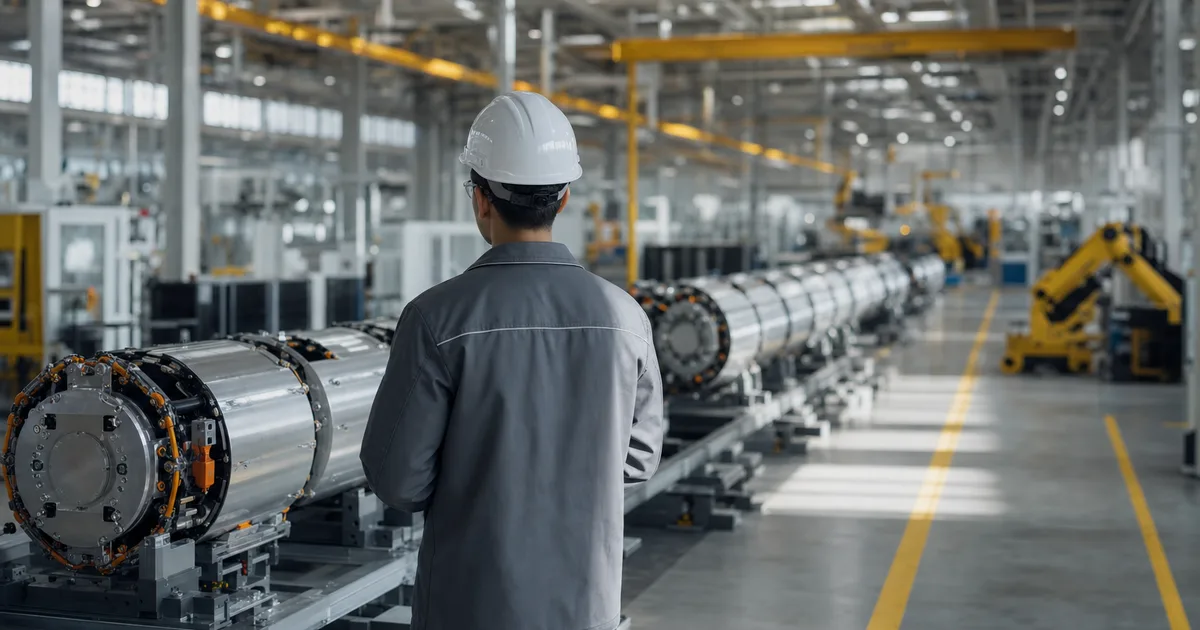
The domestic EV and battery supply chain is being built right now, and these facilities need mechanical engineers badly. Dozens of gigafactory projects have broken ground across the US — Michigan, Kentucky, Georgia, Arizona — fueled by the Inflation Reduction Act's production tax credits and DOE loan guarantees. They are hiring structural engineers, thermal systems engineers, manufacturing process engineers, and pack integration engineers at a pace the domestic pipeline alone cannot satisfy.
For you — an international student or professional on F-1, OPT, STEM OPT, or H-1B — that demand creates a real opening. These companies are scaling engineering teams from zero to hundreds on compressed timelines; the alternative to sponsoring you is leaving the role unfilled for months. This guide covers which roles sponsor most reliably, how to navigate OPT and H-1B timelines in a hardware-heavy industry, what the green card path looks like, and the mistakes that consistently derail international candidates.
Why the EV and battery sector is unusually sponsorship-friendly
The battery and EV startup world sits in an unusual position — these are well-funded companies (many with multi-billion-dollar DOE loans or IRA tax credit commitments) that are scaling engineering teams from zero to hundreds in compressed timelines. They cannot afford to filter out international candidates; the alternative is leaving critical roles unfilled.
Three specific drivers matter:
- IRA Section 45X production tax credits require companies to staff US facilities to claim credits — they cannot wait 18 months for an H-1B lottery outcome on a hire that gates the credit
- Domestic content requirements under IRA push manufacturing to US sites, which requires US-based engineering talent
- CHIPS and Science Act downstream: semiconductor and power electronics supply chains feeding EV drivetrains also need mechanical engineers for thermal and structural integration
Verify sponsorship history by checking USCIS LCA (Labor Condition Application) public disclosure data — filter for SOC code 17-2141 (Mechanical Engineers) at companies you're targeting.
For a broader look at how the automotive and EV sector handles H-1B sponsorship, see our automotive and EV industry H-1B sponsorship guide.
Roles with the strongest visa sponsorship record
Not all mechanical engineering titles at a battery startup carry equal sponsorship odds. The H-1B specialty-occupation standard requires that the role normally requires at least a bachelor's degree in a specific field — which is easy to demonstrate for some titles and harder for others.
| Role Title | Specialty Occupation Argument | Sponsorship Ease |
|---|---|---|
| Thermal Systems Engineer | Thermal / mechanical engineering — very strong | High |
| Battery Pack Structural Engineer | Mechanical or materials engineering — strong | High |
| Manufacturing Process Engineer | Industrial or mechanical engineering — strong | High |
| Cell Integration Engineer | Mechanical or chemical engineering — strong | High |
| NVH Engineer (noise/vibration/harshness) | Mechanical engineering — very specific, strong | High |
| Module Design Engineer | Mechanical engineering — strong | High |
| BMS Mechanical Integration Engineer | Mechanical or electrical engineering — strong | Moderate-High |
| "Product Engineer" (vague title) | Harder to establish specialty occupation | Moderate |
The thermal engineer track deserves attention: as battery energy density increases, thermal management has become a genuine bottleneck and a distinct discipline. Companies recruiting thermal engineers for EV applications are almost always willing to sponsor because the candidate pool with both domain knowledge and US work authorization is very thin.
See our deeper dive on mechanical engineer H-1B and OPT jobs for broader role mapping.
OPT and STEM OPT strategy for hardware roles
Mechanical Engineering (CIP code 14.0901) is on the official STEM OPT eligible degree list, which means you have access to the 24-month STEM OPT extension after your initial 12-month OPT period — 36 months total.
Timeline you should build around
- Activate OPT before graduation — file with your DSO ideally 3-4 months before your graduation date. The EAD card processing alone can take 3-5 months; don't assume it arrives before your start date.
- Start date within 60 days of program end — your OPT period begins on the EAD start date; you have a 90-day total unemployment tolerance during OPT (not 90 days in a row, but cumulative). Hardware roles often have start dates tied to facility readiness; plan for the gap.
- File STEM OPT extension 90 days before OPT expires — early filing is crucial. Your employer signs Form I-983 (Individual Career Enhancement and Training Plan). For a manufacturing or design role, the I-983 maps learning objectives to your engineering duties — keep it specific and honest.
- H-1B lottery timing — the FY2027 H-1B lottery registration window typically opens in March. If you're on STEM OPT with 36 months of runway, you may have two registration attempts. If you miss both, have a backup plan ready.
- Cap-gap protection — if your STEM OPT expires between April 1 and September 30 and you have an approved H-1B petition, the cap-gap extension protects your status through September 30 of that year. For hardware roles with October project milestones, this timing matters.
The 90-day unemployment clock is the most common trap here. Gigafactory construction slips are common; if your start date is delayed and the offer rescinds, those days count. Keep a backup application pipeline active.
For the full OPT vs STEM OPT vs CPT breakdown, see opt-vs-stem-opt-vs-cpt-2026.
H-1B strategy for mechanical engineers at EV startups
Specialty occupation documentation
The H-1B Modernization Rule (effective January 2025) codified deference to prior approvals for extensions and transfers, but the initial petition still needs strong documentation. For battery and EV mechanical roles, the essentials are:
- Degree requirement in the job description — must say "bachelor's degree in mechanical engineering or related field" (not just "engineering degree")
- Duty-to-degree nexus — each major duty should map to a specific ME subdiscipline: thermal analysis to heat transfer, structural analysis to mechanics of materials, tolerancing to manufacturing engineering
- Expert opinion letter — useful for non-obvious titles
- LCA wage compliance — DOL prevailing wage for SOC 17-2141 varies by region; gigafactory locations in rural Kentucky or Georgia may have lower prevailing wages than California, which is an advantage for the employer
Companies to target
Look for these signals in USCIS LCA public disclosure data rather than chasing specific company names (which change rapidly):
- Companies with 10+ LCA filings for mechanical or manufacturing engineers in the past 24 months
- DOE Loan Programs Office loan recipients (public list on energy.gov) — contractually committed to US hiring milestones
- IRA Section 45X credit recipients filing facility construction permits
The green card path from a battery startup
EB-3 via PERM (the standard path)
Most mechanical engineers at EV startups pursue EB-3 via PERM labor certification: the employer runs a 30-60 day recruitment campaign (ETA Form 9089), DOL certifies the PERM, then the employer files an I-140 immigrant petition. PERM audits are triggered randomly and can add 12-24 months; clean documentation prevents most issues.
Start the PERM conversation with your employer at 12-18 months into your employment, not the 5-year mark. Priority dates matter enormously for categories subject to retrogression, and the earlier you file, the earlier yours is locked in.
For more on how EB-2 and EB-3 compare strategically, see eb2-vs-eb3-green-card-which-category-is-faster.
EB-2 NIW (National Interest Waiver) — a real option here
Battery and EV engineers have a genuine NIW advantage that many don't use. The Matter of Dhanasar framework (2016) asks whether your work has substantial merit, national importance, and whether you are well-positioned to advance it. Domestic battery supply chain ticks all three: battery cell manufacturing is an explicit energy-security priority in DOE strategy documents, the IRA was passed to incentivize exactly this supply chain, and a thermal or structural engineer with battery domain knowledge has specialized expertise that is genuinely hard to replicate.
EB-2 NIW requires no employer sponsorship — you self-petition via Form I-140 with USCIS, and the petition survives employer changes. Build an evidentiary record: publications, patents, technical reports, any documentation of specific contributions. See eb2-niw-self-petition-guide.
EB-1A (Extraordinary Ability) for senior engineers
Senior engineers who have published research on battery systems, hold patents, or received industry awards may qualify for EB-1A. The standard is high, but EB-1A has no employer sponsorship requirement and no per-country quota wait for most nationals. See eb1a-vs-eb2-niw-engineers for a direct comparison.
What the CHIPS Act connection means for you
The CHIPS and Science Act primarily targets semiconductor fabrication, but two ripple effects reach battery and EV mechanical engineers directly.
Power electronics — inverters, DC-DC converters, and onboard chargers in EV drivetrains use power semiconductor devices. Mechanical engineers handling thermal and structural packaging of power modules work at the exact intersection of CHIPS-adjacent supply chains and EV manufacturing.
Equipment engineering — battery cell manufacturing equipment (calendering, coating, slitting, stacking, formation cycling) is specialized capital equipment that shares engineering overlap with semiconductor fab tooling. Mechanical engineers fluent in precision process equipment are highly transferable to gigafactory equipment teams.
For a deeper look, read our semiconductor jobs H-1B CHIPS Act guide.
Common mistakes that cost international candidates these roles
Applying only to the biggest names
Tesla, Rivian, and Lucid get enormous application volumes. The mechanical engineer roles with the most accessible visa sponsorship are often at Tier 2 suppliers: companies building gigafactory equipment, battery module assembly lines, thermal management systems, and BMS hardware. These employers are smaller, hire more relative to their size, and often have more flexibility in the sponsorship process. Check the LCA disclosure data for mid-market suppliers, not just OEMs.
Underestimating relocation reality
Gigafactory locations — rural Tennessee, rural Kentucky, rural Georgia — are not typical tech-hub cities. Many international candidates filter these roles out because of location. That reduces competition significantly. If you can commit to 2-3 years in a non-coastal location, your odds of landing the role and getting sponsorship improve substantially. Factor in that many of these locations have lower cost of living, which can offset the lower prevailing wage.
Missing the I-983 training plan requirement
STEM OPT employees at hardware companies often have informal training plans that don't match the I-983 format well. If USCIS audits and finds the training plan is inconsistent with your actual duties or doesn't show a genuine learning progression, your STEM OPT authorization can be challenged. Keep detailed records of projects, technical skills developed, and how your duties map to your degree.
Not negotiating PERM timing into the offer
At a startup, "we'll start PERM when you're ready for it" can turn into "we ran out of runway and can't do immigration right now" two years later. If green card sponsorship is important to you, ask during the offer negotiation what the company's standard timeline is for initiating PERM for H-1B employees. A company that has done it before will have a concrete answer. A company that hasn't may need the process explained to them — which isn't necessarily disqualifying, but it's a data point.
Waiting too long to engage immigration counsel
Battery startups often delegate immigration to a generalist HR manager learning on the job. If you're the first international hire, you may guide the process yourself. Connecting HR with a qualified immigration attorney early — and offering to help find one — signals seriousness and produces cleaner petitions with fewer RFEs.
For a full checklist on evaluating whether a startup can actually execute sponsorship, see can-this-startup-sponsor-h1b-checklist.
Frequently asked questions
Do EV and battery startups actually sponsor H-1B visas for mechanical engineers?
Yes — and at higher rates than most people expect. Gigafactory construction requires specialized talent that domestic supply alone cannot fill, so companies routinely file H-1B petitions for structural, thermal, and manufacturing engineers. Verify a specific employer's history by checking USCIS LCA disclosure data before applying.
Can I work at a battery startup on OPT or STEM OPT as a mechanical engineer?
Yes. Mechanical Engineering (CIP 14.0901) is a STEM-designated major, giving you the 12-month initial OPT plus a 24-month STEM OPT extension — 36 months total. During STEM OPT your employer signs a Form I-983 training plan. Watch the 90-day cumulative unemployment limit carefully; gigafactory hiring delays can eat into that clock faster than you expect.
What mechanical engineering roles at EV startups are most likely to get H-1B approval?
Thermal systems engineer, battery pack structural engineer, manufacturing process engineer, and NVH engineer all have strong specialty-occupation arguments that map directly to a specific engineering degree. Vague titles like "product engineer" without detailed duty statements are harder to defend in the initial petition.
How does the IRA or CHIPS Act affect sponsorship odds at battery companies?
The IRA's Section 45X production tax credits and DOE loan guarantees create strong financial incentives to staff US facilities — and those funding mechanisms often include domestic hiring requirements. More hiring volume at IRA-funded startups means more H-1B filings and more institutional experience with the sponsorship process.
What is the green card path for a mechanical engineer at a battery startup?
The standard path is EB-3 via PERM labor certification (DOL advertising, ETA Form 9089, then I-140). Engineers with advanced degrees can also self-petition for EB-2 NIW by arguing that domestic battery supply chain work serves a national interest — a credible argument given the explicit energy-security rationale in IRA legislative history.
The window for landing a well-funded, sponsorship-ready mechanical engineering role in the EV and battery sector is real — these facilities are being staffed now, the financial incentives to hire are strong, and the specialized talent pool is genuinely thin. That combination does not last forever; as gigafactories mature and the engineering teams stabilize, the urgency to sponsor will decrease.
If you want help identifying which companies are actively filing LCAs for your specific role and location, or need support thinking through your OPT-to-H-1B timeline for a hardware role, F1Jobs works with international mechanical engineers navigating exactly this sector.
Frequently asked questions
Do EV and battery startups actually sponsor H-1B visas for mechanical engineers?
Yes — and at higher rates than many people expect. Gigafactory construction and cell manufacturing require specialized mechanical engineering talent that domestic supply alone cannot fill. Companies building out US battery facilities under IRA and CHIPS Act incentives routinely file H-1B petitions for structural, thermal, and manufacturing engineers. Check USCIS LCA disclosure data to verify a specific employer's filing history before applying.
Can I work at a battery startup on OPT or STEM OPT as a mechanical engineer?
Yes. Mechanical Engineering (14.0901) is a STEM-designated CIP code, so you qualify for the 12-month initial OPT period plus the 24-month STEM OPT extension — giving you up to 36 months of work authorization without an H-1B. During STEM OPT your employer must sign a Form I-983 training plan. Watch the 90-day unemployment clock; gaps between roles count against you, so start your STEM OPT extension application early.
What mechanical engineering roles at EV startups are most likely to get H-1B approval?
Roles with a clear specialty-occupation argument fare best. Thermal systems engineer, battery pack structural engineer, manufacturing process engineer, and NVH (noise/vibration/harshness) engineer all map cleanly to a bachelor's-level engineering degree in a specific discipline. Avoid vague titles like "product engineer" without detailed duty statements — the H-1B Modernization Rule codified deference to prior approvals, but the initial petition still needs a strong specialty-occupation nexus.
How does the CHIPS Act or IRA affect visa sponsorship odds at battery companies?
The Inflation Reduction Act (IRA) created production tax credits worth billions for US-manufactured battery cells and packs, and DOE loan guarantees are funding gigafactory construction directly. This means companies have strong financial incentives to staff up US facilities — and the funding typically comes with domestic hiring requirements that push employers to sponsor rather than offshore the work. More hiring volume at funded startups generally means more H-1B filings.
What is the EB-2 or EB-3 green card path for a mechanical engineer at a battery startup?
Most mechanical engineers at EV startups pursue EB-3 (Schedule A does not cover engineering) via PERM labor certification. The employer advertises the role, demonstrates no qualified US workers applied, and files the PERM with DOL. Once certified, they file an I-140 immigrant petition. For engineers with advanced degrees and work of national importance, EB-2 NIW (National Interest Waiver) is possible without employer sponsorship — manufacturing engineers working on domestic battery supply chain can make a credible NIW argument given the national energy-security rationale.