Panel Interview Tips for International Candidates: Managing Several Interviewers and One Visa Question
A panel can score you several times at once, so here is how to work the room, answer the sponsorship question in public and follow up with the right person.
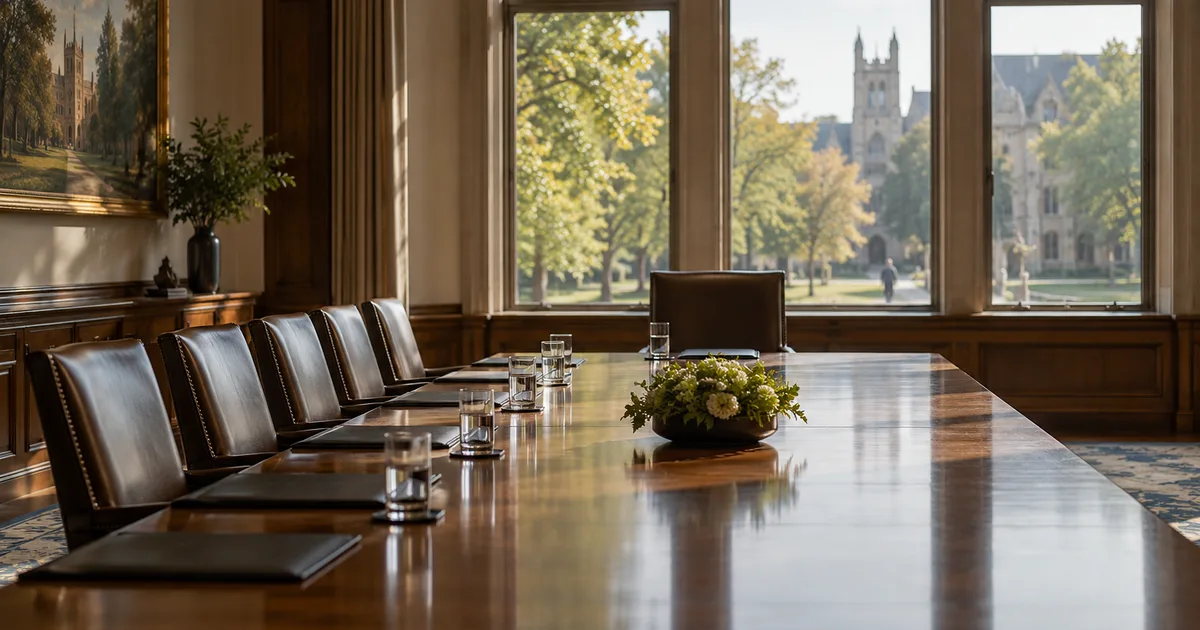
The panel interview tips that matter most for an international candidate are simple to state and hard to do under pressure. Learn who each panelist is before the day. Answer the person who asked, then widen your eye contact to the whole room. Ask for a repeat when someone speaks fast instead of guessing. If anyone asks about sponsorship, give one calm, factual sentence and move on. Panelists usually score you separately and then compare notes, so everyone at the table needs to hear your evidence. Afterward, thank each panelist individually and take every visa or start-date question to the recruiter, not the panel.
Visa context, as of 2026-11-01. OPT unemployment limits are in effect and unchanged: 90 days on post-completion OPT, 150 days in total once STEM OPT is added. Proclamation 11069's $100,000 H-1B entry restriction is in effect on paper, but the fee is blocked: courts vacated the agency policies that would collect it, and USCIS is not collecting it. Florida's Board of Governors has paused new H-1B hires at its 12 public universities until at least 2027-01-05, and Texas has frozen new H-1B petitions at state agencies and public universities through 2027-05-31 unless the Texas Workforce Commission gives written permission. None of this changes how a panel runs. It changes what a panelist might ask you.
How do panel interviews work and how are they scored?
A panel interview is one meeting in which two or more interviewers question you together, usually from a shared list of questions. In structured panels, common in government, universities, hospitals and banks, each panelist rates your answers on their own sheet against a rating scale, and the panel then compares scores before recommending a candidate.
The US Office of Personnel Management, which writes hiring guidance for federal agencies, says on its structured interviews page that structured interviews "are usually scored by a panel in which each member rates applicant responses individually," after which each member joins a group discussion "to resolve significant scoring discrepancies." Its scoring FAQ gives an example in which "each competency will receive a score ranging from 1 (Awareness) to 5 (Expert)" from each interviewer.
What that means for you:
- Every panelist needs your evidence. If HR scores communication and the peer scores technical judgment, a great answer aimed only at the director leaves two boxes empty.
- Note-taking is not boredom. Panelists record what you said to justify a score. Let the pause happen.
- A flat reaction is not rejection. OPM says a very highly structured interview asks every applicant "the same exact set of pre-defined lead and probe" questions, so even the follow-ups are scripted and panelists may not react to what you say.
Private employers set their own scorecards, so ask the recruiter what the panel will assess.
Where international candidates usually meet panels (as of 2026-11)
| Setting | Typical panel | Visa angle to know before you walk in |
|---|---|---|
| Public universities and research institutes | Search committee of faculty, staff and HR | Universities can file cap-exempt H-1B petitions, but cap-gap "applies only to beneficiaries of cap-subject H-1B petitions"; Florida's public universities have paused new H-1B hires and Texas's have frozen new petitions |
| Hospitals and health systems | Department manager, a peer, sometimes HR | A nonprofit hospital with a written affiliation agreement with a university may file cap-exempt; ask HR how it classifies itself |
| Banks and financial firms | Two or three interviewers, often on a "superday" | Usually cap-subject, so sponsorship normally runs through the annual H-1B registration |
| State and local government | Fixed questions and scoring sheets for every candidate | Some public employers restrict new H-1B petitions; Texas froze them at state agencies through 2027-05-31 unless the Texas Workforce Commission gives written permission |
| Tech and product companies | Mostly one-on-one loops; true panels are rarer | Usually cap-subject; the recruiter handles the sponsorship conversation |
Our guide to cap-exempt hospital and university employers explains why those employers skip the lottery, and our guide to faculty job interviews on a visa covers search committees and campus visits. The Florida pause, which "does not impact workers who are currently employed or up for renewal," is reported by Central Florida Public Media; the Texas freeze, which runs "through the end of the next legislative session on May 31, 2027," by the Texas Tribune.
How to prepare for a panel interview
Work through these steps in the week before.
- Ask the recruiter, by email, for each panelist's name and title, the length, the format (in person or video) and whether every candidate gets the same questions.
- Map each panelist to what they probably score, using the posting's qualifications, the department's staff page and their professional profiles. One line per person is enough.
- Tag six to eight two-minute stories against the competencies in the posting, so you can pick the right one for whoever asks.
- Check your work-authorization facts: your EAD start and end dates, whether your degree is STEM-eligible, and how many unemployment days SEVIS has counted. The SEVIS Help Hub lists "Post-completion OPT: 90 days" and "STEM OPT: 150 days, which includes any days accrued while on post-completion OPT." Your DSO can see the counter in SEVIS; if anything looks wrong, ask your DSO, not the employer.
- Look up the employer on the USCIS H-1B Employer Data Hub, which covers USCIS's first decisions on H-1B petitions from fiscal year 2009 through fiscal year 2026 (quarter 4). A long record suggests the room has seen sponsorship before; no record does not mean the employer cannot sponsor, so leave that question for the recruiter.
- Rehearse with two or three friends who take turns asking without warning, including one who interrupts and one who asks about your visa.
- Confirm the room or video link, the time zone and a backup phone number. For an in-person day, our onsite interview logistics guide covers travel, scheduling and reimbursement.
Panel interview tips for the room: who to look at and how to take turns
Use "answer the asker, then include the room." Look at the person who asked for your first sentence. During the substance, move your eye contact around the table, a sentence or two per person. Return to the asker for your last sentence, which signals that you are done.
How do you handle multiple interviewers who want different things?
Connect their interests out loud. If the hiring manager asks about a project and the finance panelist looks skeptical, add a sentence on cost before you finish: "and since budget came up earlier." It shows you are tracking everyone, not just the loudest voice.
- Draw a seat map. Write names on your notepad in seating order during introductions.
- Do not default to the most senior person. Deferring to seniority is respectful in many cultures, but in a US structured panel the junior peer and the HR coordinator may score you too.
- Let interruptions land. If two people speak at once: "Happy to take either; which would you like first?"
- Jot the questions. Ask, "Do you mind if I take notes?" A few words per question also help you personalize thank-you notes.
What should you say when a panelist speaks fast or uses an unfamiliar phrase?
Ask a clarifying question; it reads as care, not weakness.
- "Could you repeat the last part? I want to answer the right question."
- "Just to check, are you asking about the design decision or how I led the team?"
- "When you say 'move the needle', do you mean revenue or adoption?"
Paraphrasing the question back is the most useful habit when several accents share one room. Our guide to accent and communication style in US interviews has more phrases and a practice plan.
Virtual panel interview tips
On video, eye contact means the camera. Pin gallery view so you see everyone, use names to direct an answer, and pause a beat longer than in person so lag does not cut someone off. Confirm the time in writing in both time zones. Our virtual interview guide for international candidates covers setup, lighting and time-zone checks.
Panel interview questions to expect
| Question | Who often asks | International angle |
|---|---|---|
| "Walk us through your background." | Chair or hiring manager | Keep the path short; skip visa history unless asked |
| "Tell us about a disagreement with a colleague." | HR or a peer | A US-workplace example lands best if you have one |
| "How would you handle [a scenario from the job]?" | Peer or technical panelist | Name the US standard or tool you would use |
| "When could you start?" | HR or chair | On initial OPT, USCIS says you "may not begin" until your I-765 is approved and you receive your EAD |
| "Will you need sponsorship?" | HR, sometimes anyone | Use the one-sentence answer below |
Expect the work-authorization question somewhere. According to a single-vendor review by Match.dev of 2,718 US engineering roles at 136 companies, read 2026-10-13, 90.7% of application forms asked about sponsorship.
What should you ask the panel at the end?
Prepare one question per panelist, tied to what that person scores: the workload for the hiring manager, how the team works for the peer, the next steps for HR. Ask two or three, depending on time. Do not ask the panel whether they sponsor; that question goes to the recruiter, before or after the panel.
What if a panelist asks about sponsorship in front of everyone?
Give one calm, factual sentence, then return to the job. The panel usually does not decide sponsorship; HR and the employer's immigration counsel handle it. A long explanation invites four non-specialists to debate your status in real time.
One-sentence sponsorship answers for a group setting (as of 2026-11)
| Your situation | One sentence for the room |
|---|---|
| Post-completion OPT, STEM-eligible degree | "I'm authorized to work on OPT now, my degree may qualify for the STEM OPT extension with an E-Verify employer, and I'd need H-1B sponsorship later; happy to go over dates with the recruiter." |
| Post-completion OPT, non-STEM degree | "I'm authorized to work on OPT through [month and year] and would need H-1B sponsorship after that; the recruiter has my dates." |
| H-1B with another employer | "I hold H-1B status now, so this would be a change-of-employer petition; I can share details with HR." |
| University or affiliated hospital role | "I'm on OPT now and would need H-1B sponsorship, and I'm glad to work through timing with your HR team." |
Say only what is true for you, and confirm your OPT dates with your DSO beforehand. Our guide to answering "Do you need sponsorship?" has scripts for application forms and skeptical interviewers.
What if a panelist brings up the $100,000 H-1B fee?
Stay brief and do not argue. As of 2026-11-01, Proclamation 11069 is in effect on paper until 2027-09-21, but the fee is blocked: a court "vacated agency guidance implementing the $100,000 payment requirement," according to the USCIS Form I-129 page (updated 2026-10-30), which adds: "If this order is later lifted, DHS still plans to collect the payment." Even if collection resumed, USCIS's H-1B page (last updated 2026-09-21) says the proclamation does not reach a change of status, amendment or extension for someone inside the US "where the alien is granted" it; a denied change of status or a consular-notification petition would be covered. How it touches any one petition is the employer's counsel's call. A reasonable line: "My understanding is that the fee isn't being collected right now because of court orders, and I'd defer to your immigration counsel." Our Proclamation 11069 update tracks the litigation.
Panel interview follow up: thank-you notes and the recruiter
Send a short, separate email to each panelist within one business day, mentioning something specific that person asked. Three to five sentences is plenty. Without their addresses, send one note to the recruiter that names each panelist and asks them to pass it along. For timing and status checks, see how to follow up after interviews as an international candidate.
Keep visa questions out of panelist notes. Your one work-authorization follow-up goes to the recruiter: "If it helps your planning, my OPT authorization runs through [month and year], and I'm happy to share anything HR needs about timing."
Worked example: a university panel in November 2026
A candidate on post-completion OPT (non-STEM degree, EAD valid through 2027-06-30) interviews for a research coordinator role at a public university outside Florida and Texas.
| Date | What happens | Visa check |
|---|---|---|
| Mon 2026-11-09 | Recruiter confirms a four-person structured video panel, 60 minutes | Asks the DSO to confirm the SEVIS unemployment count |
| Tue 2026-11-10 | Candidate maps each panelist and writes one question per person | Rehearses the one-sentence OPT answer |
| Thu 2026-11-12 | Panel; the HR member asks about sponsorship | Gives the sentence, offers dates to the recruiter |
| Fri 2026-11-13 | Four individual thank-yous; one recruiter note with the EAD end date | No visa detail in panelist notes |
| Mon 2026-11-30 | The promised decision date (11-25) passed over Thanksgiving week; one status check to the recruiter | If an offer comes, raises the H-1B start date against the EAD end date with HR |
Because USCIS says cap-gap does not apply to cap-exempt petitions, the gap between that EAD end date and any H-1B start date is worth raising with the employer's HR and immigration counsel early.
Common mistakes
- Talking only to the chair. Every panelist with a scoring sheet needs your evidence.
- Guessing at a question you did not catch. A repeat costs seconds; a wrong answer costs a score.
- Explaining your whole immigration history to the room. One sentence, then the recruiter.
- Stating a date you have not checked. Confirm EAD dates and unemployment days with your DSO first.
- Sending one generic thank-you. Personalize each note to that panelist's question.
Frequently asked questions
How do I prepare for a panel interview?
Ask the recruiter for each panelist's name, title and the format, then map your best examples to what each person is likely to score. Rehearse with two or three people asking in turn and prepare one question per panelist. Before the day, check your EAD dates and OPT unemployment days (as of November 2026, 90 on post-completion OPT and 150 in total once STEM OPT is added).
Who should I look at when answering a panel?
Look at the person who asked for your first and last sentence, and move your eye contact around the rest of the panel in between. Include the note-taker and the most junior panelist, because in a structured panel each member scores you separately. On video, look at the camera and use names.
What if a panelist asks about sponsorship in front of everyone?
Give one calm, factual sentence, such as "I'm authorized to work on OPT now and will need H-1B sponsorship in the future, and I'm happy to go over timing with the recruiter," then return to the job. The panel usually does not decide sponsorship, so the detail belongs with the recruiter or HR. Confirm your OPT dates with your DSO beforehand.
How do I send thank-you notes after a panel interview?
Send a short, separate email to each panelist within one business day, mentioning something that person asked. Without their addresses, send one note to the recruiter that names each panelist and ask them to pass it on. Visa and start-date questions go to the recruiter, never in panelist notes.
How are panel interviews scored?
In a structured panel, each interviewer rates your answers individually against a rating scale, then the panel discusses significant differences. The US Office of Personnel Management describes this method, with an example scale from 1 (Awareness) to 5 (Expert) per competency. Private employers use their own scorecards, so ask the recruiter what the panel will assess.
Sources
- OPM, Structured Interviews and scoring FAQ
- SEVP, SEVIS Help Hub unemployment counter
- USCIS, OPT for F-1 students and cap-gap extension
- USCIS, Form I-129 and H-1B Employer Data Hub
- Central Florida Public Media and Texas Tribune on state university H-1B pauses
- Match.dev on sponsorship questions in engineering applications (single vendor, reported)
How we checked this: we read the OPM, SEVP and USCIS pages and the news reports above on 2026-11-01, quoted them where we rely on them, and matched every policy statement to F1Jobs' dated facts brief for November 2026.
This is general information, not legal or tax advice. Your own EAD, I-20 and I-797 govern; ask your DSO about OPT or SEVIS and a licensed immigration attorney about petitions or status strategy.
If you want a second set of eyes on your panel prep or your sponsorship answer before a big interview, talk to F1Jobs.
Frequently asked questions
How do I prepare for a panel interview?
Ask the recruiter for each panelist's name, title and the format, then map your best examples to what each person is likely to score. Rehearse with two or three people asking in turn and prepare one question per panelist. Before the day, check your EAD dates and OPT unemployment days (as of November 2026, 90 on post-completion OPT and 150 in total once STEM OPT is added).
Who should I look at when answering a panel?
Look at the person who asked for your first and last sentence, and move your eye contact around the rest of the panel in between. Include the note-taker and the most junior panelist, because in a structured panel each member scores you separately. On video, look at the camera and use names.
What if a panelist asks about sponsorship in front of everyone?
Give one calm, factual sentence, such as "I'm authorized to work on OPT now and will need H-1B sponsorship in the future, and I'm happy to go over timing with the recruiter," then return to the job. The panel usually does not decide sponsorship, so the detail belongs with the recruiter or HR. Confirm your OPT dates with your DSO beforehand.
How do I send thank-you notes after a panel interview?
Send a short, separate email to each panelist within one business day, mentioning something that person asked. Without their addresses, send one note to the recruiter that names each panelist and ask them to pass it on. Visa and start-date questions go to the recruiter, never in panelist notes.
How are panel interviews scored?
In a structured panel, each interviewer rates your answers individually against a rating scale, then the panel discusses significant differences. The US Office of Personnel Management describes this method, with an example scale from 1 (Awareness) to 5 (Expert) per competency. Private employers use their own scorecards, so ask the recruiter what the panel will assess.