Power Systems Engineer Jobs With H-1B Sponsorship: Utilities, Grid Operators and Consultancies
Utilities, grid operators and T&D consultancies all hire power systems engineers, but sponsorship is decided employer by employer and role by role. Here is how to tell who files for yours.
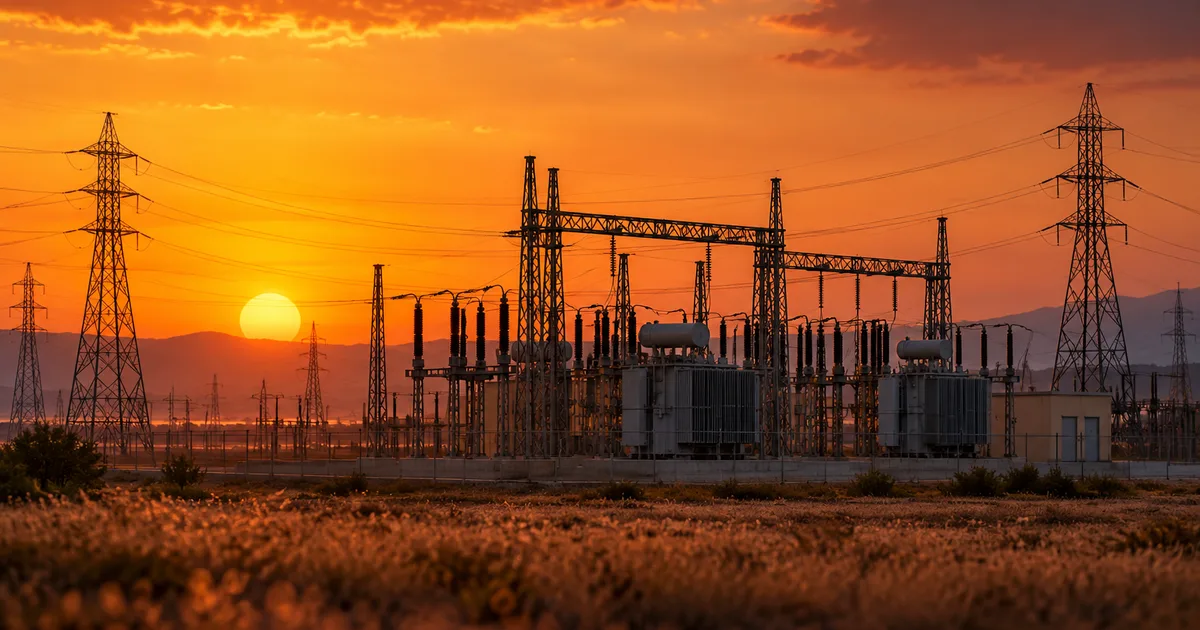
As of November 2026, yes: many power systems engineer jobs come with H-1B sponsorship, but not all. Investor-owned utilities, grid operators, transmission and distribution (T&D) consultancies and equipment makers can all file H-1B petitions, while some city-owned utilities do not sponsor at all. Power systems engineer H-1B sponsorship is decided employer by employer and position by position, so the reliable test is the employer's own Labor Condition Application (LCA) history for your title. Most of these roles sit on an electrical engineering degree, which is STEM OPT eligible.
Status as of 2026-11-01. In effect: wage-weighted H-1B selection and the STEM OPT 180-day automatic extension. Blocked: collection of the $100,000 H-1B payment, on appeal (the proclamation stands on paper). Not announced: FY2028 H-1B registration. Proposed only: the OPT fee, ending the work-visa (not F-1) 60-day grace period, and removing deference on extensions. Dates are in the status board below.
Do power systems engineer jobs come with H-1B sponsorship?
Yes, at many employers, but sponsorship is set role by role. Power systems roles generally fall under the Electrical Engineers occupation (SOC 17-2071), where 82% of O*NET respondents say a bachelor's is required, so the job usually fits the H-1B specialty-occupation test. Whether a specific employer files for your role shows up in its public LCA history.
This is the grid-focused companion to our broader electrical engineering H-1B guide, which covers semiconductors, RF and hardware.
Which power-sector employers sponsor H-1B?
Ownership drives the cap question and how predictable sponsorship is.
Power-sector employer types and visa considerations, as of 2026-11
| Employer type | Typical power roles | H-1B cap | What to check before you apply |
|---|---|---|---|
| Investor-owned utility | T&D planning, protection and controls, interconnection, substations | Cap-subject | Operating company's LCA history; E-Verify for STEM OPT |
| Public power (city utility, public power district) | Distribution engineering, planning, SCADA | Cap-subject; government ownership is not an exemption | Whether it sponsors at all; civil-service rules; E-Verify |
| Electric cooperative | Distribution planning and engineering | Cap-subject | LCA history |
| Federal power agency (TVA, BPA) | Transmission, hydro, grid operations | Federal hiring rules come first | Each posting's "who may apply" and citizenship lines |
| Grid operator (ISO or RTO) | Operations, transmission planning, interconnection studies | Cap-subject unless it qualifies under 8 CFR 214.2(h)(8)(iii)(F) | LCA history; NERC background checks |
| T&D consultancy or EPC firm | Substation design, protection and load-flow studies, large-load tie-ins | Cap-subject | LCA history by title; client-site work; PE path |
| Equipment maker or grid-tech company | Application, test and field engineering, grid software | Cap-subject | LCA history; export-control questions |
| University power research center or nonprofit research institute | Research engineer, postdoc | Cap-exempt if it qualifies | No cap-gap; Florida and Texas public-university pauses |
Do utilities sponsor H-1B?
Some do; sponsorship tracks ownership first and the role second. The EIA separates "for-profit" investor-owned utilities "owned by stockholders" from "not-for-profit" municipal utilities "owned by the city or local government," member-owned cooperatives and federal power authorities such as BPA and TVA (EIA).
Investor-owned utilities behave like other private engineering employers: some file LCAs for engineering titles, others keep a no-sponsorship policy. Public power is the least predictable; some municipal utilities do not sponsor at all, and hiring can run through civil-service rules. Federal power agencies follow federal hiring rules; read each posting's eligibility section.
State politics adds a layer. Texas froze new H-1B petitions at state agencies and public universities from 2026-01-27 to 2027-05-31 unless the Texas Workforce Commission permits one; private employers are not covered (Governor's letter, 2026-01-27; Texas Tribune). Florida paused new H-1B hires at 12 public universities from 2026-03-02 until at least 2027-01-05 (Central Florida Public Media). At a public employer in either state, ask HR whether the rule applies.
Do grid operators like MISO sponsor visas?
They can; check each one the same way. The EIA describes RTOs as "independent, membership-based, non-profit organizations that ensure reliability" and names seven in the US: CAISO, ERCOT, ISO-NE, MISO, NYISO, PJM and SPP (EIA Today in Energy, 2011).
Nonprofit does not mean cap-exempt. Under 8 CFR 214.2(h)(8)(iii)(F), the exemption covers universities, nonprofits related to or affiliated with them, and nonprofit or governmental research organizations, defined as organizations where "a fundamental activity" is "engaging in basic research and/or applied research" (eCFR, 8 CFR 214.2). An organization can have several fundamental activities, but grid operation is not research, so expect the lottery unless the employer says it files cap-exempt; nonprofit research institutes and university labs are likelier to qualify. For MISO's filings, search "Midcontinent Independent System Operator"; older records may use "Midwest Independent Transmission System Operator."
Do power consulting firms hire on OPT?
They can. Post-completion OPT needs no employer petition, only work directly related to your major; STEM OPT adds employer duties. The USCIS STEM OPT page requires E-Verify enrollment, a Form I-983 training plan, commensurate terms and "a bona fide employer-employee relationship." You can train at a client utility's site, but the consultancy "may not assign, or otherwise delegate, its training responsibilities" to a third party, and your trainers cannot be the client's staff.
Before you accept, check whether the firm is enrolled in E-Verify and ask whether it files H-1B petitions for your title.
Equipment makers and grid-tech companies
Makers of transformers, switchgear, relays and inverters hire application, test and field engineers. In the USCIS H-1B Employer Data Hub extract we use, Hitachi Energy USA Inc, Siemens Energy Inc, ABB Inc, Eaton Corporation, Schneider Electric USA Inc and the engineering firm Black and Veatch Corporation all recorded FY2024 initial-employment approvals. That shows the entity files H-1Bs, not that it files for power roles, so confirm by title. For storage and renewables integration, see our guide to climate and cleantech companies that sponsor H-1B.
How is data-center load growth changing demand for power engineers?
It is adding grid work. Indeed Hiring Lab's October 2026 snapshot (2026-10-22) put data-center postings at an index of 247, or 147% above June 2024. On a separate scale (100 = February 1, 2020), Engineering stood around 145, the highest of the five sectors charted.
A large new load means interconnection and load-flow studies at the utility and grid operator, new substations and lines, protection settings, and power-quality and backup-generation design on the customer side. Owner and contractor roles are in our data center jobs with H-1B sponsorship guide. Postings measure demand, not sponsorship.
Is a power systems master's STEM OPT eligible?
Usually yes. The DHS list (last updated July 22, 2024) "designates the following four primary CIP series at the 2-digit CIP code level: Engineering (14)" plus three sciences, and adds: "Any new additions to those areas will automatically be included" (DHS STEM Designated Degree Program List). Codes a power program may carry include:
- 14.1001 Electrical and Electronics Engineering
- 14.4801 Energy Systems Engineering, General, and 14.4802 Power Plant Engineering
- 15.0303 and 15.1701, the electrical and energy systems technology codes, listed individually
The CIP code on your I-20 decides, not the program's name; an energy policy or management program may carry a code outside the list, so confirm yours with your DSO.
As of 2026-11-01 you can file the STEM OPT I-765 up to 90 days before your OPT EAD expires and within 60 days of your DSO's recommendation, and USCIS says "we will automatically extend your employment authorization for 180 days" for a timely filing. The 2026-10-14 rule ending automatic EAD extensions did not change that. Unemployment stays capped at 90 days on OPT and 150 in aggregate with STEM OPT (SEVIS Help Hub). E-Verify is funded under the current continuing resolution through 2026-12-11 unless Congress passes funding by then; it went offline during the 2025 shutdown.
Do I need a PE for power systems roles?
Usually not to start. Entry-level jobs want an engineering degree and, ideally, a passed FE exam, offered year-round. The PE matters most at consultancies, where deliverables are sealed, and for promotion. The "PE Electrical and Computer: Power" exam is also year-round; NCEES says it is "designed for engineers with a minimum of four years of post-college work experience," and your licensing board may add requirements (NCEES PE exam).
For immigration, licensure matters only when the job legally requires it. Under 8 CFR 214.2(h)(4)(v)(A), "If an occupation requires a state or local license for an individual to fully perform the duties of the occupation," the H-1B worker must hold it before approval. The same section allows approval where "a state may allow an individual without licensure to fully practice the occupation under the supervision of licensed senior or supervisory personnel," and up to one year when the only obstacle is a missing Social Security number or work authorization. How a petition treats a junior engineer under a PE's seal is the attorney's call. Our guide to professional license timing on OPT and H-1B covers the sequencing.
Do grid-security roles need a clearance?
Some do, and a clearance is not a grid background check. Anyone given access to certain high- and medium-impact grid cyber systems goes through the personnel risk assessment in NERC's CIP-004-7: a process "to confirm identity" and a seven-year criminal history records check covering your current residence and other places you lived for six consecutive months or more (NERC CIP-004-7). If a full check is impossible, the standard allows a partial one with the reason documented. It sets no citizenship requirement, but foreign addresses are in the lookback, so keep your address history ready.
A security clearance is a federal decision. Executive Order 12968 says eligibility for access to classified information "shall be granted only to employees who are United States citizens," apart from narrow limited-access exceptions (EO 12968, govinfo). If a posting asks for an active clearance or the ability to obtain one, treat it as closed on F-1 or H-1B; see our guide to government contractor jobs and the clearance barrier.
How to check a power employer's LCA history
- Find the legal employer name on the offer letter. Utilities often hire through an operating company, not the holding company.
- Download the latest LCA disclosure file from DOL OFLC's Performance Data page. As of 2026-11-01 the newest is FY2026 Q3, covering determinations through 2026-06-30.
- Filter the employer name and SOC code 17-2071 (Electrical Engineers), then read titles for "power systems," "protection" or "substation." Technician code 17-3023 is a weak H-1B fit; on O*NET its most common education answer is an associate's degree.
- Compare the LCA record's worksite with your target office and read its wage level (I to IV); under weighted selection a Level IV offer gets four lottery entries, Level I one.
- Cross-check initial versus continuing approvals in the USCIS H-1B Employer Data Hub, which says it covers FY2009 through FY2026 Q4 (checked 2026-11-01).
- Ask the recruiter in writing whether the employer files H-1B petitions for this title and is enrolled in E-Verify.
The file shows titles and codes, not duties, and one LCA can cover several positions. Our step-by-step LCA search guide walks through the layout.
Rules that affect power engineers on OPT and H-1B
Status board, as of 2026-11
| Rule | Status on 2026-11-01 | What it means for you |
|---|---|---|
| $100,000 H-1B payment (Proclamation 11069) | In effect on paper to 2027-09-21; collection blocked, on appeal | A change of status USCIS grants inside the US, such as OPT to H-1B, was never covered; a denied one would be (USCIS, 2026-09-21); Global Nurse Force opening brief due 2026-11-06, check the docket after |
| Wage-weighted selection | In effect since 2026-02-27 | Your offered wage level sets your entries |
| FY2028 registration | Not announced; 30 days' notice required | March 2027 is an expectation, not a date |
| STEM OPT 180-day automatic extension | In effect; untouched by the 2026-10-14 EAD rule | File before your OPT EAD expires |
| OPT fee ($70,000 initial, $30,000 each later recommendation; the school pays and may pass it on) | Proposed; comments close 2026-11-09 | Would reach only DSO recommendations dated 60+ days after a final rule; check after 2026-11-09 |
| Ending the worker 60-day grace period | Proposed; comments close 2026-11-10 | Today's 60 days still applies to H-1B workers; the F-1 grace period is a separate rule |
| Removing deference on extensions | Proposed; comments close 2026-11-13 | Current deference still applies |
Sources: USCIS I-129 page, USCIS H-1B page, USCIS registration page, OPT fee NPRM, grace-period NPRM, deference NPRM, Global Nurse Force schedule.
A worked timeline: MS in power systems to H-1B through a consultancy
A hypothetical: you finished an MS in electrical engineering (CIP 14.1001) in May 2026, your OPT EAD runs 2026-07-01 to 2027-06-30, and you run interconnection studies at a T&D consultancy.
- Now (2026-11-01): confirm the firm is in E-Verify and keep unemployment days under 90.
- Expected March 2027 (not announced): your employer registers you for FY2028 at the wage level of the offered job.
- 2027-04-01 (Thu): the STEM OPT filing window opens, 90 days before the EAD ends; it closes when the EAD expires on 2027-06-30 (Wed). Your DSO confirms the dates.
- If selected: the employer files an I-129 change of status with a certified LCA. Cap-gap extends F-1 status and OPT work to April 1 of the fiscal year requested or the petition start date, if earlier, normally 2027-10-01.
- If not selected: STEM OPT from 2027-07-01 gives you more chances (expected March 2028 and March 2029), each announced separately.
Common mistakes
- Treating a company list as proof. An employer that sponsors software staff may never file for a protection engineer.
- Searching the holding-company name. The LCA usually names the operating utility.
- Assuming a nonprofit grid operator or a city utility is cap-exempt. Neither is, by that fact alone.
- Taking a technician-coded role and planning H-1B later. Ask how the job would be classified first.
- Skipping the E-Verify check. No E-Verify, no STEM OPT.
- Confusing NERC background checks with clearances. Only clearances are generally limited to citizens.
Frequently asked questions
Do utilities sponsor H-1B?
Some do, depending on ownership and role. Investor-owned utilities can file like any private employer; some city-owned utilities do not sponsor at all. Search the operating company in DOL's LCA disclosure data (latest file FY2026 Q3, through 2026-06-30).
Do grid operators like MISO sponsor visas?
They can, but a nonprofit grid operator is not cap-exempt by that fact alone, so expect the H-1B lottery. Search DOL's LCA data under the legal name, such as Midcontinent Independent System Operator for MISO, and ask the recruiter.
Is a power systems master's STEM OPT eligible?
Usually. The DHS STEM list includes the whole engineering series (CIP 14), including 14.1001 and 14.4802, but the CIP code on your I-20 decides, so confirm it with your DSO. As of 2026-11-01 the STEM OPT 180-day automatic extension remains in effect for timely filers.
Do power consulting firms hire on OPT?
They can; post-completion OPT needs no employer petition, only a job directly related to your degree. For STEM OPT the firm must use E-Verify, sign a Form I-983 and train you with its own staff, even at a client's site.
Do I need a PE for power systems roles?
Not for most entry-level roles. Under 8 CFR 214.2(h)(4)(v), if the job legally requires a state license, such as for sealing drawings, you need it unless the state allows the work under a licensed engineer's supervision.
Sources
- USCIS: STEM OPT; cap-gap; H-1B registration; Form I-129; H-1B specialty occupations; H-1B Employer Data Hub
- DOL: OFLC Performance Data; O*NET 17-2071 and 17-3023
- States: Texas governor's H-1B letter to agency heads, 2026-01-27; Central Florida Public Media on the Florida Board of Governors pause
- DHS: STEM Designated Degree Program List; SEVIS Help Hub unemployment counter
- Regulations and orders: 8 CFR 214.2 (eCFR); EO 12968; NERC CIP-004-7
- Industry and data: EIA utility types; EIA on RTOs; NCEES FE exam; NCEES PE Electrical and Computer; Indeed Hiring Lab, October 2026
How we checked this: we read the USCIS, DOL, O*NET, ICE, Study in the States, eCFR, govinfo, NERC, EIA, NCEES, Texas governor, Federal Register, CourtListener and Indeed Hiring Lab pages above on 2026-11-01 and 2026-11-02, and filtered the USCIS Employer Data Hub extract we use for FY2024 initial-employment approvals.
This is general information, not legal or tax advice. Your own I-20, EAD and approval notices govern; take CIP, I-983 and cap-gap questions to your DSO, and petition, licensure or cap-exemption questions to a licensed immigration attorney.
If you are targeting utilities, grid operators or T&D consultancies on OPT or STEM OPT, F1Jobs helps international engineers run a focused search for employers that file for their kind of role.
Frequently asked questions
Do utilities sponsor H-1B?
Some do, depending on ownership and role. Investor-owned utilities can file like any private employer; some city-owned utilities do not sponsor at all. Search the operating company in DOL's LCA disclosure data (latest file FY2026 Q3, through 2026-06-30).
Do grid operators like MISO sponsor visas?
They can, but a nonprofit grid operator is not cap-exempt by that fact alone, so expect the H-1B lottery. Search DOL's LCA data under the legal name, such as Midcontinent Independent System Operator for MISO, and ask the recruiter.
Is a power systems master's STEM OPT eligible?
Usually. The DHS STEM list includes the whole engineering series (CIP 14), including 14.1001 and 14.4802, but the CIP code on your I-20 decides, so confirm it with your DSO. As of 2026-11-01 the STEM OPT 180-day automatic extension remains in effect for timely filers.
Do power consulting firms hire on OPT?
They can; post-completion OPT needs no employer petition, only a job directly related to your degree. For STEM OPT the firm must use E-Verify, sign a Form I-983 and train you with its own staff, even at a client's site.
Do I need a PE for power systems roles?
Not for most entry-level roles. Under 8 CFR 214.2(h)(4)(v), if the job legally requires a state license, such as for sealing drawings, you need it unless the state allows the work under a licensed engineer's supervision.