What to Wear to a Green Card Interview (and What to Bring): USCIS Interview Prep for H-1B and F-1 Applicants
Business casual, a tidy folder of originals, and your interview notice in hand. Here is how H-1B, H-4 and F-1 applicants should dress and prepare for a USCIS green card interview.
Part of our guide to Form I-485.
Your I-485 interview notice arrived. Whether you are an H-1B worker, a former F-1 student who went through OPT, or an H-4 spouse listed as a derivative, you are probably wondering what to wear to a green card interview, and whether a wrong choice could hurt your case.
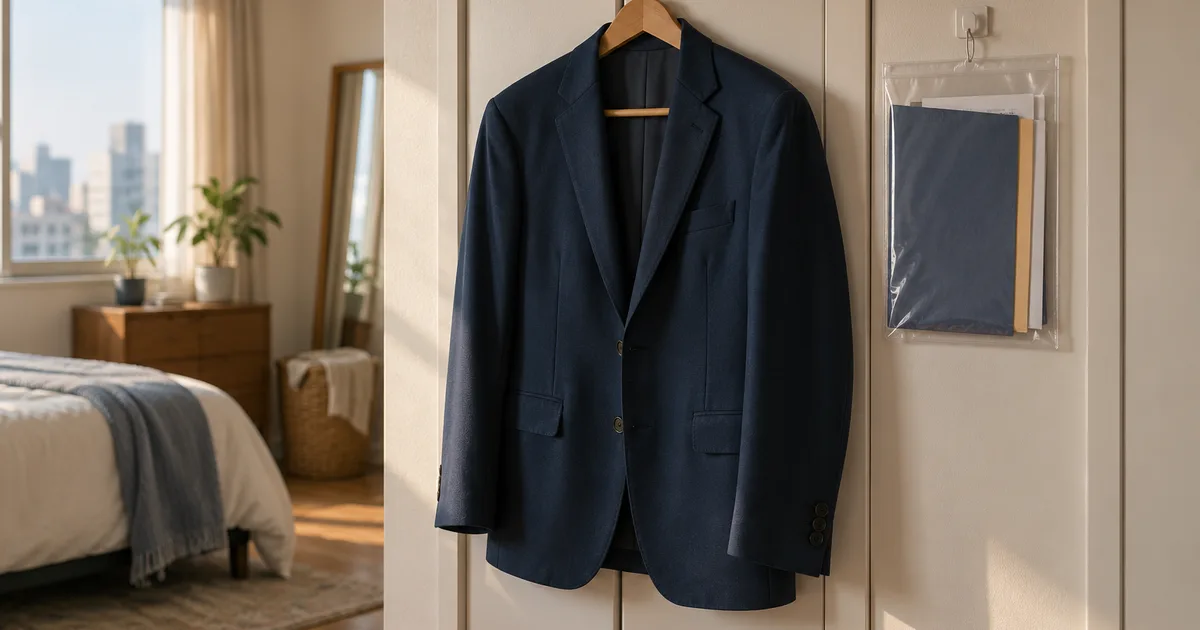
Short answer: wear business casual. A collared shirt or blouse, trousers or a knee-length skirt or dress, clean closed shoes, nothing with slogans or logos. USCIS does not publish a formal dress code for interviews, and no officer approves or denies an adjustment of status because of a blazer. The part that actually deserves your energy is the second half of the question: what to bring. That is set by your own interview notice, and this guide shows you how to build a folder around it.
Status as of October 2026. The public charge final rule is in effect, challenged: it took effect 2026-09-18 for adjustment filings postmarked or e-filed on or after that date, and lawsuits are pending with no order blocking it. Only the 09/18/26 edition of Form I-485 is accepted for new filings (uscis.gov/i-485). Neither change rewrites your interview notice. Your notice governs what you bring and who must attend.
What to wear to a green card interview: the practical default
A green card interview is a sworn, official appointment at a USCIS field office. Dress the way you would for a weekday at a conservative office. That signals that you take the process seriously, and it keeps you comfortable through a long morning of security screening and waiting.
If you already read our guide on building an interview wardrobe on OPT wages, good news: the same pieces work here. You do not need to buy anything new.
A simple USCIS interview outfit, piece by piece
| Element | Good choice | Skip it |
|---|---|---|
| Top | Collared shirt, plain blouse, fine-knit sweater | T-shirts with graphics, slogans, political or sports-team messages |
| Bottom | Trousers, chinos, knee-length or longer skirt | Ripped jeans, athletic shorts, gym leggings |
| Layer | Blazer or cardigan you can take off | Heavy coat you will have to carry through screening all day |
| Shoes | Clean closed shoes you can stand in for an hour | Brand-new shoes you have not broken in, flip-flops |
| Accessories | Watch, minimal jewelry, a folder or tote | Large metal belts and jewelry that slow down screening, sunglasses indoors |
| Grooming | Clean, neat, light or no fragrance | Strong perfume in a small interview room |
| Religious or cultural dress | Fully appropriate | Nothing to skip; wear what you normally wear |
A suit is fine if you own one and feel natural in it. It is not expected.
The dress code for a USCIS interview is about comfort as much as respect
Two practical realities shape what you should wear to an immigration interview:
- Security screening. Field offices sit in federal buildings with airport-style screening. Fewer metal accessories and a layer you can slip off make the line faster.
- Waiting. Your appointment time is when you check in, not when you are called. Expect to sit for a while. Comfortable waistbands and shoes matter.
Your notice says who must attend. If your spouse or children are scheduled with you, dress children neatly and comfortably, and bring something quiet to keep them occupied if the office allows it.
What to bring: build your folder from the notice, not from a blog
Here is the caution that matters most. Interview attendance, waivers and document lists are set by your interview notice. Two applicants in the same EB-2 category can receive different lists. Treat every checklist you find online, including the one below, as a way to organize your folder, never as a substitute for the notice. When the notice and a blog post disagree, the notice wins. Check the current official pages at uscis.gov/i-485 as well.
For a full walkthrough of the appointment itself, see our I-485 interview process guide.
Commonly requested documents for an employment-based green card interview
| Category | Commonly requested items | H-1B / F-1 notes |
|---|---|---|
| Appointment | The interview notice itself | Bring the printed notice; it lists the address, time and required items |
| Identity | Passport (current and any expired ones), government photo ID | Expired passports often hold old visa stamps and entry stamps |
| Status history | I-94 records, I-797 approval notices, EAD cards, advance parole documents | F-1 history usually means every I-20 and any OPT or STEM OPT EAD card |
| Employment | A current employment verification letter, recent pay stubs | Officers may ask whether the sponsored job is still available; some cases involve Form I-485 Supplement J |
| Petition | The I-140 approval notice and copies of what was filed | Derivatives bring proof of their relationship to the principal |
| Civil documents | Birth certificate, marriage certificate, any divorce records | Bring certified English translations for anything not in English |
| Education | Degrees, transcripts, credential evaluations if relevant to the petition | Useful when the job required a specific degree |
| Financial | Tax returns or transcripts, W-2s, if the notice asks | See the public charge section below |
| Medical | Anything the notice asks for regarding Form I-693 | Follow the notice exactly; do not guess |
Bring originals plus a copy of everything. Organize the folder in the order of the table, with tabs, so you can hand over a document in seconds instead of searching.
Status history matters more for F-1 and H-1B applicants
If your path ran F-1 to OPT to STEM OPT to H-1B, your file has many moving parts: several I-20s, one or more EAD cards, change-of-status approvals, and possibly cap-gap periods. Officers can ask about any stretch of it. Lay the documents out in date order so you can answer a question about a specific year without fumbling. If you are unsure whether a past gap or a past job raises a question, raise it with a licensed immigration attorney before the interview, not at the counter.
Our guide to I-485 interview questions covers the topics officers commonly ask about, including employment, travel and status history.
Public charge in 2026: what changed and what to do differently
As of October 2026, this is the rule change most likely to touch what some applicants bring to an interview.
Public charge, old vs new (as of October 2026)
| Old framework | New framework (in effect, challenged) | What to do differently | |
|---|---|---|---|
| Which rule | The 2022 public charge regulation | The 2026 final rule, which rescinds the 2022 regulation | Ask your attorney which framework applies to your filing date |
| When it applies | Filings before 2026-09-18 | Adjustment filings postmarked or e-filed on or after 2026-09-18 | Know your I-485 filing date and keep your receipt notice in the folder |
| Benefits considered | Under the 2022 test | Benefits received on or after 2026-09-18 can be considered; USCIS examples include cash assistance, housing assistance, food stamps and financial aid for college | Bring the financial records your notice requests, and do not guess about past benefits |
| Form edition | Earlier I-485 editions | Only the 09/18/26 edition accepted for new filings | Nothing to do at the interview if you already filed; this affects new filings |
The rule is being challenged in federal court, but as of October 2026 no court has blocked it. USCIS published guidance on how officers make the determination on its public charge guidance alert. Former F-1 students should note that USCIS lists college financial aid among its examples; our explainer on the 2026 public charge rule and financial aid covers that in more detail. Whether any benefit affects your case is a question for a licensed immigration attorney.
Your interview day, step by step
- One week before. Re-read the notice line by line. Confirm the field office address with the USCIS field office locator. Request the day off; an H-1B worker should plan for most of a working day.
- Three days before. Assemble the folder in tabbed order: originals and copies for you and every derivative. Confirm translations are complete.
- The night before. Lay out your outfit, check that shoes are comfortable, and re-read your own I-485 and supporting documents so your answers match what you filed.
- Morning of. Eat, leave early for traffic and parking, and leave anything prohibited in the car or at home. Check the notice for rules about phones and electronics.
- Arrival. Clear security, then check in at the window with your notice and ID. Arriving very early does not always help; some buildings limit how early you can enter.
- In the room. The officer will place you under oath. Listen to each question, answer truthfully and directly, and say "I don't know" or "I don't remember" when that is the true answer. Ask for a question to be repeated if you did not understand it.
- Before you leave. If the officer hands you a notice, such as a request for more evidence, read it before you leave the building and note the deadline.
- After. Track your case online. Our guide on what happens after an I-485 is approved explains the next stages.
Common mistakes
- Treating a generic checklist as the rule. The notice governs. If your notice asks for something not on any list you found online, bring it.
- Bringing copies without originals. Officers frequently want to see originals. Bring both.
- Forgetting the derivatives' documents. Your H-4 spouse and children each need their own identity, status and relationship documents.
- Clothing with messages. Slogans, political text and large logos are distractions in a sworn interview. Plain is better.
- Not re-reading your own application. Answers that contradict what you filed create questions. Know your dates of employment, addresses and travel history.
- Guessing. If you don't know or don't remember, say so. A confident guess that turns out wrong is worse than an honest "I'm not sure."
- Showing up without understanding your status timeline. If you have a gap in status or a job change since filing, talk to a licensed immigration attorney beforehand. Job changes after the I-140 can involve AC21 portability and Supplement J, which an attorney should handle.
- Assuming a news headline changed your interview. The 2026 public charge rule and the new I-485 edition affect filings in specific ways. They do not cancel or replace the instructions on your notice.
Frequently asked questions
Is there an official dress code for a USCIS interview?
USCIS does not publish a formal dress code for green card interviews. Business casual is a sensible default, meaning clean, comfortable, conservative clothing you would wear to an office job. What decides your case is your evidence and your truthful answers, not your outfit.
Should I wear a suit to my employment-based green card interview?
A suit is not required. If you already own one and feel comfortable in it, it is fine to wear, but a collared shirt or blouse with trousers or a skirt and clean closed shoes reads just as respectful. Prioritize comfort, because you may spend hours in security lines and waiting rooms.
What documents should I bring to a green card interview?
Your interview notice governs, so start with the list printed on it. Commonly requested items include the notice itself, a passport and government photo ID, originals of everything filed with the I-485, status documents such as I-94 records, I-797 notices, I-20s and EAD cards, and a current employment letter. Every derivative family member needs their own set.
Can I wear religious or cultural attire to my USCIS interview?
Yes. Religious and cultural dress, including head coverings, is appropriate at a USCIS interview. The officer will verify your identity against your documents, so if you have a question about how that works with your attire, ask the USCIS Contact Center before your interview date.
Does the new public charge rule change what I should bring to my interview?
The 2026 public charge final rule took effect on 2026-09-18 for adjustment filings postmarked or e-filed on or after that date, and it is being challenged in court with no order blocking it. Which framework applies to you depends on when your I-485 was filed. Bring any financial documents your notice requests and ask a licensed immigration attorney how the rule applies to your case.
Sources
- USCIS, Form I-485 page (current edition and filing instructions): https://www.uscis.gov/i-485
- USCIS, guidance on public charge inadmissibility determinations: https://www.uscis.gov/newsroom/alerts/uscis-issues-guidance-on-making-public-charge-inadmissibility-determination
- USCIS, field office locator: https://www.uscis.gov/about-us/find-a-uscis-office/field-offices
This article explains how the process generally works. It is not legal advice. For questions about your specific case, speak with a licensed immigration attorney.
The green card interview is one of the last steps in a long path, and it usually goes to the people who prepared the folder, not the people who bought a new suit. If you are still earlier in that path and looking for a sponsoring employer on OPT, STEM OPT or H-1B, F1Jobs can help you plan the job search side.
Frequently asked questions
Is there an official dress code for a USCIS interview
USCIS does not publish a formal dress code for green card interviews. Business casual is a sensible default, meaning clean, comfortable, conservative clothing you would wear to an office job. What decides your case is your evidence and your truthful answers, not your outfit.
Should I wear a suit to my employment-based green card interview
A suit is not required. If you already own one and feel comfortable in it, it is fine to wear, but a collared shirt or blouse with trousers or a skirt and clean closed shoes reads just as respectful. Prioritize comfort, because you may spend hours in security lines and waiting rooms.
What documents should I bring to a green card interview
Your interview notice governs, so start with the list printed on it. Commonly requested items include the notice itself, a passport and government photo ID, originals of everything filed with the I-485, status documents such as I-94 records, I-797 notices, I-20s and EAD cards, and a current employment letter. Every derivative family member needs their own set.
Can I wear religious or cultural attire to my USCIS interview
Yes. Religious and cultural dress, including head coverings, is appropriate at a USCIS interview. The officer will verify your identity against your documents, so if you have a question about how that works with your attire, ask the USCIS Contact Center before your interview date.
Does the new public charge rule change what I should bring to my interview
The 2026 public charge final rule took effect on 2026-09-18 for adjustment filings postmarked or e-filed on or after that date, and it is being challenged in court with no order blocking it. Which framework applies to you depends on when your I-485 was filed. Bring any financial documents your notice requests and ask a licensed immigration attorney how the rule applies to your case.