Semiconductor Jobs by State on OPT and H-1B: Arizona, Texas, New York, Idaho and the Fab Towns Behind Them
Where fab and chip-design jobs actually sit in Arizona, Texas, Idaho and New York, which of those employers file H-1B petitions, and what export review means for you.
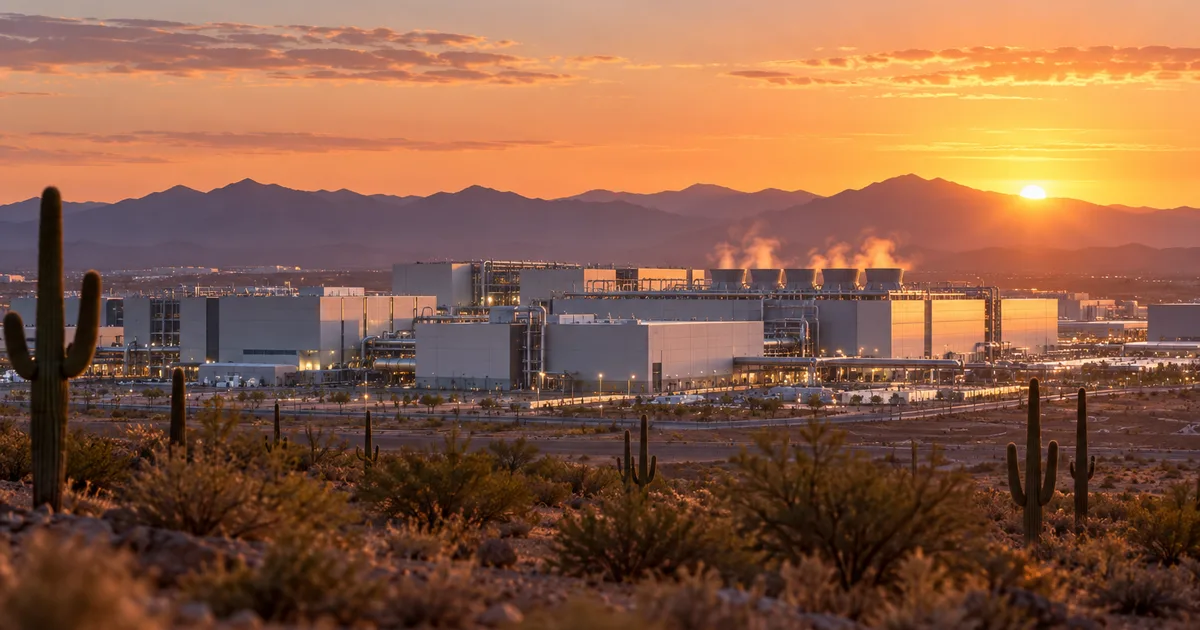
Semiconductor jobs in Arizona that come with an H-1B filing history cluster in Chandler, Phoenix and Scottsdale. In the USCIS H-1B Employer Data Hub extract behind our employer pages (petitions decided from FY2024 through a partial FY2026), Intel's Chandler entry carries 4,982, ASML 592 and 171 under two entities, Microchip 242, TSMC Arizona 206, ASM America 193 and onsemi 108. Below, the same map for Texas, Idaho and New York.
Status as of 2026-11-01: wage-weighted H-1B selection is in effect (since 2026-02-27); the FY2028 registration window is not announced. STEM OPT rules, including the 180-day automatic extension for timely filers, are in effect and unchanged. The $100,000 H-1B payment is blocked: USCIS's Form I-129 page (updated 2026-10-30) says a court vacated the agency guidance implementing it, though DHS still plans to collect it if that order is lifted. Proclamation 11069 stays in effect on paper to 2027-09-21 and never covered a change of status USCIS grants inside the US. Texas's freeze on new H-1B petitions at state agencies and public universities is in effect to 2027-05-31; it does not cover private chipmakers.
This is the location map. For the industry and policy overview, read our guide to semiconductor jobs and H-1B sponsorship in the CHIPS Act era.
Where are semiconductor jobs for OPT and H-1B candidates?
This guide maps four chip clusters. Arizona (Chandler, Phoenix, Scottsdale) has the largest chip-company H-1B filing totals of the four in our data. Texas pairs Austin's fab and design employers with Texas Instruments in Dallas. Idaho is Micron in Boise. New York is GlobalFoundries in Malta, plus Micron's Clay fab, which Micron expects to start production in 2030.
If you are asking which state has the most chip-company H-1B filings, the answer in our data is California: NVIDIA, Qualcomm, AMD, Applied Materials, KLA and Lam Research together out-file every chip filer in the four states below combined (our arithmetic). That is mostly design and equipment work; see our list of chip design companies that sponsor H-1B, and for Intel's Oregon site, our Portland H-1B jobs guide.
Engineering postings are holding up better than software postings. Indeed's October 2026 labor market snapshot (2026-10-22) puts its Engineering postings index at about 145 and Software Development at about 78-79 (100 = February 1, 2020). Its separate data-center postings index reached 247 through September 2026 (100 = June 2024). Indeed does not break out semiconductors, so treat this as a signal, not a chip-jobs count.
State-by-state chip sponsor map (as of 2026-11)
| State | Fab towns | Chip H-1B filers in our extract (petitions decided, FY2024 to partial FY2026) | Dated company timeline | Browse |
|---|---|---|---|---|
| Arizona | Chandler, Phoenix, Scottsdale | Intel 4,982 (Chandler); ASML 592 + 171, two entities (Chandler); Microchip 242 (Chandler); TSMC Arizona 206 (Phoenix); ASM America 193 (Phoenix); onsemi 108 (Scottsdale) | TSMC: first fab in high-volume N4 production since Q4 2024 (TSMC's Arizona page) | Arizona sponsors, Phoenix metro, Scottsdale metro |
| Texas | Austin, Dallas | Samsung Austin Semiconductor 353 and NXP 333 (Austin); Silicon Labs (Austin, no standalone page yet); Texas Instruments 422 (Dallas) | No dated fab timeline found; check each company's newsroom | Austin metro, Dallas metro, Texas |
| Idaho | Boise | Micron 955 | First wafer output expected mid-calendar 2027 for the first new Idaho fab, late calendar 2028 for the second (Micron, 2026-07-09) | Micron; no Idaho state page |
| New York | Malta (Capital Region), Clay (near Syracuse) | GlobalFoundries 119 (Malta) | Micron Clay: ground broken January 2026; production expected to start in 2030 (Micron, 2026-01-16) | New York sponsors, GlobalFoundries |
The timelines come from Micron's January 16, 2026 and July 9, 2026 releases and TSMC's Arizona page (read 2026-11-01). The TSMC page carries no publication date, so we repeat only a milestone already reached.
How to read these petition numbers
USCIS describes its tool this way: "The H-1B Employer Data Hub has data on the first decisions USCIS makes on petitions for initial and continuing employment." Keep four limits in mind when you use the live Data Hub or our pages built from it:
- Totals mix new hires and existing staff. USCIS's Data Hub glossary counts a worker changing into H-1B from another classification, such as F-1, as new employment, so OPT-to-H-1B hires land in the initial column. The continuing column covers people already in H-1B status, such as extensions with the same employer (our reading of that glossary).
- FY2026 is partial in our extract. The live Data Hub now says it runs through FY2026 quarter 4, so its totals can be higher than ours. Never read a three-year total as one year's hiring.
- One row is one legal name. ASML files as two entities (592 and 171). onsemi files as Semiconductor Components Industries LLC, and a truncated spelling of that name appears as a separate row. Search every variant.
- The city is a filing address, not your desk. Our directory files each employer under one primary city, so a petition counted in Chandler or Boise can be for a job elsewhere (our reading).
On our arithmetic, the seven chip-company entries in the Arizona row (six companies) account for 6,494 of the 10,527 petitions decided across the 69 employers on our Arizona page (each with at least 25), about 62%. Intel Corporation alone is about 47%. In Arizona, sponsorship and semiconductors are close to the same conversation.
Semiconductor jobs in Arizona: Chandler, Phoenix and Scottsdale
Chandler is the core: Intel, both ASML entities and Microchip all list Chandler in the extract. Phoenix has TSMC Arizona and ASM America, and onsemi files from Scottsdale. Arizona State University and the University of Arizona are also on our Arizona list, and as universities they can file cap-exempt H-1B petitions for research and lab roles. For Arizona taxes, other cap-exempt options and the metro's non-chip sponsors, see our Phoenix H-1B jobs guide.
Intel in Chandler and H-1B sponsorship
Intel files a large volume of H-1B petitions under a Chandler entry: 4,982 petitions decided for Intel Corporation from FY2024 through a partial FY2026, initial and continuing combined. That is a filing history, not a promise for any particular requisition. Two smaller Intel entities (Intel Americas and Intel Federal) also appear on the Arizona list, so search each Intel name in the Data Hub, starting with our Intel Corporation employer page.
At TSMC Arizona, notice one line on the company's Arizona page: "Our Technician jobs don't require a college degree." That helps local hiring and is a flag for you. An H-1B needs a specialty occupation that normally requires a bachelor's degree in a specific field, and your Form I-983 has to show how a STEM OPT role relates to your degree. Process, equipment, yield, integration and device engineering titles usually fit those tests better than technician roles. Our guide for manufacturing and process engineers seeking H-1B sponsorship goes deeper on fab job titles.
Semiconductor jobs in Texas: Austin and Dallas
Semiconductor jobs in Austin, Texas center on Samsung Austin Semiconductor (353 petitions decided) and NXP (333), with Silicon Labs and Cirrus Logic (two entity names) also filing from Austin. In Dallas, the largest chip filer is Texas Instruments (422), with Qorvo also on the Dallas list; STMicroelectronics files from Coppell on our Texas list. Browse the Austin metro list and the Dallas metro list, and see our Austin H-1B jobs guide for the city's non-chip sponsors.
The Texas wrinkle is political. According to the Texas Tribune, Gov. Abbott directed state agencies and public universities in January 2026 not to file new H-1B petitions without written permission from the Texas Workforce Commission, through 2027-05-31. That order is in effect. It does not reach private employers (the Tribune reported in August that it did not apply to K-12 schools either), so Samsung, NXP, Silicon Labs and TI are outside it. A cleanroom or research job at a Texas public university such as UT Austin, normally a cap-exempt route, now needs that state permission first; see our explainer on the Texas and Florida H-1B hiring freezes. Cap-exempt petitions also get no cap-gap extension, so the timing has to work with your OPT EAD end date; read whether cap-gap applies to cap-exempt H-1Bs and take the timing to your DSO and the university's immigration attorney.
Semiconductor jobs in Idaho: Micron in Boise
Idaho has no state page on our site; the filer that matters is Micron Technology, whose 955 petitions decided sit under a Boise entry. Micron's July 9, 2026 release says it is "making rapid progress in Idaho, with first wafer output expected in mid-calendar 2027 for the first fab and late calendar 2028 for the second." That makes Boise the nearer-term Micron build. Because our directory files Micron under one city, the 955 can include Micron jobs at other sites (our reading). See our Micron Technology employer page.
Semiconductor jobs in New York: Malta and Clay
GlobalFoundries U.S. is the largest chip filer on our New York list, with 119 petitions decided under a Malta entry in the Capital Region; other GlobalFoundries entity names appear on the same list. Micron's megafab in Clay, north of Syracuse, is the newer project, and its January 16, 2026 release is plain on timing: "Production is expected to start in 2030 with the fabs ramping throughout the decade." Our upstate New York H-1B jobs guide covers the Albany-Malta corridor and nearby universities.
Is Micron hiring for the Clay fab yet?
Its New York careers page says "As we build our team, we are looking for a wide range of talent and experiences," links to open roles near Clay and describes a Registered Apprenticeship Program. The July 9 release says the project "is expected to generate 50,000 jobs in New York, including 9,000 direct Micron jobs," a projection over the build-out, not a 2026 hiring count. Neither the careers page nor the releases mention visa sponsorship, so ask for each role and weigh it against nearer-term openings in Boise.
Do semiconductor fabs hire international students on STEM OPT?
They can, if the employer meets the STEM OPT employer rules. The USCIS STEM OPT page (updated 2026-01-30) says the employer must "Be enrolled in E-Verify" and attest by "signing the Form I-983, Training Plan for STEM OPT Students." Every chip employer with its own page in our directory shows initial-employment approvals in our extract, the column where an OPT-to-H-1B change of status lands. That still does not tell you whether a given team sponsors.
Three rules shape the timeline, all in effect as of 2026-11-01:
- Unemployment. 90 days on post-completion OPT and 150 days on STEM OPT, a total that includes days already used on post-completion OPT, per the SEVIS Help Hub unemployment counter.
- The 180-day extension. USCIS says it "will automatically extend your employment authorization for 180 days" when you file the STEM I-765 on time. A STEM I-765 filed after the OPT EAD expires gets no 180 days.
- The weighted lottery. Under the wage-weighted selection rule, in effect since 2026-02-27, a Level IV registration is entered four times and a Level I registration once. An offer at Level I or II gets fewer entries, which is why STEM OPT's extra registration seasons matter. The FY2028 window is not announced; USCIS must announce it at least 30 calendar days ahead, so watch its registration page.
Export controls and deemed exports: what chip candidates should know
What a deemed export is, and when it affects you
The Commerce Department's Bureau of Industry and Security defines it on its deemed exports page: "A deemed export refers to the sharing or release of controlled technology or source code to a foreign person within the United States." Under 15 CFR 734.13(b), that release is a deemed export "to the foreign person's most recent country of citizenship or permanent residency." If your role touches technology that needs a license for your country, the employer has to get authorization before sharing it with you.
The Form I-129 instructions (edition 09/09/26) apply this to H-1B hires: release to foreign persons in the US, "even by an employer," is deemed an export, so "a U.S. company must seek and receive a license from the U.S. Government before it releases controlled technology or technical data to its nonimmigrant workers employed as H-1B, H-1B1, L-1, or O-1A beneficiaries." The employer certifies in Part 6 of Form I-129 whether a license is required and, if one is, that it will not release the technology until authorization arrives. The same instructions say this "will affect only a small percentage of petitioners," because most types of technology are not controlled for release to foreign persons.
This describes the mechanism only; we make no claim about how any employer named here handles export review.
Where export control shows up in a chip hire (as of 2026-11)
| Stage | What happens | Who acts | What you can do |
|---|---|---|---|
| Application | A "U.S. person" or export-control question | You answer | Answer truthfully; under the export rules, F-1, OPT and H-1B holders are not U.S. persons |
| Offer | Export compliance may check the role's technology against the Commerce Control List and your countries | Employer | List every citizenship if asked |
| STEM OPT start | No I-129 is filed, so there is no Part 6 certification, but the EAR still applies to any release | Employer | Ask whether any part of the role is controlled |
| H-1B petition | Employer certifies in Part 6 of Form I-129 whether a license is required | Employer | Nothing to file yourself |
| License needed | Controlled technology cannot be released until authorization arrives | Employer applies | Ask how the team handles work in the meantime |
Our guide to the "Are you a U.S. person?" export-control question covers ITAR versus EAR and how to answer that question accurately. Some chip postings do require U.S. persons, but export review is a step an employer takes for a specific role, not a blanket bar on visa holders, so ask about each role rather than ruling out the industry.
How to vet a chip employer before you apply
- Open the employer's page in our company directory and note every legal entity name and city it files under.
- Search the USCIS H-1B Employer Data Hub for each name, comparing initial-employment approvals with continuing ones.
- Confirm E-Verify enrollment before you accept a STEM OPT offer, and get the E-Verify company identification number your STEM OPT Form I-765 asks for.
- Read the posting for "U.S. person," "export license" or "ITAR" language, and ask whether the role involves controlled technology.
- Ask which site you would work at, since the petition address and the fab can differ.
- Report the new employer and worksite to your DSO, or through the SEVP Portal, the way your school requires.
- Ask HR or the employer's immigration attorney how they handle registration timing and the wage level for your role.
Common mistakes
- Reading petition totals as openings. They describe past federal filings, not current job openings.
- Searching one legal name. ASML, Intel, onsemi and GlobalFoundries each file under more than one name.
- Treating the filing city as the worksite. Ask where the job actually is; your I-983 and any LCA have to name the real worksite.
- Chasing technician roles for H-1B. A posting that requires no degree is a weak fit for a specialty-occupation petition.
- Answering "yes" to a U.S. person question. It is a legal definition, and F-1, OPT and H-1B holders fall outside it.
- Assuming the Texas freeze covers private chipmakers. It reaches state agencies and public universities only, through 2027-05-31.
- Waiting for Clay. Micron expects New York production to start in 2030; plan around the fabs that run today.
Frequently asked questions
Which states have the most semiconductor jobs for OPT and H-1B candidates?
Our data counts H-1B filings, not jobs. By chip-company petitions decided in the USCIS Employer Data Hub extract our pages use (FY2024 through a partial FY2026), California's design and equipment firms out-file every chip filer in the four states here combined (our arithmetic). Among those four, Arizona leads (Intel alone at 4,982), then Texas, Idaho (Micron, 955) and New York (GlobalFoundries, 119).
Does Intel in Chandler sponsor H-1B?
Intel Corporation has 4,982 petitions decided under a Chandler, Arizona entry in our extract of the USCIS H-1B Employer Data Hub (FY2024 through a partial FY2026, initial and continuing combined). That is a filing history, not a promise for any role. Ask the recruiter whether the position is open to candidates who need sponsorship, and search every Intel entity name in the Data Hub.
Do semiconductor fabs hire international students on STEM OPT?
They can, when the employer is enrolled in E-Verify and signs your Form I-983 training plan, as the USCIS STEM OPT page (updated 2026-01-30) requires. Every chip employer with its own page in our directory shows initial-employment H-1B approvals in our extract. Get the employer's E-Verify company ID for your STEM OPT Form I-765, and track the 150-day STEM OPT unemployment limit.
What is a deemed export license and does it affect me?
A deemed export is the release of controlled technology or source code to a foreign person inside the US, treated as an export to that person's most recent country of citizenship or permanent residency. If a role involves controlled technology, the employer needs authorization first (for EAR technology, a license from the Bureau of Industry and Security). USCIS's Form I-129 instructions (edition 09/09/26) say this affects only a small percentage of petitioners.
Is Micron's New York fab hiring engineers yet?
Micron broke ground in Clay, New York in January 2026, poured first concrete more than one quarter ahead of plan (July 9, 2026 release) and expects production to start in 2030. Its New York careers page lists open roles and a Registered Apprenticeship Program but says nothing about visa sponsorship, so ask for each role. Micron's H-1B filings in our extract sit under its Boise, Idaho entity.
Sources
- USCIS H-1B Employer Data Hub and Understanding Our H-1B Employer Data Hub
- USCIS, Optional Practical Training Extension for STEM Students
- USCIS, H-1B Electronic Registration Process
- USCIS, Form I-129 Instructions, edition 09/09/26 and the Form I-129 page
- Federal Register, Weighted Selection Process final rule
- SEVIS Help Hub, Unemployment Counter
- Bureau of Industry and Security, Deemed exports and 15 CFR 734.13
- Indeed Hiring Lab, US labor market snapshot, October 2026
- Texas Tribune on the Texas H-1B freeze, January 26, 2026 and August 18, 2026
- Micron releases of 2026-01-16 and 2026-07-09; Micron New York careers; TSMC Arizona
How we checked this: employer figures come from the USCIS H-1B Employer Data Hub extract behind our company pages; rules and quotes come from the USCIS, BIS, Federal Register and SEVIS pages above, and fab timelines from dated company statements, all checked on November 1, 2026.
This is general information, not legal or tax advice; your own I-20, EAD, I-94 and approval notices govern, so take F-1, OPT and SEVIS questions to your DSO and petition or status strategy to a licensed immigration attorney.
If you are mapping chip employers by state and want help running a focused search for the ones that sponsor, F1Jobs works with international candidates on exactly that.
Frequently asked questions
Which states have the most semiconductor jobs for OPT and H-1B candidates?
Our data counts H-1B filings, not jobs. By chip-company petitions decided in the USCIS Employer Data Hub extract our pages use (FY2024 through a partial FY2026), California's design and equipment firms out-file every chip filer in the four states here combined (our arithmetic). Among those four, Arizona leads (Intel alone at 4,982), then Texas, Idaho (Micron, 955) and New York (GlobalFoundries, 119).
Does Intel in Chandler sponsor H-1B?
Intel Corporation has 4,982 petitions decided under a Chandler, Arizona entry in our extract of the USCIS H-1B Employer Data Hub (FY2024 through a partial FY2026, initial and continuing combined). That is a filing history, not a promise for any role. Ask the recruiter whether the position is open to candidates who need sponsorship, and search every Intel entity name in the Data Hub.
Do semiconductor fabs hire international students on STEM OPT?
They can, when the employer is enrolled in E-Verify and signs your Form I-983 training plan, as the USCIS STEM OPT page (updated 2026-01-30) requires. Every chip employer with its own page in our directory shows initial-employment H-1B approvals in our extract. Get the employer's E-Verify company ID for your STEM OPT Form I-765, and track the 150-day STEM OPT unemployment limit.
What is a deemed export license and does it affect me?
A deemed export is the release of controlled technology or source code to a foreign person inside the US, treated as an export to that person's most recent country of citizenship or permanent residency. If a role involves controlled technology, the employer needs authorization first (for EAR technology, a license from the Bureau of Industry and Security). USCIS's Form I-129 instructions (edition 09/09/26) say this affects only a small percentage of petitioners.
Is Micron's New York fab hiring engineers yet?
Micron broke ground in Clay, New York in January 2026, poured first concrete more than one quarter ahead of plan (July 9, 2026 release) and expects production to start in 2030. Its New York careers page lists open roles and a Registered Apprenticeship Program but says nothing about visa sponsorship, so ask for each role. Micron's H-1B filings in our extract sit under its Boise, Idaho entity.